

It Was Julia Child's Favorite — Now This Vintage Kitchen Utensil Is A Valuable Thrift Store Find
We may receive a commission on purchases made from links.
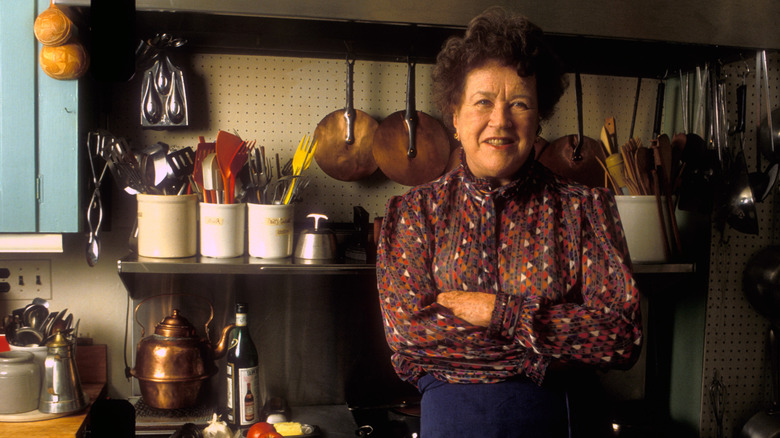
Julia Child was famous for her indulgent mashed potatoes. The care — and the dozens of garlic cloves — she put into them were undeniably important to the success of the dish. But there was another behind-the-scenes hero ensuring Julia's spuds were so delicious: the Foley fork. Before our contemporary era of endless handy kitchen gadgets (that are often just a waste of money), this rake-like cooking tool did it all. You could use it to blend batters, mash chickpeas for hummus, whisk or scramble eggs, cut butter into flour, break up ground meat, and — of course — whip up the fluffiest mashed potatoes. Once this nifty fork is in your hot little hands, you might even want to get rid of most other items in your kitchen ASAP.
This funky kitchen fork was produced by Minneapolis-based Foley Manufacturing Co., which operated from the late 1920s to 1982 or 1984, depending on the sources you consult. Either way, Foley eventually ceased operations as an independent company. Despite being a best-selling product in the 1950s, the Foley fork is admittedly not much to look at. However, each facet of its design has a purpose. It has long, tapered, evenly spaced tines that reach deep into pots and cut through food neatly without tearing it apart. It has a narrow, curved, ergonomic neck that takes some weight off your wrist and gives you lots of leverage for mixing or pressing. Finally, it boasts a flat, heat-resistant stainless steel handle that's easy to hold and a cinch to keep clean. The rounded edges of the handle won't dig into the skin on your hands, even if you're vigorously mashing a big pot of root vegetables. It makes sense that it replaced conventional kitchen tools, like whisks and standard forks.
Why you should consider adding a Foley fork to your utensil drawer
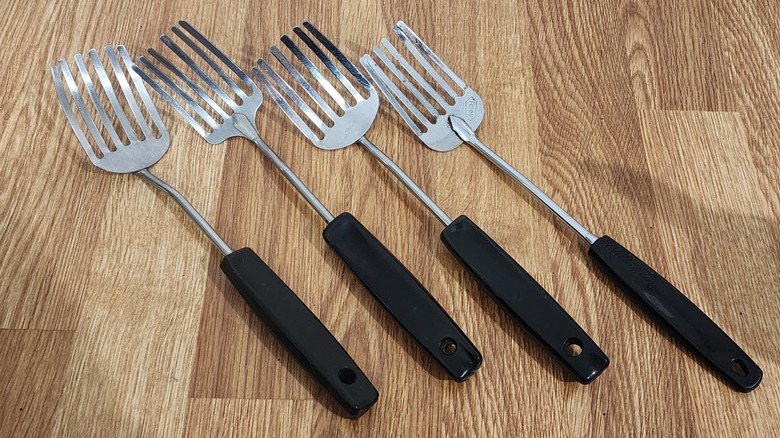
Though the original Foley fork has been out of production for decades, vintage versions abound. If you're very lucky, you might be able to pick one up while thrifting or perusing yard sales. At the very least, it's worth rummaging through thrift store shelves for one. To identify an original Foley fork, look for six tines that curve upward at an approximately 35-degree angle, an all-metal, black plastic, or wooden handle, and a FOLEY FORK MPLS stamp on the stem or back of the fork head. A truly vintage example will also likely show some signs of wear.
If you don't have the patience for thrifting, eBay has a few Foley fork listings, with prices ranging from about $15 to $50. That's about the price of a sit-down lunch for one, depending on where you go. Sometimes, Foley forks also appear in sets of vintage kitchen utensils sold on Etsy, with prices around $100. If you can't find anything secondhand, consider buying a modern alternative, like this RSVP International Endurance Kitchen Baking Tool Collection Fantastic Fork for about $15.
You'll probably end up using your new-to-you fork all the time. To keep it in pristine condition, take the time to learn about the best cleaners to use on stainless steel kitchen appliances and utensils. These include baking soda, sparkling water, steam, and store-bought stainless steel cleaner. Wash your Foley fork immediately after use to remove any salts and acids, and don't leave it soaking in a solution overnight. If in doubt, don't put your vintage utensils in the dishwasher.