

How Often To Water Grass Seed So It Thrives
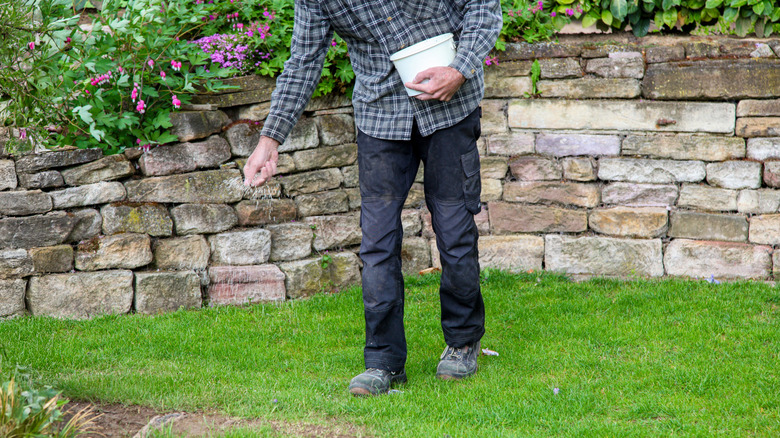
If you've ever overseeded your lawn only to be greeted with patchy, disappointing growth, you've likely fallen victim to one of the most common lawn care mistakes: improper watering. Grass seed requires consistently moist soil during germination. If the top layer of soil dries out for even just a few hours, the process can come to a grinding halt. Fortunately, turning a lackluster yard into a lush lawn doesn't require a green thumb — it requires a consistent, phase-based watering schedule, ideally with twice-daily sessions. Knowing a few tips for growing grass seed fast to create a lush lawn will also help.
Underwatering grass seed may stop germination or damage newly sprouted seedlings. Giving grass seed too much water can promote fungal growth, and the seed may also wash away with runoff. Finding the perfect balance between hydration and drainage is the secret to success. In general, grass seed needs frequent, light waterings. You should aim to keep the top 1 to 2 inches of soil consistently moist, but not so wet that your lawn becomes a mud pit. It's important to adjust your watering schedule around the weather. Skip scheduled waterings after rain to avoid water-logging the grass seed. If you're experiencing a heatwave, you might need to add a midday watering to stop the soil surface drying out.
How often do you need to water grass seed for optimal results? To give the seed a fighting chance during the first three weeks after sowing, set your sprinklers to run two to four times a day for five to 10 minutes per session. If the seeds dry out even once during the first three weeks, the germination process can come to a grinding halt. The tiny sprouting blades can also die from dehydration and heat exposure.
How much water you need to use after the first three weeks
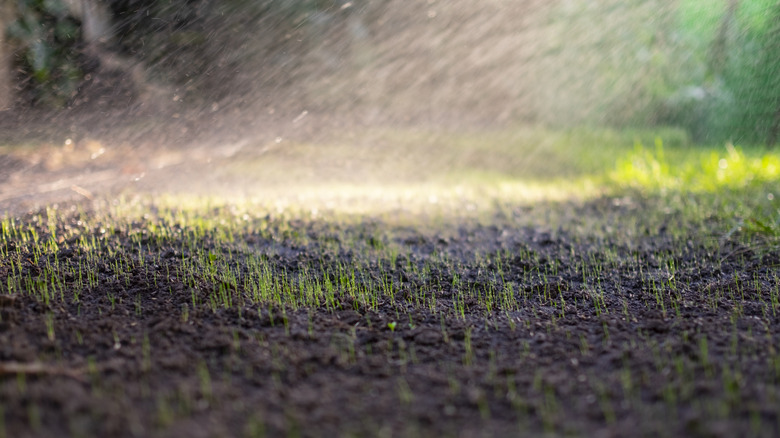
Steering clear of common mistakes everyone makes when watering their lawn is critical once grass seedlings appear. As soon as your yard is covered in green fuzz, slowly taper off your watering frequency. You need to shift from providing surface moisture, which supports early growth, to soaking the soil, which encourages roots to grow deeply into the ground. If, however, you keep the topsoil perpetually soggy rather than moist, you will encourage shallow, weak roots that are unlikely to survive a heatwave.
After the first three weeks, the grass seeds will have become established. Once you see most of the grass sprouting — this usually happens anywhere from 10 to 21 days after sowing the seed — you can begin training the roots to grow deeper into the soil by reducing watering frequency and increasing watering duration. Start watering once a day for 15 to 20 minutes, moistening the soil about 1 to 6 inches deep. If the weather is particularly hot and dry, add a second, lighter watering session each day.
After about six weeks, your grass will begin transitioning from young seedlings to an established lawn as the root system matures. At this point, you should only need to water your lawn about two to three times a week for about 30 minutes to maintain overall turf health. Apply roughly 1 inch of water in total each week. Deep, infrequent watering encourages grass roots to grow deeper into the soil, increasing the drought tolerance of your lawn.
Pro tips and tools for grass seed watering success
Even with the perfect schedule in place, variables like soil type, heat, and rain can throw a wrench in your plans. To help your grass seed thrives despite changing environmental conditions, there are a few watering tips to keep in mind. First, you don't really need any fancy tools to monitor your lawn's watering needs day to day. A rain gauge is useful for measuring sprinkler output, but otherwise, it's best to focus on soil moisture. To test soil moisture, push a screwdriver into the soil. If it slides in easily — up to about 4 inches — the soil has enough moisture. If you meet resistance or the soil feels hard, water your lawn.
Knowing the best time to water your lawn for luscious grass will make all the difference, too. Aim to water your lawn in the early morning, so the water can soak into the ground before it evaporates in the heat of the midday sun. Morning watering also ensures the grass blades dry out before nightfall. If the soil is left damp and cool overnight, your lawn can become a breeding ground for fungal diseases.
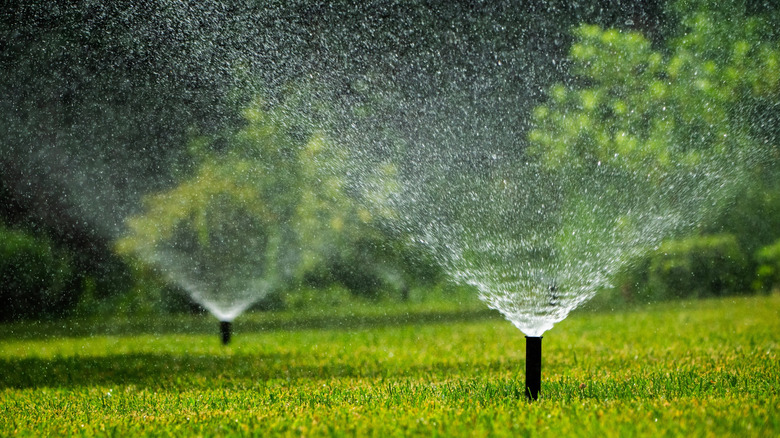
You also need to use the right lawn-watering tools. High-pressure sprayers can wash away topsoil and displace grass seeds, leading to bald spots in your lawn. Instead, use an oscillating sprinkler or a hose nozzle set to a gentle mist or shower setting. If you're watering manually, move the nozzle side to side rather than focusing on a single spot. Since watering consistency is one of the biggest factors in successful grass seed germination, purchasing a simple and inexpensive hose-end timer that can automate two to four sessions per day will save you time and help prevent your grass from drying out.