

The Neglected Household Scrap To Add To DIY Fertilizer For A Thriving Pothos Plant
We may receive a commission on purchases made from links.
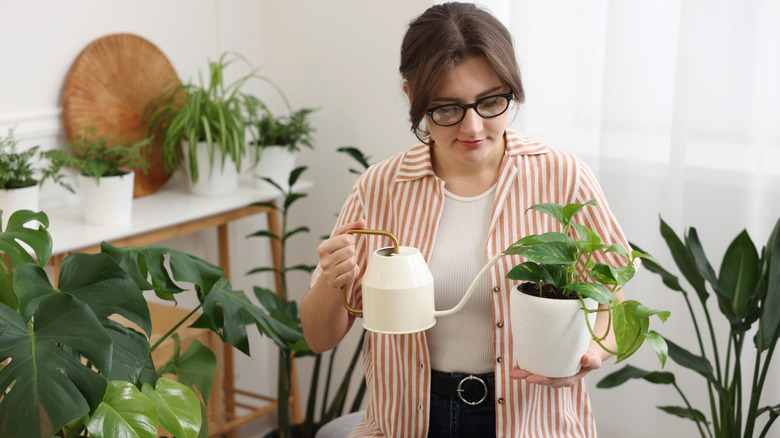
If you're a houseplant enthusiast, it's quite likely that you have at least one pothos plant. Pothos are one of the most popular indoor plants because they're very easy to grow and can be displayed in so many different ways. They're arguably the perfect way to add living greenery to your home. Some of the easiest types of pothos plants you can propagate and grow at home also happen to be readily available at nurseries and big box retailers — think golden pothos, 'Jade' pothos, 'Neon' pothos, and dragon-tail plant. Once you have just one plant, you'll likely want to multiply your collection. However, like most houseplants, pothos need fertilizer to keep them looking their best. If you also have a fish tank in your home, you're in luck. Dirty freshwater fish tank water is more than just something you pour down the drain — it also makes a great pothos fertilizer.
After the fish in your aquarium have consumed the food that you give them, they turn it into waste that's ejected into the water. While that makes the water cloudy and in need of replacing, it also fills the water with nutrients that are beneficial to plants. The most common nutrient in aquarium water is nitrogen, and guess what? Pothos love a good dose of nitrogen, which helps them to grow lots of lovely green leaves and long stems. On top of that, aquarium water contains potassium, phosphorus, ammonia, and tiny microorganisms that may benefit houseplant soil. In fact, spent fish tank water is probably not all that different from store-bought liquid plant fertilizers or fish emulsion. In short, it's the water you might not have thought to recycle in your garden but should be.
Using your fish tank to fertilize pothos and grow more plants
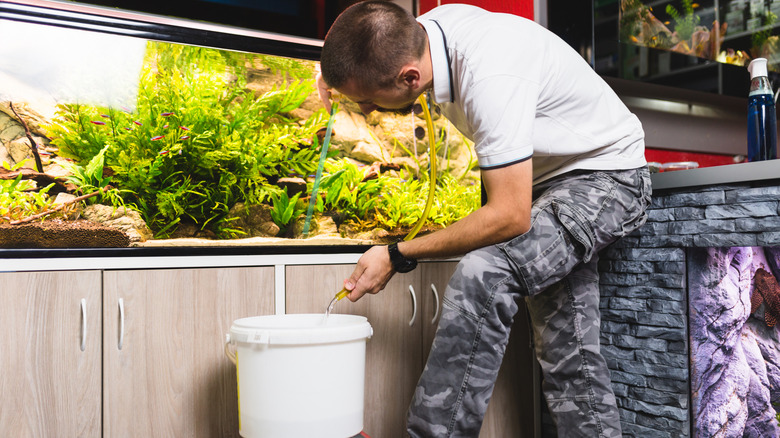
If you replace the water in your fish tank regularly, it should be safe to use as is on your pothos. You shouldn't have to worry about overdosing your plants with nutrients. If the water is really dirty — perhaps because it's well overdue for a change — dilute it a little before watering your pothos with it. You could follow the same guide as fish emulsion concentrate: 1 tablespoon to 1 gallon of water. Only ever use old water from a freshwater aquarium on houseplants. If you have a saltwater fish tank, pour the water into outdoor drainage or contact your municipality for responsible waste disposal options. All that salt may damage your plants. In short, always keep your used aquarium water; there are plants that love it — and we're not just talking about pothos. You can add it to the soil of philodendrons, peace lilies, and even potted herbs like mint and basil.
If you don't want to pour all that dirty aquarium water onto your pothos, you can use your fish tank to propagate cuttings. Simply submerge the ends of the stems in the water, keeping the leaves above the surface. Use something like these Aidmi Aquatic Plant Cups or these Borlech Aquarium Plant Holders to support your cuttings. Once your baby pothos grow roots, you can replant them or leave them growing where they are in the tank. Pothos can, after all, grow in water indefinitely, as long as the plant receives the appropriate nutrients. It might not be any more effective than regular water or water with added fertilizer, but it's definitely convenient. The pothos may even help clean the tank water as the roots act like filters, trapping debris and absorbing excess nutrients.