

Here's How Long Grass Can Go Without Water
If you're in the middle of a heat wave and haven't seen any decent rain for a while, you might be wondering whether your lawn will survive or if it's a good idea to give it some water. How long your grass can go without water before it totally dies will depend entirely on the species of turf you're growing. You will find that some grasses will go dormant during hot conditions and often turn brown. But, as soon as the rains come, they spring back into growth, and you'll once again be able to enjoy a nice, lush, green lawn.
You might need to identify what type of grass you have, so that you know how long it can go without water. As a general guide, most cool-season grasses can last for approximately four to six weeks without any water, be that from rain or supplementary watering. If your lawn is made up of Kentucky bluegrass, you may even find that the grass can survive without water for around two months. This particular species goes dormant, and the blades of grass that you see will die. However, the crown of each plant, as well as the roots, will remain alive and start to grow again once the soil receives enough water. Similarly, both tall and fine fescue are two species that can handle a lengthy period of dry weather and will even remain green for around 28 days without receiving any water.
What should you do to help you lawn survive a dry spell
If you're really not that keen on replacing your turf with drought-resistant grass alternatives, the best thing you can do for your lawn during a drought is to let the grass go dormant and stay off it. That means no mowing and no foot traffic. This will help to protect the crown and roots of each grass plant from any extra stress. Of course, it goes without saying that you should never apply fertilizer to a lawn that is stressed from lack of water.
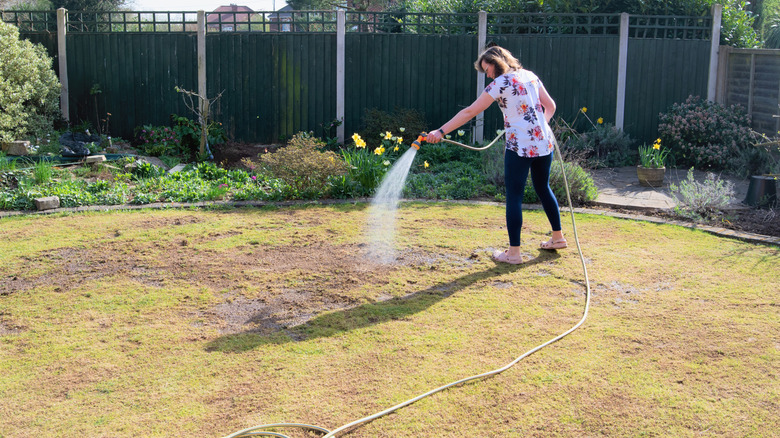
To keep your lawn alive during a drought, you may want to consider some supplemental irrigation that still allows you to stay within any water rationing your state may impose. Dormant turf really only needs around ½ inch of water every second week to keep the roots and crowns happy until the rains come. In fact, you don't want to overdo it; otherwise, you'll initiate new growth that will just die if there's no rain forecast. Make sure you water early in the morning so it doesn't evaporate before it reaches the roots. One of the most common mistakes everyone makes when watering their lawn is irrigating during the hottest part of the day. This is generally just wasteful and doesn't benefit the grass much at all.