

Borax Vs Boric Acid: Is There A Difference?
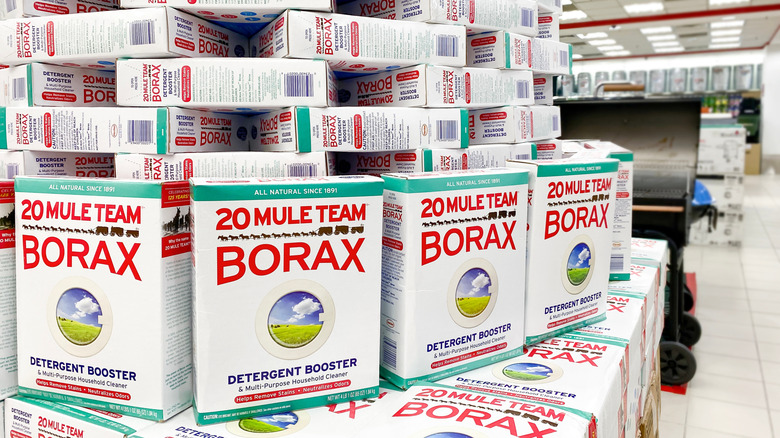
Borax is, to many, a bit of a mysterious substance. It can be used as a bleach alternative that will make your white clothes look clean and smell fresh, a cleaning agent that can easily tackle mold and mildew, and even an activating ingredient in fun homemade slime. Most assume it's a brand name due to its catchy moniker, and even more are completely left in the dark on the chemical composition of this white powder. Add in the fact that boric acid, a common anti-fungal treatment, pesticide, and cleaning agent, has a similar title, and you're left with a situation that's completely cloaked in confusion.
Don't worry — we're here to clear things up. While borax and boric acid sound similar and have some properties in common, they're actually two separate compounds. Borax, chemically known as sodium tetraborate, is a salt that contains sodium, oxygen, and boron. Boric acid, on the other hand, is what happens when borax undergoes a chemical reaction with hydrogen or another acid, becoming hydrogen borate. You can even synthesize boric acid by adding a suitable amount of hydrochloric acid to a solution of water and borax if you're in the mood for a science experiment.
Both of these compounds can be found in nature, and despite their somewhat ominous-sounding chemical names, they make the cut of natural cleaning products you'll want a healthy stock of in your home. These boron-based chemical cousins might not be the same thing, but they can both help you create a clean and pest-free space.
What are boric acid and borax used for?
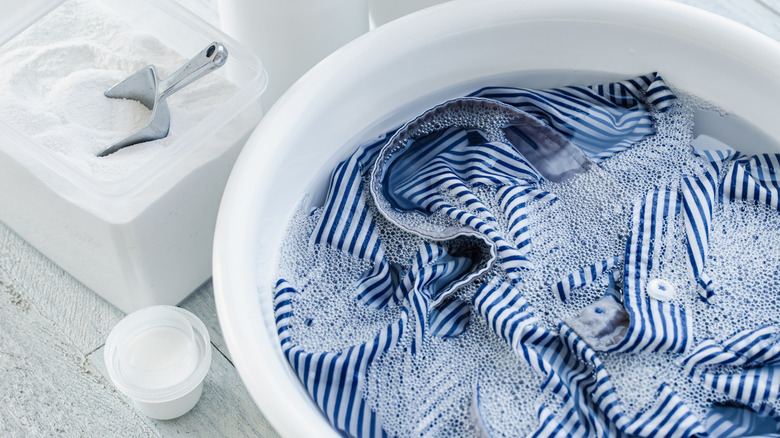
Differing chemical structures set borax and boric acid apart, but in many cases, both can be used for similar jobs around the house. Both compounds can find uses as treatments for mold and mildew and carpet deodorizers, thanks to the fact that both boric acid and borax have antifungal and deodorizing properties. However, borax is generally preferred for these home applications, given that it's less concentrated. Borax's alkalinity also makes it a more effective laundry addition, especially if you're looking to eliminate stains caused by dirt or oils without relying on bleach. In comparison, boric acid is considered better for pest control thanks to the fact that it has a finer grain — meaning insects like cockroaches and ants are less likely to detect it and more likely to consume it.
Whether you're using boric acid or borax in your home, make sure you're taking necessary precautions. Just because a substance can be found in nature, it doesn't mean it's food-grade or safe to handle in large amounts. Prolonged contact can cause skin irritation, especially in the case of children, and ingesting either can result in gastrointestinal distress or even death. By using these compounds responsibly and keeping them away from pets and children, you can enjoy their benefits without putting yourself or your family at risk.