

Why Do So Many California Backyards Have Artificial Turf?
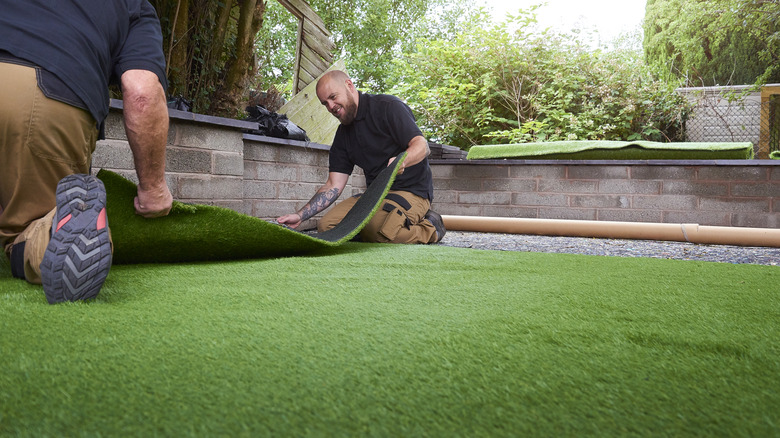
Imagine a lawn that stays perpetually green and at just the right height, no watering or mowing required. If it sounds too good to be real, it is. Regular mowing and watering are necessary for keeping your lawn looking good. But artificial turf is a grass alternative for your lawn that gives a uniform, manicured look with no regular maintenance required. And it seems to be a particularly popular option in California.
In California, many sporting fields have been converted to artificial turf and the trend has caught on in backyards as well. Just how much grass has given way to turf? It's hard to say for sure but an article in the Los Angeles Times — which asserts that artificial turf installations are higher in the Golden State than any other — reports, "It's estimated that 1,100 acres of the material, or the equivalent of some 870 football fields, are being installed across the state each year." Turf has been trending upward in popularity largely because it doesn't require regular watering. This falls in line with the state's frequent water restrictions due to drought, a regular occurrence in California. Turf also doesn't need to be mowed or fertilized, and cleaning it is pretty straightforward, all of which saves homeowners time and money, and omits the need for chemical treatments. Are Californians onto something? Does turf solve watering woes and give you a maintenance-free lawn or are there drawbacks to this landscaping trend?
Artificial turf holds heat and contributes microplastics to the environment
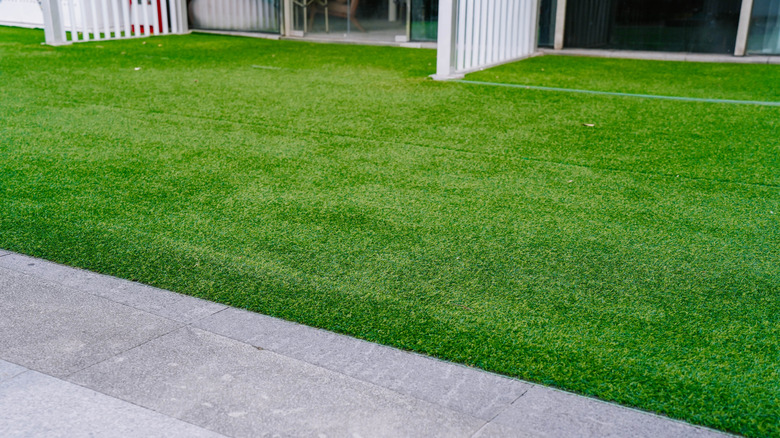
It's true that turf has upsides and can save time on yard upkeep while potentially reducing your water footprint. But despite the fact that many California backyards are turning to turf, there are several hidden downsides of artificial grass to consider before making the switch. In fact, enough Californians have opted for artificial turf for these perceived time, money, and water savings, that some cities have stepped in. For example, the city of Thousand Oaks, west of L.A., has dedicated a page on its website explaining why locals should opt against fake grass.
For one thing, turf gets hot. The synthetic blades of grass, backing, and fill material all absorb heat more than natural grass and soil. The results of research done in New York found that the surface temperature of turf fields was significantly hotter than grass — up to 60 degrees Fahrenheit hotter. And the University of California Agricultural and Natural Resources found surface temperatures of artificial turf reached up to 165 degrees F when the thermometer climbed above 100. If you have kids or pets playing outside during the day, a turf backyard can be too hot to be comfortable or safe. It can even require more water than natural grass as a result, as hosing off artificial turf keeps it both clean and cool.
One more reason to think twice about turf is its contribution to microplastic pollution. It's estimated that turf contributes 2,000 to 3,000 pounds of microplastics to the environment annually. In addition, artificial turf with a crumb rubber fill, made from recycled tires, contains chemicals that are known carcinogens. Finally, an organization called Safe Healthy Playing Fields argues that artificial turf costs more than natural grass, when all is said and done.