

How To Give Overfertilized Petunias A Second Chance At Blooming
We may receive a commission on purchases made from links.
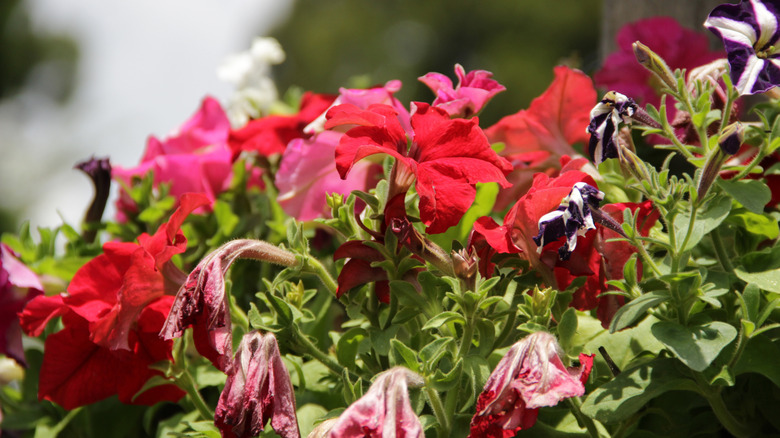
If you love a colorful garden that's easy to care for, chances are you've gotten the recommendation to grow petunias (Petunia x hybrida). These tender perennial plants have been bred in a wide variety of hues and bloom all through the summer. Their petals look like delicate ruffles or funnels, adding variety among other organic garden shapes. You may have heard they need consistent feeding with fertilizer, but sometimes there can be too much of a good thing. When overfertilized, petunias can wilt, develop yellow or brown leaves, grow more slowly, and stop producing flowers. Even if you see these signs, don't despair right away. You may be able to bring these dying petunias back to life by flushing their soil with water.
Petunias can only grow year-round in the warm climates of USDA Hardiness Zones 10 and 11. In other places, gardeners tend to treat them as annuals, either letting them die after the warmer months or bringing them inside when the weather starts to cool. They look stunning in hanging baskets, but that can also make it challenging to reach the flowers with a hose if you need to flush fertilizer buildup from the soil. Products like the Dramm One Touch Rain Wand come in handy to make it easier. Whichever method you choose, the flushing process is essential to fix overfertilization and get your petunias blooming again.
What happens when petunias are overfertilized
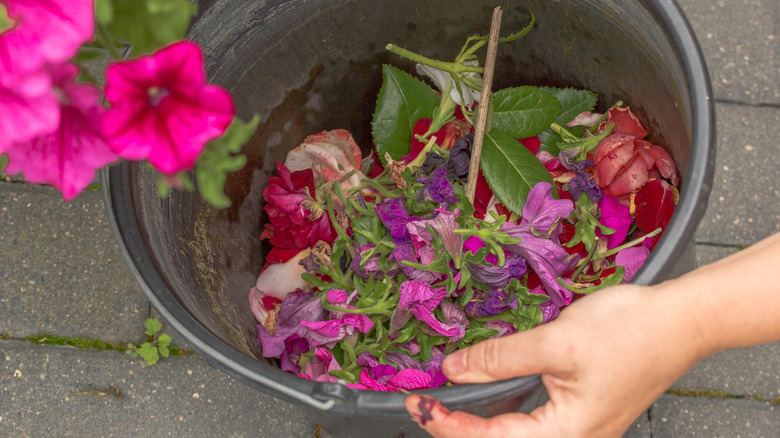
As helpful as fertilizer can be in the right amounts, if there's too much in the soil, plants aren't able to stop themselves from absorbing more nutrients than they need, which can lead to unhealthy growth spurts, poor root structure, and fewer flowers. If new gardeners who are still feeling out how to fertilize petunias add too much when they're seedlings, it can even lead to the small plants' death. Petunias at all stages can also suffer from black root rot, which causes stunted growth and yellow leaves, when they're fertilized too heavily or often. Additionally, they may have trouble absorbing enough water due to a change in pressure that causes water to flow out of the roots rather than into them. The imbalance also hurts the soil, where it's important to have the right microorganisms to aid in plant growth and a particular pH level that too much fertilizing can change.
There are some signs to tell you when showering your plants with nutrients was a bad idea. First, crusty soil may indicate that salts from fertilizer have built up. Eventually, the leaves may change color and can start dying, along with the flowers. The plants may wither, and new blossoms may stop appearing. You can double-check the package directions for the fertilizer to understand if it was applied in the wrong concentration or at the wrong frequency.
How to flush fertilizer from petunia soil
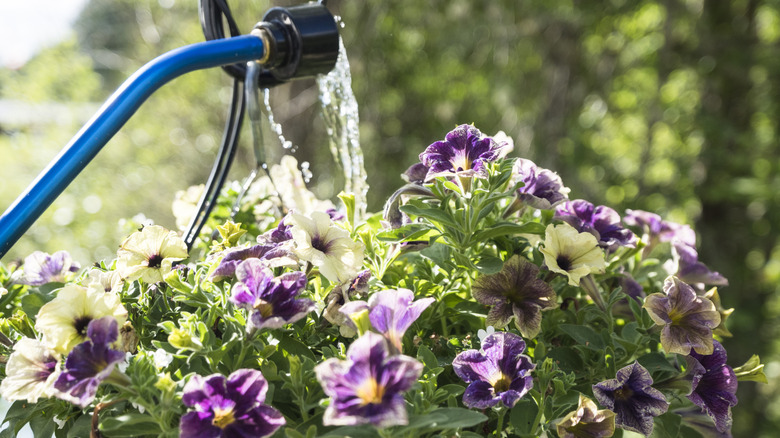
Flushing out excess fertilizer from your petunias can look different depending on how you're growing the plants, but the first step is to get any crusted salt off the top of the soil, as well as any fertilizer powder or granules. For petunias in hanging baskets or other containers, water them thoroughly with a garden hose and make sure the water drains out of the bottom. You can then replace the soil and repot the plant. Petunias in the ground need to be watered for a few minutes; the goal is to leach extra fertilizer from the soil. You can skip the soil replacement step in this case, but severely damaged plants can be transplanted to a new place in the garden if they don't improve. Let the soil dry after the water has either run through drainage holes or pooled around the roots. After a two- or three-day period, cut off discolored leaves and decide whether to repeat the flushing process.
If flushing your petunias helps them rebound, there are a few ways to keep them healthy for the rest of the season. Reducing the frequency of feedings can make a difference; while they'll still need a balanced fertilizer, you can go down from weekly to biweekly or even once a month, depending on the type of petunia and where it's growing. If you find that fertilizing more often is needed, keep up the flushing practice one or two times each month on sunny days when the soil can dry out adequately. It's also important not to fertilize wilted plants — give them water to perk them up first instead. One useful way to make sure the ground isn't retaining too many nutrients is to use a home-based soil testing kit.