

Goodbye Stubborn Weeds: Pull Deep Roots Quickly With A Tool You Already Own
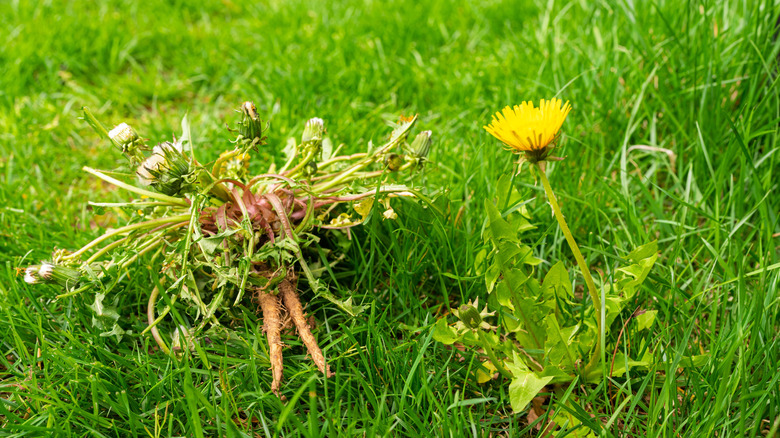
Is there anything quite as frustrating as having a beautifully manicured lawn, only for some nasty weeds to ruin it? The worst part is that weeds are like icebergs: They have a lot going on under the surface. Besides their leafy tops, many also have deep and stubborn roots. And to get rid of weeds in your garden, you need to remove both. To do this, you can use a tool that you may already own as a DIY solution: a crowbar.
While you may be more used to crowbars removing flooring and prying nails from wood, you can also use them for weed management. The reason this works well is because crowbars are designed to give you the leverage to pry things with less effort, which makes it easier to pull weeds out of the ground with their roots. Plus, if you already own one, you won't have to go out and buy new weeding tools.
Of course, you can also pull weeds by hand, but this has a high likelihood of ripping leaves off and leaving some roots underground — which will cause new leaves to sprout. Another option you might have considered is chemical weed killers, but they can imbalance your local ecosystem and hurt wildlife. So if you prefer to play it safe and would like to avoid chemicals, head into your garage and grab a crowbar. Best of all, unlike many chemical weed killers, it gives you instant results.
How to remove weeds from your lawn with a crowbar
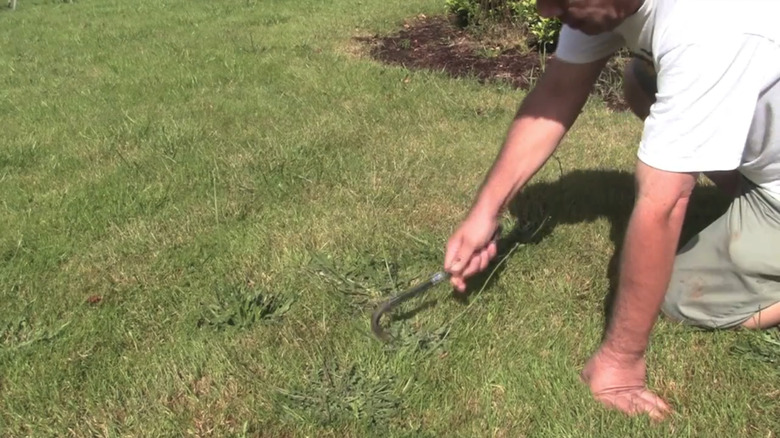
Crowbars are short, so this technique does require you to get on your knees. This might be hard for anyone with mobility issues, in which case purpose-built weed pullers could be worth the money, as some have long handles you can use standing up.
To use the crowbar as a DIY weed-removing tool, get close to the weed and hold it with the claw end aiming forward and downwards. Then, swing the head of the crowbar down into the soil, near the center of the weed. Wiggle it a bit and repeat a few times until you feel like the plant is ready to come out. The goal is to loosen the soil slightly to more easily dislodge the entire root ball that's beneath the plant. Once you feel it coming loose, stick the claw end in more firmly, and use your hand to push the crowbar away from you, creating a lever-like movement. There's no need to apply excessive force, since you're trying to pull out the roots instead of breaking them.
Though some weeds can be composted, you might want to err on the side of caution if the weeds are carrying plant diseases and pests, spread by tubers, or have produced seeds (which can survive the compost heap). In these situations, throw away weeds in a sealed trash bag, or check with your local cooperative extension service for tips. If you notice holes where you've pulled the weeds out, you can use a hand rake to level out the soil. If the holes are too deep, you can always refill them using a bit of planting soil and compost (or sand).