

What Is The Average Lifespan Of Landscape Fabric?
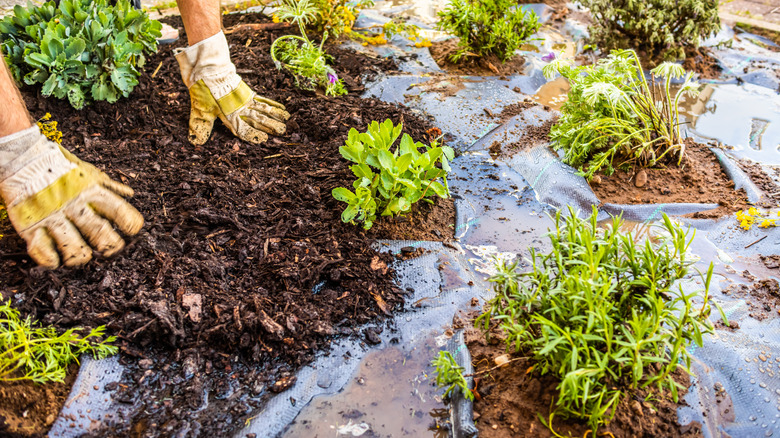
When installed correctly, landscape fabric promises a virtually weed-free garden with half the maintenance — a dream for any homeowner looking to ditch the hand-weeding routine. But while it sounds like a permanent solution, even the best geotextile barriers won't last forever. Depending on the material quality and shelter from the elements, landscape fabric has a finite lifespan, after which it can quickly turn into a torn, weed-choked mess beneath your mulch. Understanding the true lifespan of these weed barriers and the warning signs that it's time for a full replacement is key to keeping your garden beds healthy and your curb appeal intact.
So, when exactly is it time to replace it? The average lifespan of landscape fabric ranges from one to 10 years, while standard woven PP fabric for residential use lasts three to five years. Choosing the best type of landscape fabric to keep weeds at bay depends heavily on where you plan to install it in your yard. Lightweight non-woven polypropylene is typically sold in inexpensive rolls at big-box home improvement stores. This option has the shortest lifespan, often only one to three years. Because it's thin and has low tensile strength, it tears easily under foot traffic or aggressive weed roots. It also degrades rapidly in direct sunlight, making it best suited for temporary annual garden beds, short-term weed suppression, or lining raised planter boxes.
Standard woven polypropylene typically lasts three to five years. It's a tough, crisscross grid of plastic fibers with high tensile strength and puncture resistance that still allows water and essential nutrients through the tiny openings between the threads. It's a good in-between choice for average flower beds, shrub borders, and beneath soft mulches such as natural wood chips or pine straw.
Different landscape fabrics for different needs
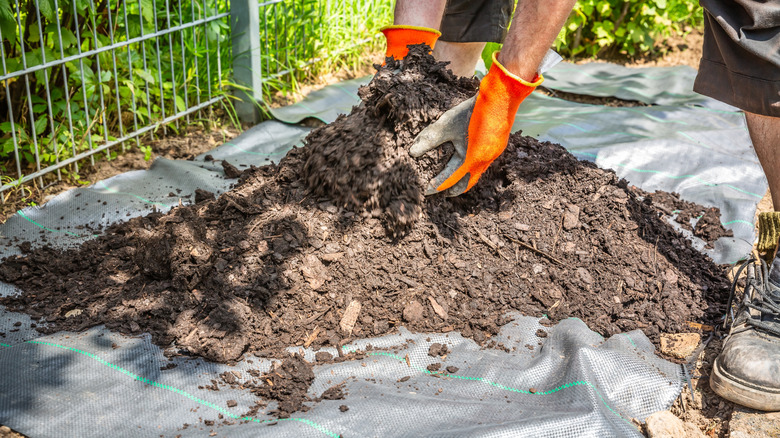
If you're looking for a landscape fabric that stands the test of time, opt instead for a heavy-duty geotextile or needle-punched woven fabric. These last a whopping 10 years or more, enduring harsh weather and high foot traffic. This landscape fabric is best beneath heavy gravel, stone pathways, rubber mulch, patio pavers, and long-term permanent hardscaping — basically anywhere where durability is non-negotiable. Because sharp stones naturally shift underfoot, understanding the one thing to be aware of before laying landscape fabric under gravel pathways can help you evaluate whether this option fits your long-term landscaping plans. When buried under a thick layer of cover to block UV rays entirely, these industrial-grade fabrics can easily last for a decade.
There are some circumstances where you'd want the landscape fabric to break down naturally, like seasonal planting or temporary soil stabilization. In this case, biodegradable fabrics made from natural fibers like jute, coir (coconut husk), or cornstarch-based polylactic acid (PLA) are your best bet. Soil microbes, moisture, and earthworms break down most of these natural fibers over 12 to 24 months, eventually incorporating the organic matter into the soil. These are perfect for eco-friendly vegetable gardens, temporary erosion control on slopes, and establishing native perennial beds where you want weed control only until the root systems take over.
When to replace your landscaping fabric
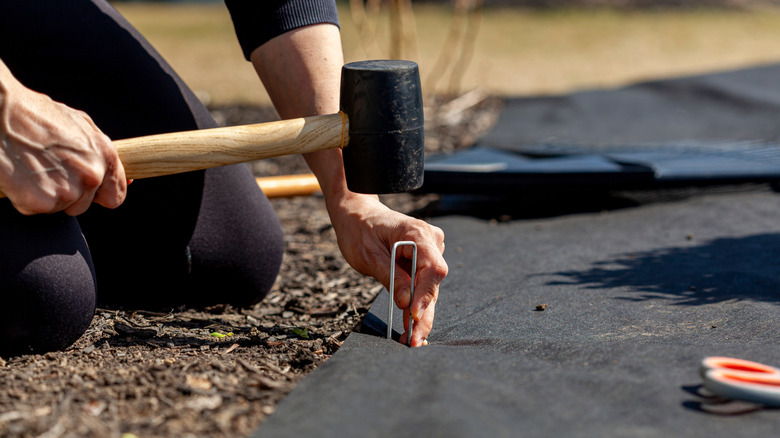
Even high-end commercial geotextiles eventually reach the end of their useful life, and understanding the downsides of landscape fabric will help you spot issues early. Because fabric is buried under mulch, soil, or stone, it's not always obvious when it has failed. If you have persistent weeds that are rooting through the fabric, it's a clear sign your barrier is no longer doing its job. A few rogue weeds sprouting in the top layer of mulch are normal — seeds blow in on the wind all the time. However, if you pull a weed and feel serious resistance, or see its root system tangled tightly within the fabric weave itself, the barrier has failed. Once this happens, the fabric becomes a grid that anchors weeds rather than blocking them.
Another dead giveaway is visible fraying, shredding, or exposed edges in your fabric. If UV rays have degraded your top layer of mulch, the underlying fabric will begin to break down under sunlight. If you notice frayed, fuzzy edges peeling up around plant bases or torn patches where lawnmowers, edgers, or other tools have snagged the material, it's time to tear it out. A final red flag to watch for is standing water or poor drainage in your garden beds. Thanks to its permeable design, landscape fabric allows water to pass directly to the soil below. Over time, fine soil particles and decomposing mulch clog the microscopic pores between the fibers. If you notice puddles standing on your garden beds long after a rainstorm, or if the soil beneath feels bone-dry despite heavy watering, the fabric has become completely clogged and impermeable. It should be replaced.