

8 Common Garden Pests Who Avoid Rosemary & 6 That Love It
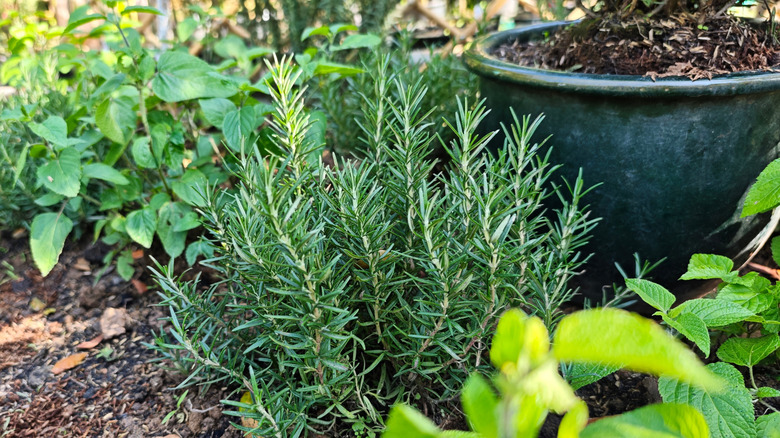
Rosemary is one of my favourite herbs for companion planting to benefit your garden and for use in the kitchen. It is wonderfully fragrant, aromatic, and is a great ally in the garden for keeping any number of pests away or for growing in areas where pests like deer browse on pretty much everything. I'm a permaculture specialist and master gardener who has been employing natural techniques for over 20 years, and rosemary is a plant I use on a regular basis.
The volatile oils that give rosemary its wonderfully distinctive scent include camphor, cineole, and pinene. These are concentrated in the needle-like leaves of the rosemary plant and they interfere with the host-finding and navigation ability of a range of common pests. They are also unpalatable to some larger garden pests and act as a deterrent to unwanted visitors that don't like the smell. Because of this, I use rosemary as a strategic interplanting partner, placing it near vulnerable crops that need extra protection, as well as using it as a border and hedgerow in other parts of my garden. Unfortunately, rosemary is not infallible, and there are some pests that love it. These will make a beeline for rosemary, regardless of what else is growing nearby.
Japanese beetles steer clear of rosemary
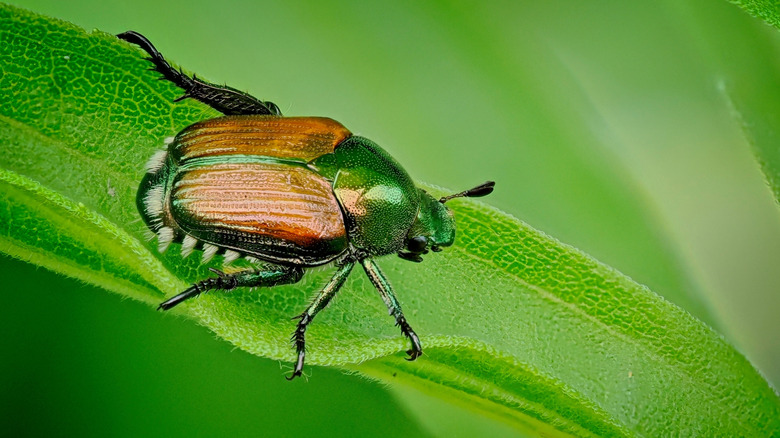
An absolute menace in both ornamental and edible gardens, Japanese beetles, Popillia japonica, find host plants by following scent signals. Rosemary is incredibly useful in the war against Japanese beetles, because it disrupts these scent signals. If you have crops that are particularly attractive to Japanese beetles, like roses, berry crops, and ornamental vines, plant rosemary nearby and you should see less Japanese beetle activity. I would plant rosemary along the front edge of a bed that contains a vulnerable species. You can also truly interplant, placing a rosemary every few feet along a row between susceptible or vulnerable plants.
But I wouldn't rely just on rosemary alone. While rosemary will help reduce the number, it won't eradicate Japanese beetles, so you'll still need to do early morning trips to the garden to pick off any of the more persistent beetles that have bypassed the rosemary and still found your vulnerable plants. You can also use a mild cedarwood spray on those vulnerable plants to act as an extra layer of deterrent. Adding extra companions such as catnip and any of the allium family, especially garlic, will also help get rid of Japanese beetles.
Carrot rust flies can't navigate through rosemary's aromatic zone
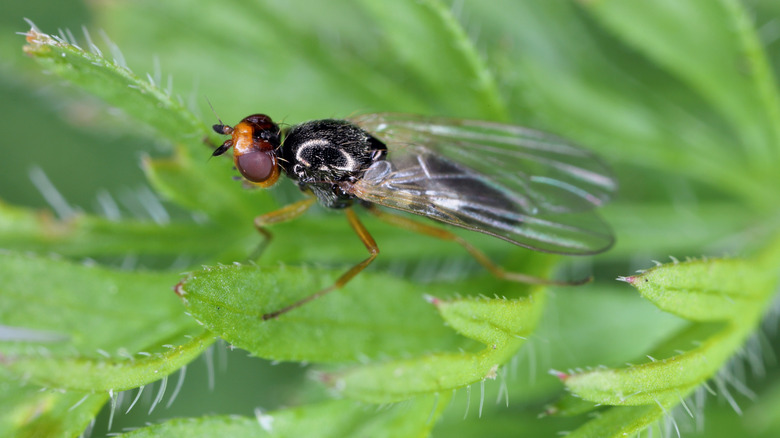
The carrot rust fly, Psila rosae, is an absolute menace and it locates its host plants primarily by scent. That's why planting rosemary nearby, especially if you also plant onions or garlic, is so effective. The aromatics from rosemary and the intense scent of alliums help mask the scent of the carrots and confuse the rust flies. You can plant a rosemary border around the edge of carrot beds and then plant your garlic and onions between rows for a pretty effective combined way of companion planting to repel the flies.
This pest is a real pain. They tunnel through carrots, parsnips, and celeriac roots and because all of that problematic activity is below ground, you don't know how bad the damage is until you harvest the crop. If carrot flies are wreaking havoc in your garden, then you can further support the rosemary and alliums with a fleece blanket over the top of the carrots.
Slugs and snails won't cross a rosemary edging
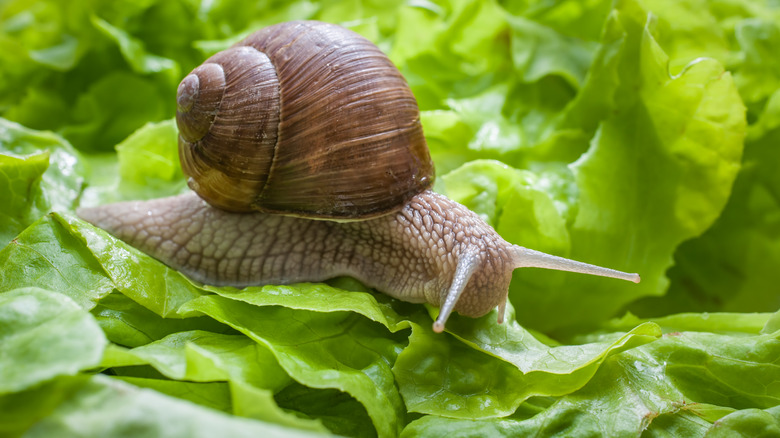
Like many strongly aromatic herbs, rosemary is another plant that slugs and snails find unpleasant and tend to avoid. It's useful as a border plant to help protect crops that are particularly vulnerable to slugs and snails, like strawberries, hostas, and any of your leafy greens. It's a pretty effective natural deterrent against these soft-bodied, voracious feeders.
Slugs and snails dislike the potent scent, as well as the dry, waxy, resinous foliage, so it repels them with both scent and touch. As with most natural options, just planting rosemary won't eradicate the local slug and snail population, but it should substantially reduce pressure — especially if you employ other natural methods too, such as getting rid of debris and leaf litter from around vulnerable plants and cutting back on evening watering. You do need borders of rosemary though, rather than just one or two individual plants, for this to be most effective. Otherwise the slugs will just go around.
Bean beetles find rosemary-planted legume patches unappealing
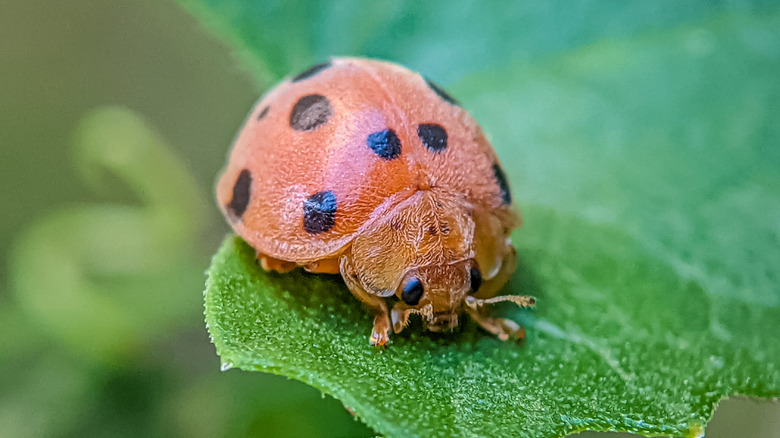
The Mexican bean beetle, Epilachna varivestis, is far less problematic for your legumes when you are companion planting with rosemary. This is another garden pest that is put off by rosemary scent compounds, because the volatile oils in rosemary hide the scent of the beans and peas. You can plant it as a perimeter around the legume bed or interplant between bean and pea rows. Given that rosemary comes back year after year, I prefer to plant it as a border. Growing it in containers that you can move each year is another option.
Floating row covers also work for bush beans, but obviously aren't terribly practical for any legumes that climb. If, like me, you have chickens, you can periodically let them rifle through your legume bed if you find that rosemary alone is not enough to keep Mexican bean beetles at bay. Chickens are excellent pest controllers and they will happily forage through your bean or pea bed in search of Mexican bean beetles and many other pests that you want to get rid of.
Aphid pressure drops in crops intercropped with rosemary
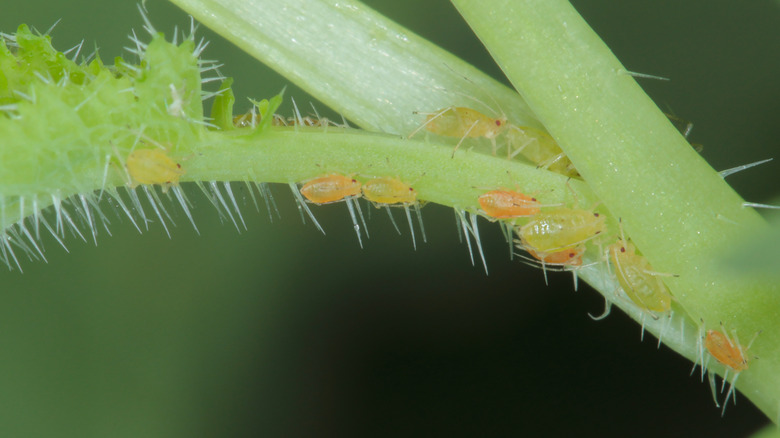
A lot of information about plants that act as pest control is based on the experience of professional permaculture gardeners like me, and anecdotal evidence passed down through generations of gardeners and food growers. The effectiveness of a single plant against a particular bug can be difficult to scientifically quantify, especially as many gardeners choose to companion plant with multiple species and use additional methods and layers of control. However there was a study about companion planting rosemary with sweet peppers and the results were that the rosemary significantly reduced aphid population density, but did not affect the number of beneficial predator insects that also help keep aphids at bay.
Notably, rosemary was also effective against the peach aphid, Myzus persicae, which is important, because this is one of the pests that carries viruses and is notorious for passing viral plant diseases between peppers and tomatoes. Therefore, reducing their numbers reduces the risk of disease transmission. I plant rosemary wherever I know I'll be growing crops vulnerable to aphids, such as peppers, tomatoes, and squashes. I do also employ other natural techniques, such as trap crops and giving any infested plant a good blast with the hose, but rosemary definitely helps reduce overall numbers.
Thrips populations fall in crops grown near rosemary
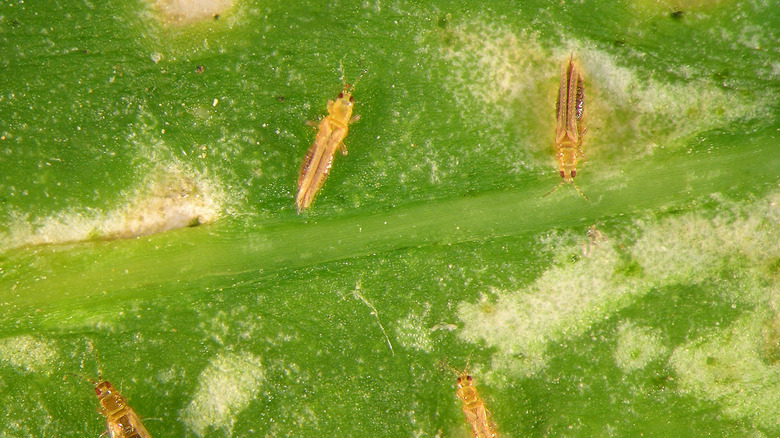
Western flower thrips, Frankliniella occidentalis, do not like some of the oils found in rosemary, particularly alpha-pinene and eucalyptol. These compounds inhibit thrips' egg-laying rates on nearby host plants and also cut the settlement rate. That means that rosemary is a particularly useful plant for susceptible crops, because it actively reduces the population of thrips overall by lessening their egg-laying rate. It doesn't just repel them and shift the problem elsewhere.
All types of peppers and many flowering annuals are vulnerable to Western flower thrips. Having rosemary interplanted throughout both my edible and ornamental garden beds is very useful, especially given that thrips are another insect pest that can carry viruses between plants.
Rabbits leave rosemary-bordered beds alone

It's not easy to keep rabbits out of the garden, which is too bad, because they're so destructive to the space. They get through the smallest hole, can dig under barriers that you install, and will indiscriminately forage on a huge array of plants. They are probably one of the pests that frustrate me most, because it's a constant battle to keep them out of my growing spaces. Every time I let my guard down, thinking I have solved the problem, they find a new way in, especially in my front garden, where it's a little more open and more challenging to pest-proof against mammals.
Rosemary, though, is rabbit-resistant. They mostly seem to dislike its scent, flavor, and texture, so they don't bother it too much unless, of course, other food sources are scarce. A hungry rabbit will eat even things it would normally skip if its preferred foods are hard to find. Although rosemary may put rabbits off and help reduce pressure, you will still need to use extra layers of protection alongside it, including physical exclusion wherever possible. Using hardware cloth in an L shape against the edges of your raised beds, with the outward L buried a few inches below the ground, can be useful to stop rabbits digging under to get to the really tasty stuff.
Deer rank rosemary low on their preferred browsing list

Where I live, deer are a real problem. They are frustratingly and incredibly destructive in the garden. They'll devour an entire tomato crop or strip all the leaves and fruits off the zucchini bed in just a single evening. Deer are also annoyingly persistent. Even though I have dogs that regularly chase them out of the garden, they just keep coming back.
After a great deal of work, my backyard is now pretty much deer-proof, but my front yard isn't and it's just not affordable or practical to make it so. However, because I still want to grow things there, I lean toward plants I know deer don't like, and rosemary is one of my favorites. I'm currently growing a rosemary hedge along the front of my property and deer willingly leave it alone. However, just like rabbits, they will still forage on rosemary if there is a shortage of food. If you need to grow deer-resistant plants, then rosemary should be high up on your list.
Southern purple mint moth caterpillars use rosemary as a host plant

The southern purple mint moth actually prefers rosemary for egg laying, actively seeking out the plant. Once those eggs hatch, they start to feed on the rosemary, concentrating their efforts around the bases of the stems. If you've got a southern purple mint moth infestation, you will see a build-up of frass and tangled webbing at the bases of the stems. This is the first most obvious sign that you've got a problem. As the caterpillars grow, the damage becomes more obvious and the rosemary can start to die back. If there's only a small infestation and you catch it early, then one of your best options is to just pick the caterpillars off by hand and drown them in some soapy water.
If you've got a persistent or heavier problem, then you can use Bacillus thuringiensis (Bt). Bt targets caterpillars and is much less disruptive to predatory insects and pollinators than broad-spectrum insecticides, although it should still be applied carefully and according to the label. It's a useful product, because it breaks down quickly in the environment and is specific to caterpillars, so won't harm beneficial insects like predatory insects and pollinators.
Overwatered rosemary becomes a fungus gnat nursery
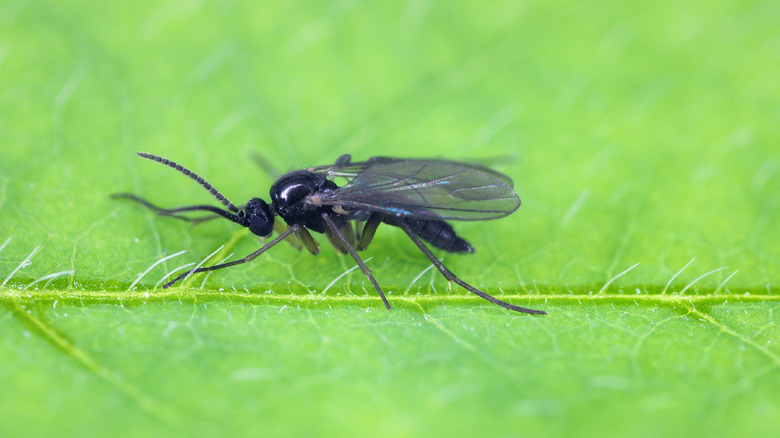
Like many woody herbs, rosemary does not like living in wet soil and it struggles a great deal. If you've got nutrient-rich, persistently wet soil around your rosemary plants, you damage your rosemary and create a pest problem in the form of fungus gnats. That consistently damp, rich soil is the exact environment that they thrive in. Fungus gnat larvae primarily feed on fungi, algae, and decaying organic matter in damp potting mix, although they may also feed on tender roots, particularly when populations are high. The continually wet conditions that support fungus gnats and the feeding activity of the larvae can also leave rosemary vulnerable to Phytophthora root rot.
Although rosemary does need some watering while it's getting established, once it anchors itself into the soil, it really doesn't need a great deal of water, except in times of extreme drought. Avoid fungus gnat problems by only planting your rosemary in free-draining soil and only providing supplemental water when strictly necessary. Fungus gnats are usually more of a problem in container rosemary, because you have to water more often because of the smaller amount of soil available to hold moisture. Plus confined commercial compost tends to hold moisture for longer than gritty free-draining soil in your garden beds. It's just as easy to overwater containers as it is to overwater your garden beds. If you already have a fungus gnat problem, you can use sticky yellow insect traps at soil level to capture the adults and help break the cycle, but you still need to fix the watering issue too. Do note that you should only use insect-grade sticky traps, as you don't want to inadvertently harm small mammals, birds, and reptiles.
Mealybugs cluster on rosemary stems and joints
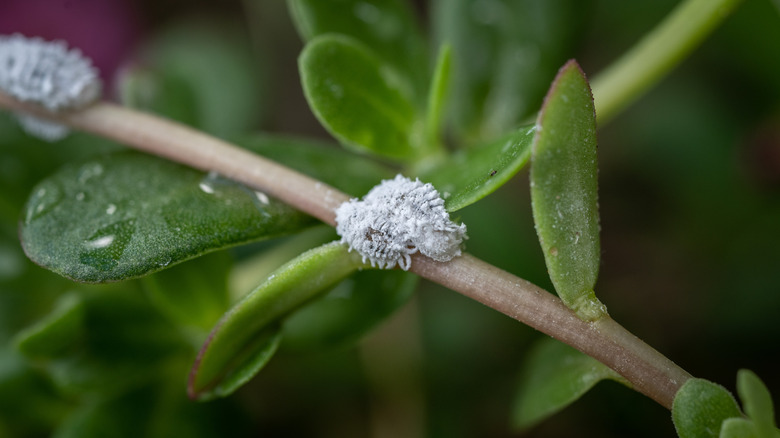
Mealybug clusters are a bit fluffy and they look relatively harmless, but actually they can cause fairly significant damage if left untreated. They're also easy to overlook, but equally easy to spot once you know what it is you're looking for. You'll find mealybugs clustered at stem joints and along new growth. They are masses of waxy, soft, white fur or cotton fluff.
Mealybugs penetrate a plant's soft tissues to consume the sap and, like aphids, they leave behind sticky honeydew. This grows black sooty mold and in severe cases, this inhibits photosynthesis, because it blocks light from reaching plant tissues. Additionally the feeding points can become entryways for infectious plant pathogens that can kill your rosemary. As long as you keep on top of them and spot them fairly early, mealybugs are pretty easy to take care of. Companion planting with peppermint or using peppermint oil also helps get rid of mealybugs. You can dislodge them with a strong blast of water. Where you have a bigger build up or a more persistent problem, you can use insecticidal soap or neem oil. You will need to get into joints and crevices, because that is where mealybugs tend to hide out and are easy to miss.
Spittlebugs colonize rosemary stems every spring
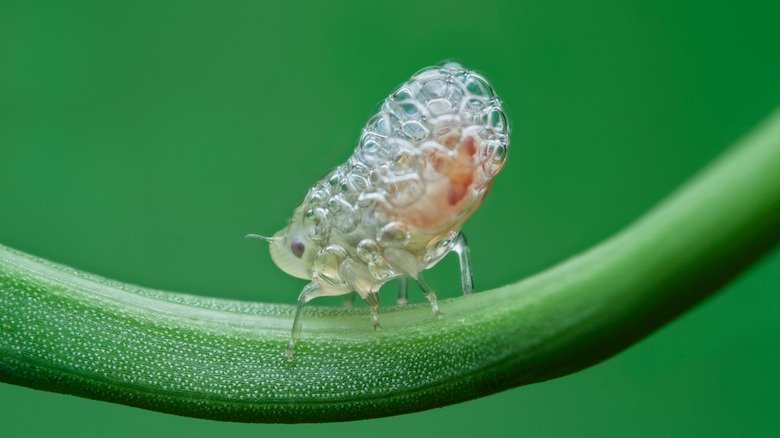
When I was a kid, the white foamy patches of protective goo (known in my neck of the woods as "cuckoo spit") from spittlebug colonies used to really freak me out. Even though I'm now grown up enough to know that the foam won't dissolve my fingers if I touch it, I still don't want them all over my rosemary. Those white foamy patches are surrounding and protecting the feeding nymphs of froghoppers. These tiny creatures pierce the stems and shoots and feed on plant sap beneath their protective foam, and they very much enjoy rosemary. Thankfully, though, they aren't a serious problem and don't harm a healthy well-established rosemary bush. If they do bother you, you can get rid of them with a jet of water from the hose, as this breaks up the foam and dislodges the nymphs.
While I don't worry about spittle bugs too much, if I do see their foamy patches, I will either hose them off or, if there's just a couple, I'll wipe them over with a damp cloth. If your rosemary is already under significant stress, such as plants that have just been transplanted or are otherwise sick or suffering from drought, then pay more attention to spittle bugs and get rid of them whenever you see them, as nymphs feeding is an extra pressure point that a struggling plant does not need.
Spider mites move fast on hot, dry rosemary
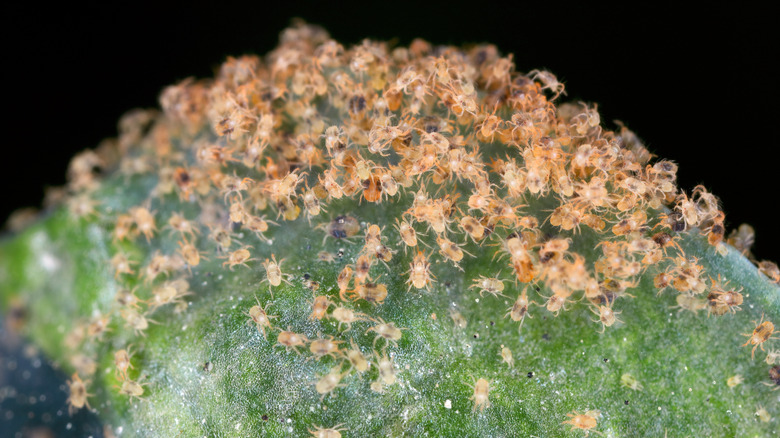
A healthy rosemary plant growing in its preferred conditions creates the perfect environment for the pesky spider mite. They like plenty of heat, low humidity, and dry soil, as do rosemary plants. Spider mites multiply alarmingly quick. By the time you notice you've got a problem, the infestation is usually well established and growing rapidly. The first signs tend to be faint webs at stem nodes and you may see pale speckling across rosemary's needle-like foliage.
To get rid of spider mites or at least get them under control, you'll need to use a strong spray of water, especially around the undersides of stems where the mites congregate and lay their eggs. You'll need to repeat this every few days to break the reproductive cycle and to reduce the number sufficiently. If you've got a real issue, you can also use insecticidal soap or neem oil, but these kill fairly indiscriminately, so can harm useful insects, too. As with all pests, a great method of control is biodiversity and creating a pollinator-friendly garden, which will also bring in predatory insects like hoverflies, ladybugs, and lacewings, that will help to keep pest numbers down. Generally speaking, containerized rosemary that is in a sheltered location is more at risk than rosemary grown out in a bed, where it is more exposed to rain and wind.
Scale insects settle quietly onto woody rosemary stems
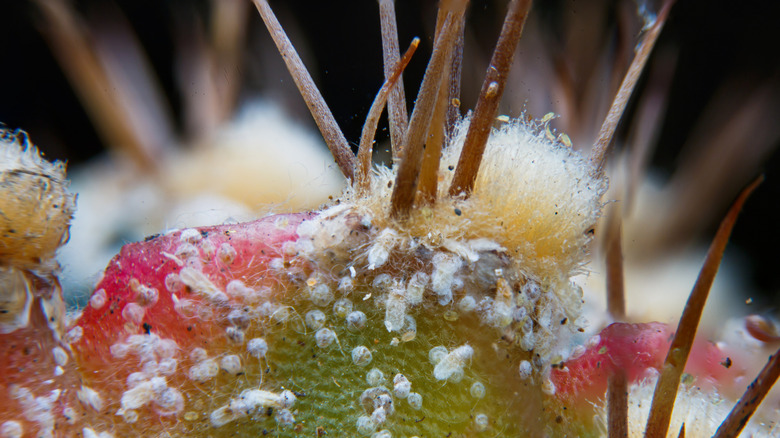
Scale insects are a real pain on rosemary and other woody plants, because they blend in so well they are easy to miss. When they press flat against woody stems with their pale or tan shells, they look pretty much like natural plant texture. Scale insects are another sap feeder that produces honeydew and, in turn, encourages sooty mold to form. Over time they can cause real damage to established rosemary plants.
They can be somewhat challenging to control effectively. Even if you're using horticultural oil or insecticidal soap, for heavier infestations it's usually a better idea to remove the branches with the severest, largest established colonies. That's because, over time, the insects colonize and pack an area very densely, so they are hard to properly control. You'll need to use multiple rounds of treatment to catch any survivors or to stop a second generation re-establishing the colony.