

What Is Red Lighting Used For In Home Design?
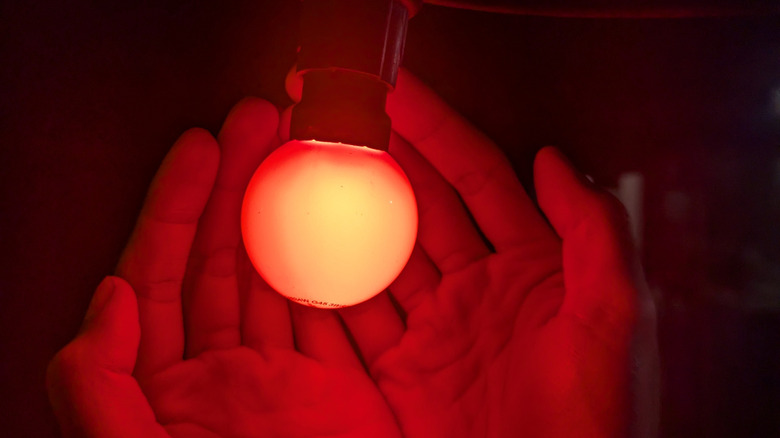
Red light therapy is said to help with skin concerns, sleep, and other aspects of health. However, now it has expanded beyond the treatments you find in doctors' offices and from face masks. Now, people are starting to create the perfect places to add red light in the home. In part, trendsetters are bringing this color into their personal space for the benefits, but also because it heightens emotions like passion, hunger, and confidence.
Since most homes use some form of white light, switching to something like red feels a little out there. It's hard to imagine going about your day with everything shaded red, even if it provides health benefits. Thankfully, you can incorporate red lights into your home in a way that's not very noticeable or domineering. It doesn't necessarily have to go in every room, either. Some spaces will benefit from the lights more than others.
Red light therapy offers a lot of benefits according to Cleveland Clinic, including improvements in acne, reducing wrinkles, and increasing collagen production. However, you won't get the same benefits at home unless you're buying very specific lightbulbs. The lights used in red light therapy and the red bulbs you'll find for your home are different. These are usually red-colored bulbs rather than lights that emit the therapeutic red wavelengths used in red light therapy. Though these specific benefits aren't likely to come your way, that doesn't mean switching out bulbs won't still provide some benefits.
How trending red lights can actually help around your home
One of the best benefits for your home is that it can help improve sleep. Most lights people have in their homes — including electronics, lightbulbs, clocks, and power strips — emit blue light, which is known to disrupt sleep. However, red lights are said to be gentler when it comes to bedtime. They're said to help promote melatonin production and are less likely to disrupt your circadian rhythm.
Additionally, the color red is associated with certain emotions, like confidence and passion, and it's also said to stimulate appetite. Another benefit, especially when used outside the home, is that red lights don't attract as many insects as other colors. It can also scare away pests, which is why adding a red light in your attic and basement is a bizarre trick to keep mice away. White lights can also affect certain wildlife, causing issues with sleep cycles and visibility.
Of course, red light is also harder to see through clearly, and changes how you observe items and paint colors you may have. Because of this, you probably don't want these red lights as your only option. A good idea is to use lamps for your red light bulbs. When you need to do something like put on makeup or pick out your favorite outfit, you can go with the regular, overhead white bulbs, but as you're winding down, you can swap to the smaller red light.
Which rooms will benefit the most from adding red light
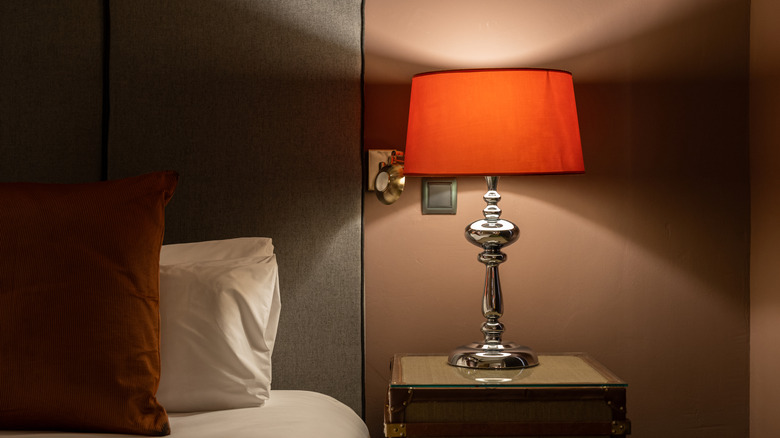
Since red lights are ideal for sleeping, you want to place them in rooms you're likely to use shortly before bed, while you sleep, and in the morning. Areas like your bedroom and bathroom are clear winners. If you have nightlights to help you get around in the middle of the night without stubbing your toe, that's a good place to make the swap as well. You can also get a little more advanced and use color-changing LEDs as an easy solution to create unique colorful lighting moods in any room.
However, you can also add red lighting to spaces like offices and kitchens because of its other purported benefits, like improving attention and stimulating appetite. You don't have to go full red either; you can add a few LED strips or fairy lights so not everything has to be so boldly red. Or, use standard warm bulbs with red lampshades or something similar to cast a faint red glow. Complementing the lighting with red pieces of furniture or paint can also help. You still need to be careful how you use it, as this bold shade isn't ideal for everyone and is actually a paint color that bothers Joanna Gaines.
Red lights around your porch or for general nighttime outdoor lighting can also be helpful. They can make it easier to see the stars while letting you get across the yard without falling over everything. They also tend to disrupt wildlife less than white lights.