

Her 'Yard' Was All Brick And Concrete: Now It's A Container Garden Oasis
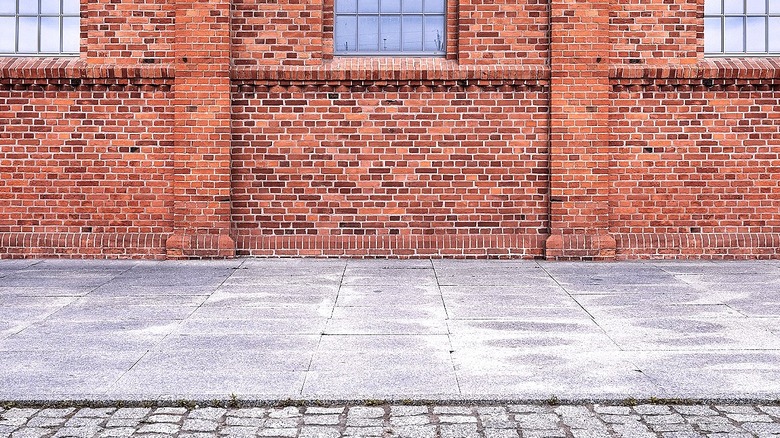
Garden designer Shirley Bovshow was thrilled with the small studio she purchased in Los Angeles, and she was eager to add plantings to the front of it. As she explained in a video filmed for her Eden Maker by Shirley Bovshow YouTube channel, her challenge was not only the minuscule space — 2 feet by 15 feet — in front of the building, but also the fact that there was not a speck of soil to be seen. The urban space was nothing but bricks and concrete, and Bovshow couldn't have her front yard go beyond the brick line, otherwise, as she put it, she would "encroach on the city, which isn't a good thing."
To meet the challenge, Bovshow turned to container gardening. She not only factored in the design but what soil was best to use under the conditions, as well as, of course, which plants would be best to grow. She deployed some basic design principles, too, to engineer a stunning transformation. The concrete and bricks are still there, but they're barely noticeable amid the lush container garden.
Bovshow may be a garden designer, but the urban garden makeover she achieved isn't anything you can't also attain. If your front "yard" is small and paved, container gardening is the way to go.
Choosing the right containers, soil, and plants
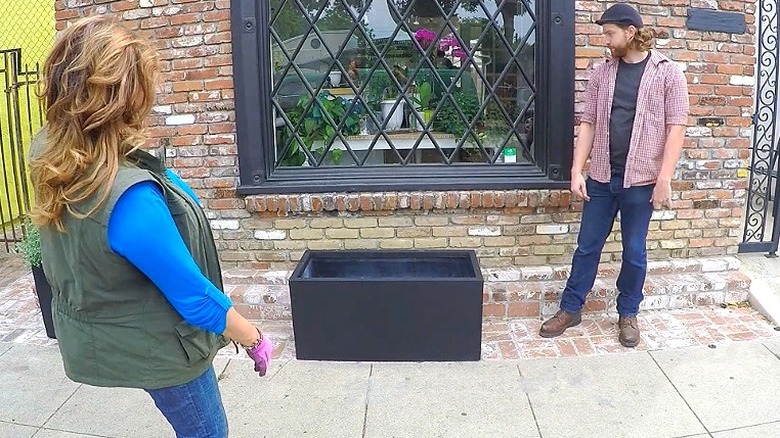
Choosing containers is the first step. Shirley Bovshow's narrow, rectangular planters fit perfectly within her limited space, and the black color played off the studio's architectural details. As for the growing conditions, next was determining what type of soil would be best for LA's Mediterranean climate.
Bovshow's response was to use soil that contains yucca extract; yucca extract enables water to penetrate the soil's surface and assists with nutrient uptake. On that note, for urban farmers, a 2023 study published in the journal Plants, which characterized yucca extract as a biostimulant, showed additional benefits when the extract was used on vegetables — early vigor for plants and natural fungicidal properties.
After pouring the soil into the planters, the next step was choosing the right plants to grow in the garden. Bovshow's top criteria was suitability as container plants and slow growth so plants and roots get disturbed less often as plants outgrow their pots. Slow-growing plants also have lower water demands than fast growers. (Note that meeting a plant's water requirements proves the biggest problem with container gardening, as soil dries out faster in containers than when in the ground. Coming up with a watering plan is key.)
As for these plants, you might also consider dwarf plants for your small garden space, as Bovshow does with the dwarf sunflowers that she plants. She strives for a variety of plant colors and textures, plus plants that have low water and maintenance needs. (Herbs, by the way, would be another great choice here, as they do well in containers.)
Applying some garden-design principles
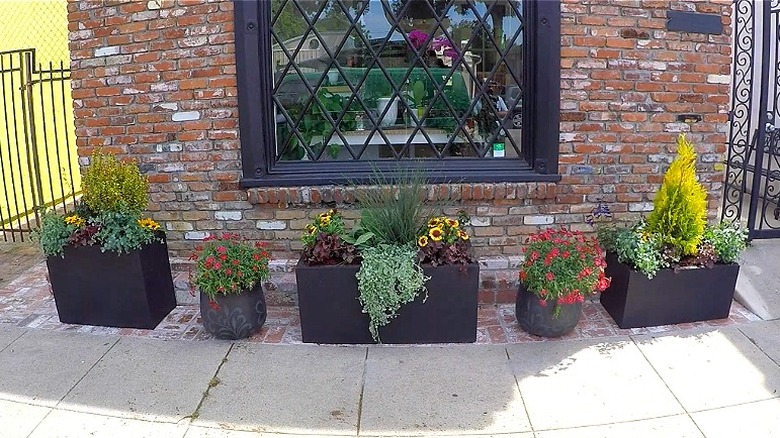
Create a cohesive front garden and make your urban garden look balanced without being "matchy-matchy," as Shirley Bovshow advises. For example, you don't need to have the same plant appear on both ends of the garden display. However, plants that reference one another in size and color can bookend your container garden nicely.
Also, fill in gaps, as Bovshow did by adding round planters between the rectangular units. Create layers, with smaller and trailing plants grown in the front. You may even have the right setting to create layers of containers; Bovshow has a small ledge, for example, for additional plants to sit behind her main row.
You can experiment and determine new ways to make your tiny garden look much more spacious, such as adding trellised plants or lighting. Since containers are easily movable, you could switch them out periodically for seasonal displays. You can even consider raised beds for your small and urban, concrete-laden space.