

Everyone Had Them In The '80s –– Thrift Store Gems We're Dying To Find
We may receive a commission on purchases made from links.
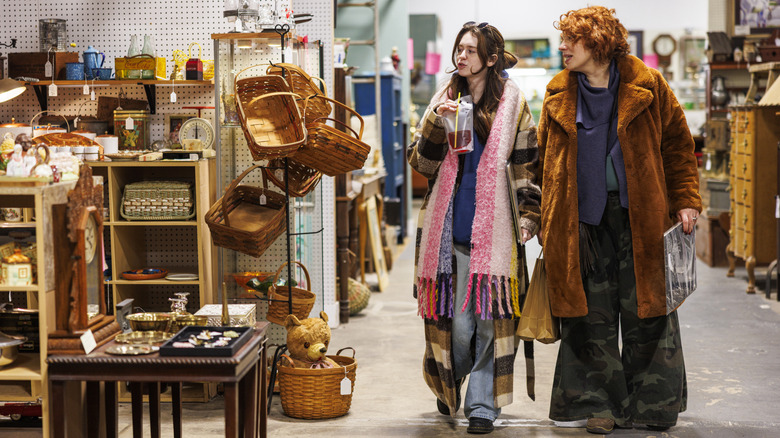
As a child of the '80s, I grew up with all of this stuff, from huge stacked hi-fis and cassette tapes to a kitchen full of Pyrex and a living room with fibre optic lamps, rotary telephones, and the miraculous touch lamps. The '80s was an interesting period for home design, being an amalgamation of futurism in terms of furnishings, accessories, and furniture that still held on to the trends of the previous decade or two. With the '80s came color and light, and the period had a very distinct sense of style. While a lot of it has rightfully fallen out of fashion, there are some gems that many of us are dying to find at the thrift store. As someone who's been thrifting for over 20 years, and a vintage reseller for roughly a decade, I love whiling away a few hours at my favorite thrift stores looking for special pieces that bring me a hit of nostalgia from my childhood.
Not everything is worth having just because it was manufactured in the 1980s, and any of it is only worth having if you actually like it, which I unapologetically admit that I do. In fact, I still have a fabulous fiber optic lamp and I still have a fairly large collection of VHS tapes and a functioning player. I also have some fabulous vintage artwork, which I love for its fantastic kitsch '80s glory. And realizing that the 1980s are now considered retro or vintage is also rather alarming, because that means I'm vintage too.
Fiber optic lamps

When I was growing up, a fiber optic lamp was the epitome of awesome futuristic fabulousness. If you wanted your lounge to look like the future, this is what you bought. Most of these had a black plastic base with a clear acrylic dome over the top, and inside was a great fountain of glowing fiber optic threads cycling slowly through different colors. Most of them hummed very faintly the whole time too. Some were sprays and some were contorted into tortured bouquets of stiff plastic flowers. If you had one of these, I pretty much guarantee that you took the dome off and spent at least 10 minutes dragging your fingers through those weirdly glowing strands to watch the lights move. Some of them, especially the flower bouquet lamps, also had a wind-up mechanism that you'd associate with an old-fashioned musical jewelry box with a little ballerina in.
Just make sure that you test it be this fun '80s novelty before you buy. There's generally a bulb that sits in the base of these lamps and the light runs up the thin bendy plastic fibers to glow at the other end of the filament. Bulbs can usually be replaced, but if the strands snap and the lamp is missing a third of its fibers, it's probably not worth purchasing. Make sure you spin the color wheel too, as sometimes the motor seizes up, and you wouldn't want to purchase that unless you have the skills to fix it.
Plaster floor lamps
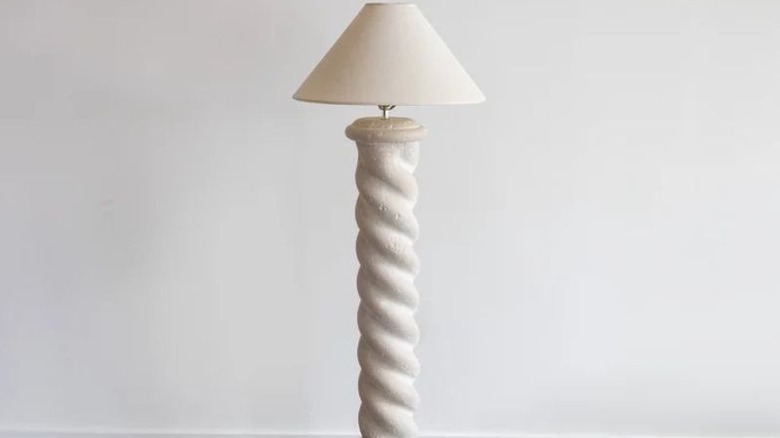
I always thought those big old plaster floor lamps were incredibly ugly. I hated the one my parents had, but they are having their own comeback moment. These are big chalky things, weigh as much as a small child, and are usually the color of unbaked shortbread. You'll commonly find them in a thick spiral or twisted column design with a heavy base and a pleated shade on the top. Today, their neutral porous finish works surprisingly well in busy rooms and those with neutral color palettes. And, of course, they can be upcycled into fabulous funky finishes. Plaster was the affordable '80s default for anything sculptural and, alongside plaster floor lamps, you'll find end tables, wall sconces, and a host of other sculpted fixtures and accessories.
When purchasing one of these, check the base for chips, as plaster crumbles, especially at the corners. You'll also want to check the switch or cord too, because you don't want to overpay if it needs rewiring. If the shade is original, there's a good chance it may be grubby or have signs of wear or repair, in which case you are probably better off replacing it with the shade of your choice.
Lotus lamps
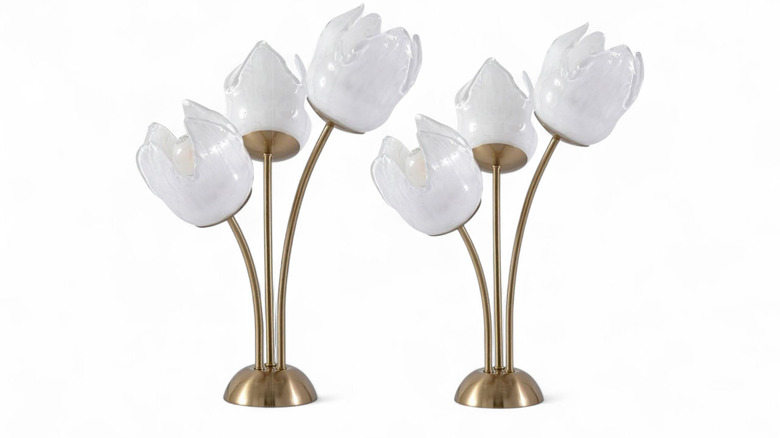
In typical '80s extravagant chic, lotus lamps are elegantly too much. They are available in different sizes, from a single lotus-shaped flower that acts as a small bedside or accent lamp to larger three-flowered table lamps and even bigger multi-lotus floor lamps. They're available in lots of different styles, but they generally have a brass base and brass and glass petals fanning out around the bulbs in a lotus shape.
These lamps are the epitome of Hollywood Regency style and in the '80s, you found them in living rooms all over the country. They are exquisitely over the top and look fantastic even today in the right setting. One of the most sought-after lotus flower brands is Feldman Lighting. They are so highly prized that one six-light lotus chandelier from the Feldman Lighting Company sold for $12,500.
Touch lamps
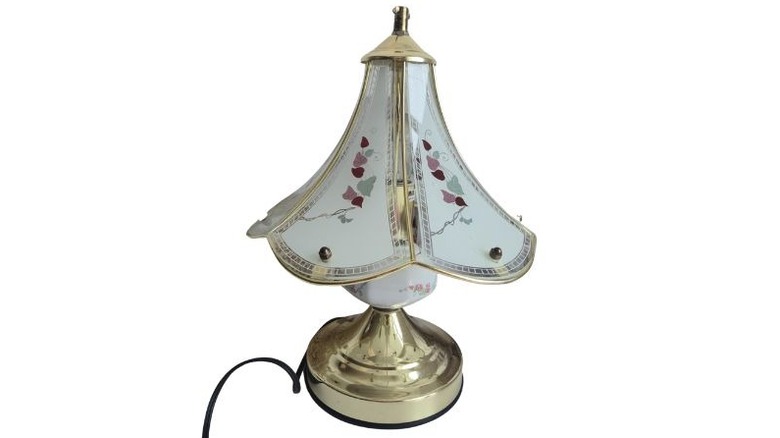
Although we take all kinds of technology for granted today, in the '80s, a touch lamp seemed like something straight out of the future. This is really one of the lamps that defined the '80s. You have to remember that this was a time when not every TV had a remote control, and many homes still had a rotary telephone. Mobile phones didn't really exist yet, and the idea of controlling your home's thermostat, lighting, or TV with a small plastic rectangle like we carry everywhere with us today seemed like science fiction.
A touch lamp seemed pretty darn cool and some of them didn't just turn on and off. They went through multiple lighting stages, from dim to eye-blindingly bright. You'll find touch lamps in all kinds of designs and styles, including brass, glass, or backlit stained glass wildlife scenes. I still really love that particular design and would love to find one again, but they do need testing, because the control module inside the base can give out. Before you purchase, make sure you plug it in at the store and test it. If you can get it at a good price and have a few basic skills, it is actually pretty easy to switch out a broken touch module for a working one. They are still wonderful functional additions to your home.
Smoked glass chandeliers
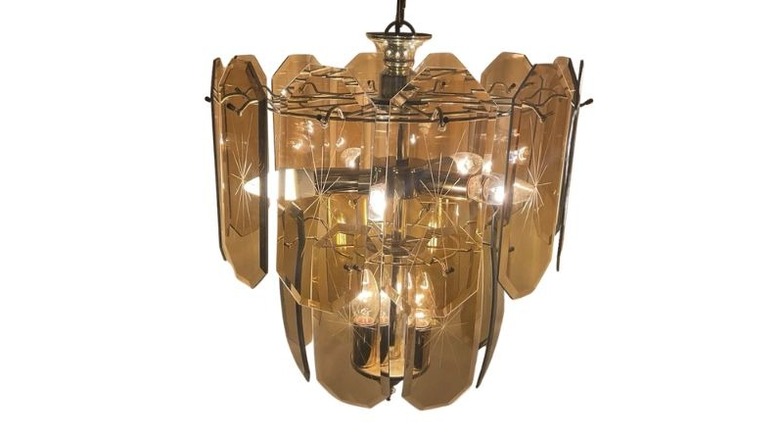
As much as the '80s was full of bright colors, neons, futuristic silvers, and sleek blacks, there was also a disturbingly large amount of brown, even extending to lighting. Smoked glass chandeliers usually had a brass frame and lots of glass, sometimes grey, sometimes amber, frequently brown. They created an oddly gloomy amber light and were very popular in dining rooms and entry halls.
Strangely enough, they are making a comeback, but not just as hanging light fixtures. Often, they are combined with an inexpensive lamp kit from the hardware store and turned into geometric table lamps. Some had a sleek and contemporary design consisting of a series of flat glass plates or stacked tiers of glass rings. Others were more abstract with sweeping curves and ornate drops. Some were reminiscent of bell flowers and still others were more ornate and in the style of a traditional candle-holding chandelier with upward-facing light bulb receptacles. If you are shopping for one of these creations, make sure that all of the glass plates are in top condition, as they are very difficult to replace.
Rack stereo systems
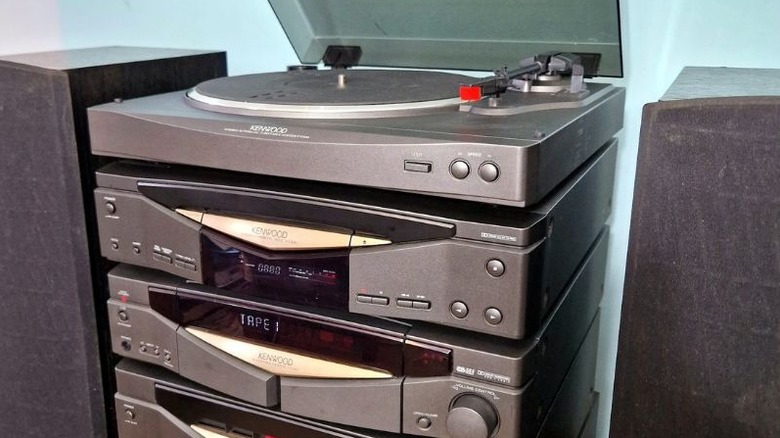
I think every household aspired to own a rack stereo system in the '80s. This was long before the days of having music on your phone. Such a thing did not exist. Instead, if we wanted to listen to music in the house, we did it on a hi-fi system or a rack stereo system. These were towers of matching black or sometimes silver components with rectangular speakers to either side. If you were really highbrow or considered yourself an audiophile, you may have even had an expensive system sitting within a purpose-built cabinet with a smoky glass door. Rack stereo systems had a receiver and tuner for radio and a dual cassette deck. They usually also had a turntable on top for your vinyls.
These audio behemoths, whether in a cabinet or not, were big and heavy. Although they looked awesome, they weren't always of particularly good quality. People shopping on a budget would usually sacrifice quality, particularly in terms of the speakers, for a system that looked the part. If you're buying a second-hand one today, make sure you check the speakers, because it may be best to buy the tower, but invest in a better set of speakers separately. You'll also need to check the belts on the cassette mechanism and look for any perished rubber, although these aren't deal breakers if you know how to replace them.
Boomboxes
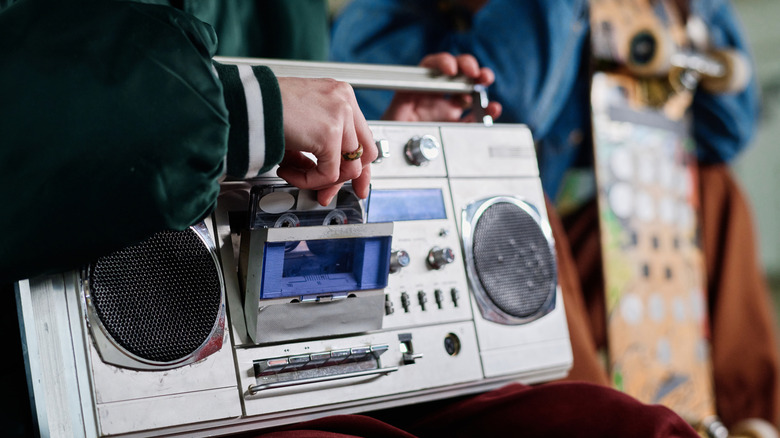
If you were one of those people who traveled with their boombox on their shoulder, blasting music on those super modern twin cassette decks, you would have been one of the coolest kids on the block. These are the much more tactile and awesome equivalent of today's Bluetooth music speakers, but these things were ridiculously oversized. The bigger and louder the boombox, the more people took notice of your declaration of status. The Conion C-100F, for example, which came out in 1984, was almost 30 inches wide and weighed over 26 lbs. To operate it, you needed a whopping 10 D-cell batteries, which is just ridiculous by any standard.
Today, this ridiculousness is still awesome in a way that only '80s items can be. A good quality boombox from a brand like JVC in working order can cost you hundreds of dollars on collector's marketplaces. If you're lucky, you can find one at a thrift store for just a few dollars. Make sure you open the battery compartment before you pay. Corroded terminals from old leaking cells basically eliminate all the value, because it renders the boombox inoperable.
VHS players and tapes
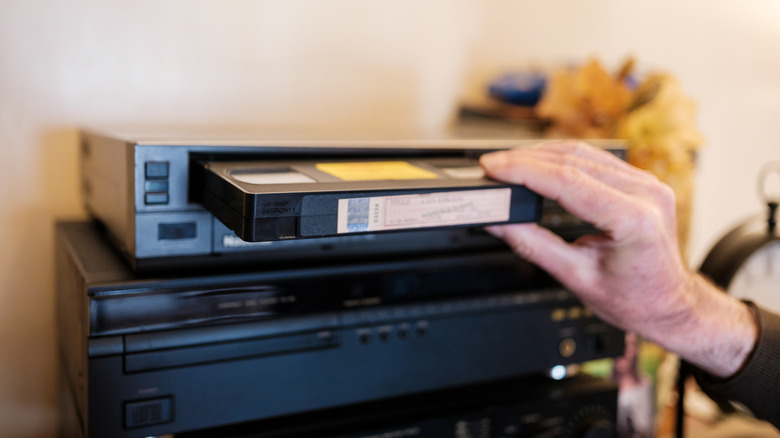
Even though they stopped producing VCRs or VHS players in 2016, they've never truly gone away. Many people, myself included, still have a VHS player and have a collection of tapes to go in them. Whether that's your favorite Disney movies from when you were a kid (for me that will always be "Robin Hood"), or home movies recorded on those giant clunky old camcorders that weighed an absolute ton.
Watching a movie on a VHS player was a ritual that can still conjure up a huge amount of nostalgia for many: the clunk of the tape going in, the whir of the rewind, and then the FBI warning glaring at you before the titles roll. There's just something special about watching your favorite movie on a VHS player. They are dirt cheap at the thrift store, but before you buy, if you can, make sure you test the tape transport, as sometimes the mechanism can fail (although it is an easy fix). If you are a tinkerer, you may want to buy two of them so that you have one to sacrifice for parts to keep the first one running.
Cassette tape racks
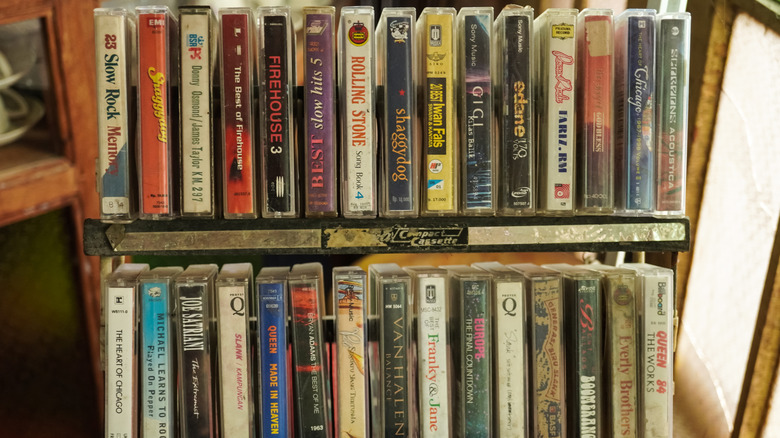
In an era when all of our music was on bulky storage, we needed some way of keeping it safe and tidy, and cassette tape racks were the answer. They could be wall-mounted or freestanding, and usually had brown veneer, sleek black, or space gray finishes. These racks had dozens of narrow slots precisely sized for one cassette, and sometimes they had a shelf without divisions where you could put your twin cassettes and multi-packs.
While most people don't have a collection of cassettes anymore, the storage racks are still pretty useful, especially if you give them a little bit of an upgrade or reconfiguration. If you pop the back off, you can reconfigure the slats inside to suit whatever you want to display, then stain or paint the whole thing to match your decor. You can then turn these '80s thrift store finds into smart hanging storage and use them as inexpensive custom curio shelves for displaying things like fossils, painted miniatures, and other small random collectibles.
Vintage Tupperware containers
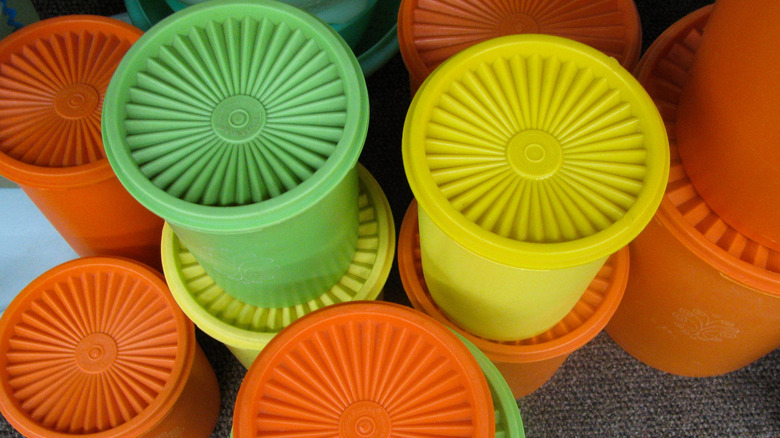
Every '80s kitchen was overflowing with vintage Tupperware in harvest gold, avocado, and burnt orange. Because they were expensive and must-have products, they were usually cared for. Hence you can still find them in good condition in thrift stores. However, true '80s vintage Tupperware is not food-safe by today's standards, as older containers have been known to test positive for contaminants like arsenic, mercury, cadmium, and lead. Plus, BPA didn't leave the Tupperware line until 2010.
Those beautiful, highly sought-after brightly colored ones are the biggest worry because the color pigments are where the heavy metals can be found. They are fine to use for non-food storage. I have a lovely rainbow selection that I use to store my small craft supplies. Avoid ones that are scratched, cloudy, warped, or stained, and just stick to the ones that just need a bit of a wash to be good as new.
Forest Fancies Pyrex
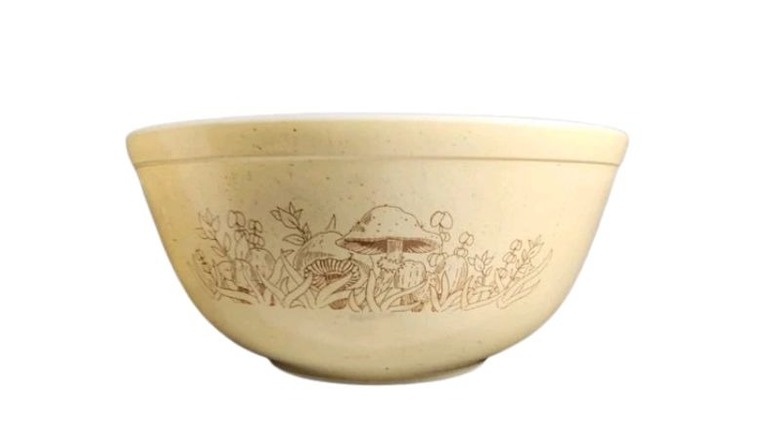
Most of the really collectible Pyrex comes from the mid-century, but the Forest Fancies range arrived in 1981. Forest Fancies Pyrex for me is a real shot of nostalgia. The dark brown mushrooms and the lovely grasses screen-printed onto speckled almond opalware just take me right back to my childhood kitchen. My mother adored her Pyrex, and while I'm not such a fan, I do really love the Forest Fancies pieces, even though they are hard to find because they only ran from 1981 to 1986.
These may not be as valuable as some '70s Pyrex patterns, but at full resale value, you can expect to pay anywhere from $100 to $300 for a complete set of mixing bowls, Cinderella bowls, or casserole dishes. I much prefer the thrill of finding one for just a couple of dollars at the thrift store and building my collection slowly. Forest Fancies had clear glass lids and you'll often find them at thrift stores with mismatched opal lids that are the same size, but these are not true complete pieces. Do check that they don't have lots of dishwasher wear either, as this kills the value and ruins their appearance.
Patrick Nagel prints
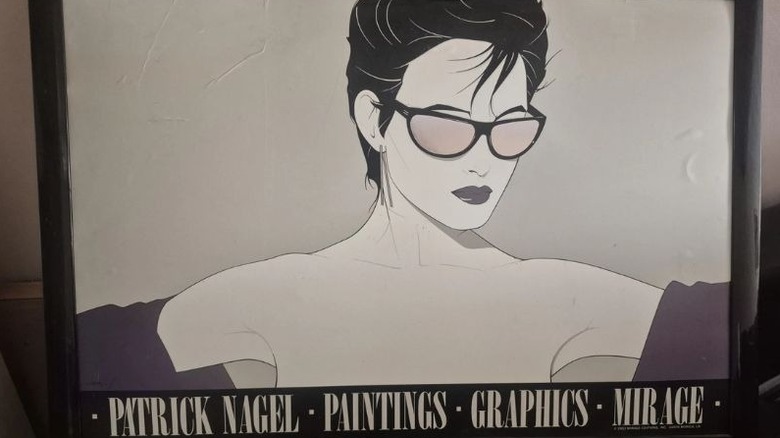
The chances of you finding a Patrick Nagel original at the thrift store are beyond slim. You may, however, stumble across one of his very distinctive prints. His art characterized a large segment of this decade, and is immediately recognizable. He uses flat planes and black and white with pops of red, and maybe a little color in the eye. Most of the women in Patrick Nagel's artwork never seemed to look right at you, but always just over your shoulder.
His work was everywhere during this decade, especially in teenage bedrooms and hair salons, and one of his best-known pieces is perhaps the artwork for Duran Duran's 'Rio,' which came out in 1982. He sadly died in 1984, aged just 38, so his originals are very limited in number, but you can usually pick up a print or poster in mint condition for just a few dollars. I would, however, be suspicious of anything that's signed at the thrift store.
Ferraro prints
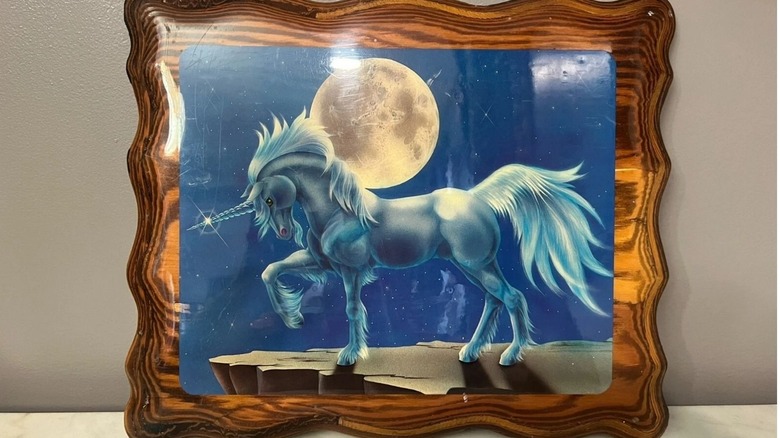
Another style of iconic '80s artwork that has regained popularity are Ferraro prints. Her majestic unicorns under improbable moons and glamorous, decadent women in jewel-toned gowns adorned the walls of teenage bedrooms all across America during the '80s. Because of their nostalgia, people who had these prints in their bedrooms want them all over again. And there are whole new generations of people who are discovering them fresh and finding them to be utterly magnificent, and they're not wrong. These fantastical prints are a quick and easy way to bring the '80s aesthetic to your living room.
You may even be lucky enough to find one of these pieces printed on mirror tile, which is just so exquisitely '80s. They're also heavier, harder to find intact, and more collectible. If you're looking for something with real value and provenance, look for a publisher's line such as Scafa-Tornabene Art Publishing of West Nyack, New York, in the lower left corner. Otherwise, just be happy that you found a fantastic piece of '80s art history for just a couple of bucks.
Etched mirrors
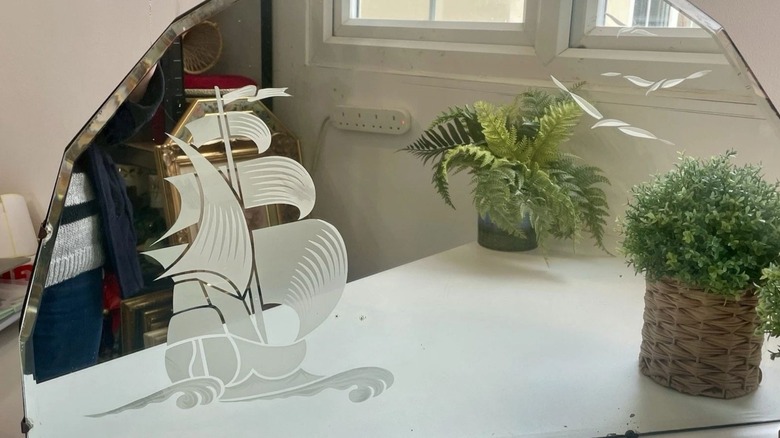
I never really understood the appeal of etched mirrors, but they were everywhere in the '80s, and they are, oddly, one of the '80s home decor trends that are making a comeback. I remember my parents having a large full-length etched mirror in the hallway with a brass frame and a strange floral design of tulips and butterflies etched across its surface. They are part of the '80s Art Deco revival and they adorned many an '80s hallway or living room, hanging above a sideboard. There are lots of different versions of etched mirrors beyond just florals. You may find nature scenes or Art Deco style women in 1920s garb, and you will find them in a triptych, with three individual etched mirrors forming one whole piece.
When looking at etched mirrors, whether individual panels or triptychs, make sure you look at the silvering. If you spot any black speckling around the edges, this means that moisture has got behind the glass and it will keep spreading. If the frame is damaged, but the glass mirror itself is intact, then it's still worth buying at the right price, because a frame is easy to fix. Damaged silvering is a permanent issue that you just can't remedy.