

She Buries Overripe Banana Peels In The Garden: Game Changer Or Raccoon Bait?
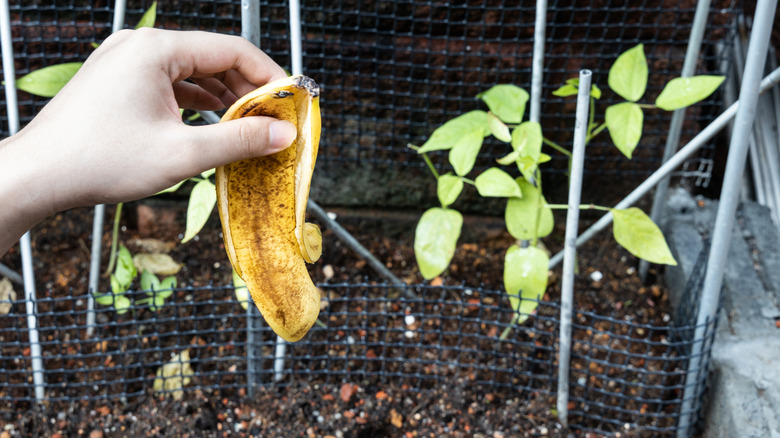
There are plenty of gardening hacks that you're likely to come across if you're in the habit of scrolling through social media. Some are good, but some aren't so great and should be avoided. Such is the case with a hack by Instagrammer sahars_suburban_garden, in which the creator extols the virtues of burying overripe bananas in a garden bed.
While bananas contain loads of potassium, which is good for plant growth and flowering, they need to decompose first before any nutrients are released and made available to the plants. You see, it takes quite a few weeks for the peels to break down, during which time the microorganisms will utilize available nitrogen in the soil for the task. This means that if you bury overripe bananas near existing plants, there may be a lack of available nitrogen for the plants during decomposition, contrary to what is said in the video.
Essentially, you'll find that burying those overripe fruits near your vegetables is going to be counterproductive, as your crops won't get the nutrients they need quickly enough due to the lack of decomposition. There's also no scientific evidence to suggest that bananas can repel soil-borne diseases or even pests such as aphids. On top of offering no notable benefits, burying rotting fruit in your garden could also attract a number of hungry guests.
Other drawbacks of burying overripe bananas and what to do instead
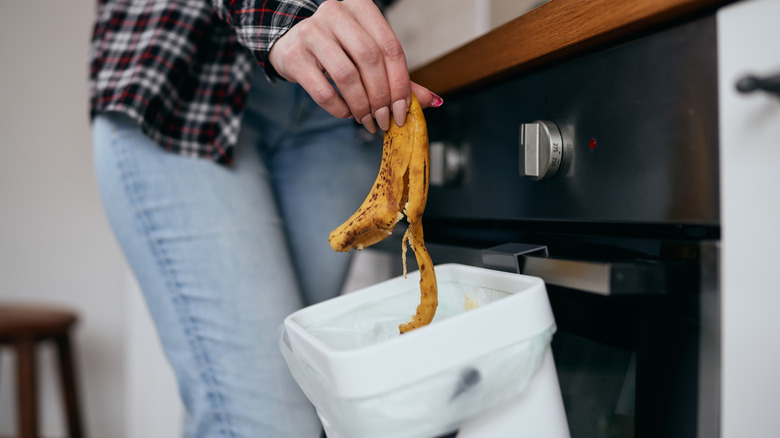
The major drawback to using banana peels as a fertilizer for your houseplants is that they can attract pests such as flies and fungus gnats. Not to mention the possibility of harboring mold. This might be okay in the compost pile, but it's not really something you want in your garden soil. There's also the danger of rodents, raccoons, skunks, or opossums digging up your garden in order to find the banana peels or the decomposing fruit to feast on.
If you do happen to have overripe bananas, the best thing you can do with them is add them to your compost bin. This will give them time to break down so their nutrients reach your plants when the compost is mixed in. Chopping banana peels into small pieces before adding them to your compost is a good idea, as well. Smaller pieces break down more quickly, helping turn food waste into nutrient-rich compost sooner. At the end of the day, it's the compost you've created that will be most beneficial to your plants and your garden overall.
Another option if you have an abundance of banana peels is to steep them in water to make a fertilizer tea. This liquid concoction is a nice tonic for flowering and fruiting plants that love banana peels and the potassium they contain. Just make sure you use this in addition to the usual fertilizer that you give your plants, as it's not a complete nutrient solution. You could even make a powerful banana peel and vinegar fertilizer as a supplemental boost for your plants.