

You Can Only Buy Fruit Tree Scions For A Few Weeks Each Year (& Here's Why)
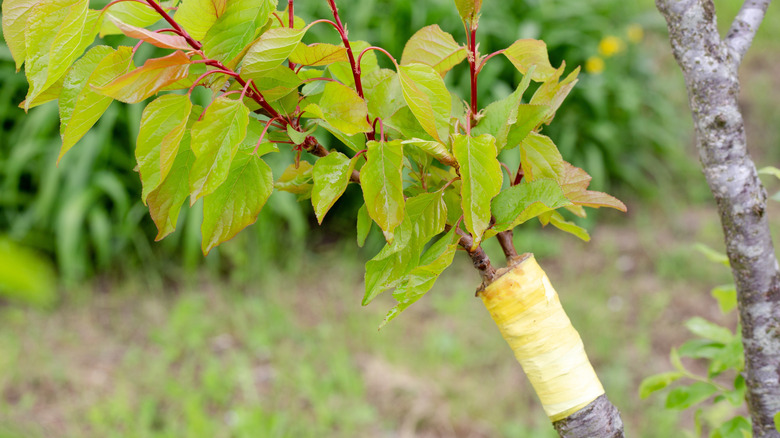
Those keen on growing fruit know that one of the best tips and tricks to help your fruit trees grow and produce faster is to start with grafting. As opposed to seeds that may not be viable or reliably clone their parent plant's characteristics, grafting ensures you get the desired plant with earlier fruiting. Grafting is a technique where compatible rootstock and scion wood are fused. The rootstock develops roots and determines the overall height, while the scion controls the top growth and fruit variety and flavor. You may notice that commercial nurseries ship scions only for a limited period: typically in March and April. That's because this short window provides the perfect connection between scion collection and its eventual grafting on the rootstock.
You see, for a grafting union to succeed, scion should be collected during dormancy. Even though the specifics vary across species and locations — for instance, dormancy breaks sooner in warmer areas or for early-flowering varieties like plums — the general window for scion collection falls in winter or early spring months spanning February and March. Shipped right after, scions reach your doorstep just in time (or a short while sooner) for grafting, ensuring your newly propagated fruit trees have the best shot at thriving.
Scions have a short collection window
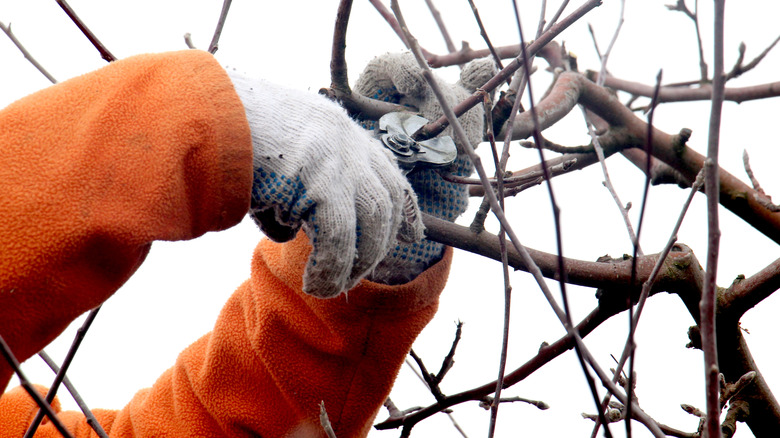
When you're grafting fruit trees, it's ideal to work with scions that are only one season old. Compared to old growth, they're smoother and easier to work with and tend to grow faster. In other words, you're looking at new wood that has grown over the spring and summer months and has accordingly gone dormant. In fact, many nurseries maintain mother blocks of fruit tree varieties, which are pruned in winter, as they yield the healthiest new growth for scion. As you can imagine, this process can involve years of advance planning. But since it's easier to estimate the overall stock they may be able to harvest in a given year by the time fall rolls in, they may start taking orders sooner. It also gives them sufficient time to label the stock before shipping. The placement window may continue into spring until stocks deplete.
It's equally important that the scion is still dormant at the time of grafting and that no buds are breaking, as they may utilize the resources required for vegetative growth, causing the grafted tree to fail. Collecting scion in early winter is an option. However, you can't graft it immediately, so you must store it for a much longer duration in this case, risking desiccation. That's why collecting scions is better towards the end of winter, when the risk of freeze injury is minimal, yet temperatures haven't warmed to the point where buds would swell and terminate the union.
Refrigerating the scion may help in some cases

As mentioned, some fruit trees wake up from winter sleep sooner than others. For this reason, most scions last in cold storage only for a limited period, usually between two and five months. Take stone-fruiting or apple trees, for instance. In mild climates, they may set buds in late winter. If you try to fuse this budding scion with rootstock, the graft union will not have sufficient time to heal or develop resource-transportation tissues, causing the new leaves to fail. So, storing them in a refrigerator to prolong their utility isn't possible, and you must graft these scions as soon as you receive them.
However, for late-budding varieties, like pawpaws and persimmons, you usually have to wait a bit longer — into May or June — until grafting becomes possible. That's because scions fuse better over a rootstock that's already leafing out. Although a few fruit nurseries may take on storage, allowing for later deliveries, most others expect home gardeners to assume this task. Fortunately, it's easy enough to tackle. Simply replace the packaging around the scion with damp (rotting can occur if it's too wet) newspaper, seal it in a Ziploc bag, and place it in the refrigerator. Avoid keeping it in the fruit compartment, as it may be exposed to ethylene gas, which can terminate all buds. Do note that scion can develop mold or rot, so it should be used soon. If you're looking to bud graft in late summer, it's best to purchase budwood rather than risk storing scion until then.