

12 Items You Should Never Buy From A Garage Sale
We may receive a commission on purchases made from links.
I'm an avid thrifter, a vintage reseller, and have been frequenting garage sales for well over 20 years. They are some of the best places that I know of to find amazing bargains on things such as cast iron pans, of which I have a lovely collection, collectible, solid wood furniture, vintage garden tools, and hand tools that have been kicking around for decades but are still in fantastic condition. Haunting your local garage sales is the perfect way to spend hours finding hidden treasure this summer.
However, while there are items that are always worth buying at garage sales, I have also learnt that there are certain categories that you should avoid. They might be hazardous or dangerous or carry unwanted pests or problems that aren't immediately visible. That's not to say the seller is being dishonest, because with many of these problems, there's a very good chance that the seller doesn't know they exist either. Bed bugs, for example, hide in upholstery seams and are invisible to a casual glance. Lead in a ceramic glaze isn't something that most people would even consider and isn't something you can identify without a test. Worn electrical insulation or dodgy insulation with internal wiring isn't obvious. However tempting the price is with certain items, the savings aren't worth the substantial risk. Solid hand tools, wooden furniture, hardware and kitchenware are all definitely worth hunting at a garage sale, but there are a number of things you should be wary of or avoid altogether.
Upholstered furniture
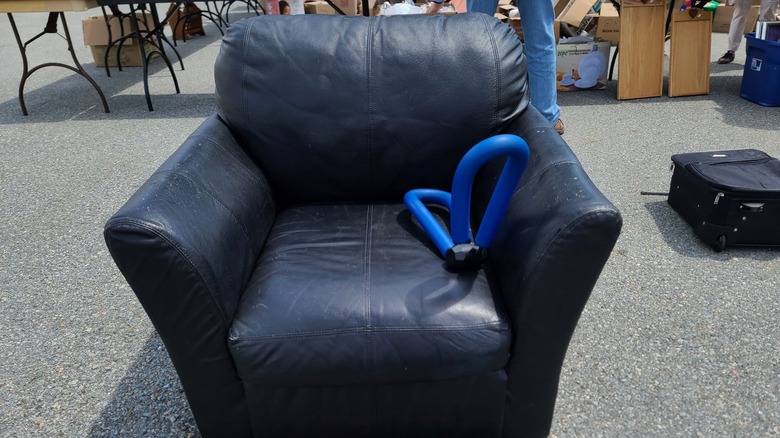
I've seen some fantastic upholstered furniture at yard sales, including most recently a gorgeous armchair with enough room for both my whippet and me to snuggle on when I want to curl up with a book. But these are items that I never buy, however cheap they are or however clean and well-looked-after they appear. Bed bugs are the hazard here. They are known to nest in upholstery seams and can get inside cushion material, including in the fabric and the filling beneath removable covers. It's just not worth the risk.
In most cases, at a garage sale you just don't have enough time to give an item the thorough inspection that it needs to guarantee that it is bed bug-free. With an armchair, for example, to be absolutely sure, you'd need to take the whole thing apart and check every seam and fold. It's just not practical to do that in someone's driveway. An item can have a significant infestation and still look perfectly clean and serviceable. There is a good chance that if you bring bed bugs into your home in upholstered furniture, consumer-grade sprays and a basic steam cleaner just won't be good enough to get rid of them. The insects retreat into foam and structural cavities that a steam wand can't reach. Professional extermination is the only reliable option, and a professional whole-home bed bug treatment typically costs around $2,500 (with repeat treatments often becoming necessary).
Space heaters
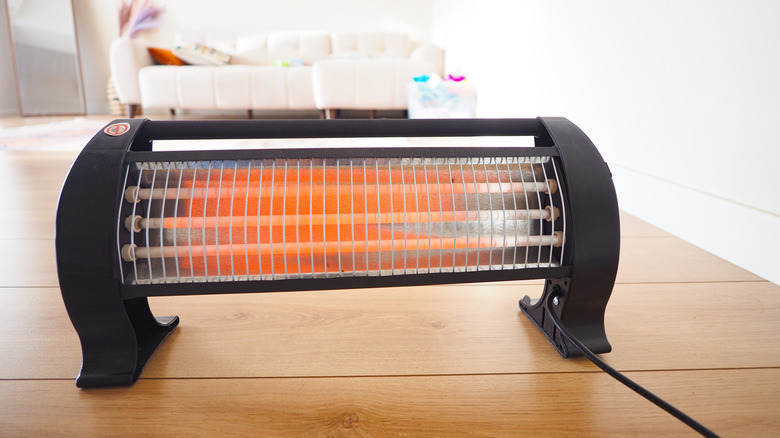
Space heaters are risky even when you buy them new. The problem with a secondhand space heater isn't just the potential age, but all of the things you can't assess just by looking at the outside of the unit. Portable heaters accounted for roughly 1,700 residential fires and 70 deaths in the United States per year, from 2017 to 2019, according to the Consumer Product Safety Commission. These fires are typically caused by electrical surges, but the danger of these units can be exacerbated by age-related factors like degraded internal wiring, a failing thermostat, or a worn-out tip-over shut-off. None of these things are visible from the exterior.
Current safety standards require specific protections in space heaters, including a tip-over mechanism that cuts the power immediately if the unit falls. Age is a factor here, as some older models may predate some of these requirements. Plus, even a heater that originally met them can have those mechanisms wear out over years of use, and you just can't test any of this. Space heaters are cheap enough from new that trying to save a few dollars on a second-hand one just isn't worth the safety risk.
Extension cords and power strips
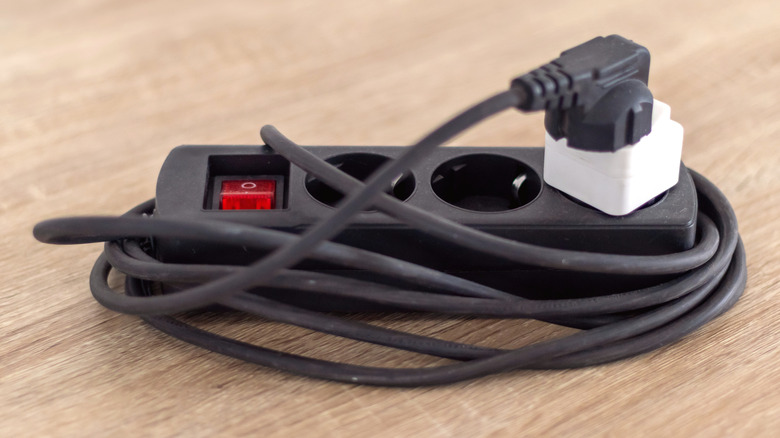
Extension cords and power strips seem like they should be pretty solid garage sale bargains because you can usually find them for a couple of dollars. Most people think as long as the wire and plug are in good condition, then it's probably safe. That may be the case, but I would never risk buying these items at a second-hand sale because, much like space heaters, you can't see what's going on inside. You don't know whether that extension cord has been used occasionally over a 6-month period or has been heavily overloaded for a few years. You don't know if it suffered any drops, impacts, water damage, or anything else that could make it a safety hazard.
Electrical distribution equipment (like power strips and extension cords) is among the primary culprits in electrical home fires, according to the National Fire Protection Association. Years of overloading, moisture exposure, or physical damage can leave a used cord unsafe even when the exterior appears intact. Just like with space heaters, you often can't see any of these things from the outside. A second-hand extension cord could have undersized wiring for the load you will eventually put on it. Its insulation could have become brittle inside, or it could have suffered water damage. These kinds of issues, which are impossible to see at a casual glance, become fire and shock hazards. Extension cords and power strips are so cheap that, for the sake of safety, you are much better off purchasing one new.
Shoes

A worn shoe compresses and deforms to accommodate the foot of whoever wore it. You'll get wear patterns on the outside and inside of the shoe based on the previous owner's gait. You can't necessarily see the degree of internal wear, nor if, how much, or at what points the midsole has been permanently squashed or compacted, even if you can see the gait pattern and foot positioning issues on the sole. This seems like a relatively minor inconvenience for the money you can save on buying secondhand shoes. But even those in good condition can cause somebody with a different foot shape and gait pattern to feel uncomfortable. The deformed support structure can create pressure problems and can inhibit your own natural gait.
Then there's the hygiene issue. The interior of your shoes is warm and dark and spends endless hours absorbing your heat and perspiration. So it's the ideal environment for the fungi that cause issues like athlete's foot and fungal nail infections. These are notoriously difficult to treat and alarmingly easy to pick up from a stranger's shoes. It's best to avoid even lightly used shoes at garage sales. If, however, you find brand-new shoes with the tag still attached, then they are a bargain that you probably don't want to miss.
Pre-1978 painted furniture and decor

Before 1978, lead paint was common in painted furniture and decor items. In 1978, lead-based paint containing more than 0.06% lead was banned for residential use in the United States. Any painted furniture, decorative piece, or architectural salvage that was made or painted before 1978 could conceivably contain dangerous amounts of lead paint, and you can't tell just from looking at it. There is simply no visual way to identify lead paint.
But, because vintage painted furniture is making a design comeback, you may find these pieces at garage sales. You may also find salvaged architectural elements from old home refurbs. If the paint is damaged, the items pose an even greater threat than those with finishes still in pristine condition. If you really do like older painted items, then you can carry some lead quick test swabs (like the AAWipes lead test swabs) to check items before you purchase. If you just have a casual or passing interest, then it's probably safer just to avoid any painted item of unknown age, especially if it has visible wear to the finish. You can also, of course, learn to DIY a distressed painted look on newer furniture to get the vintage feel without the risk.
Pet supplies
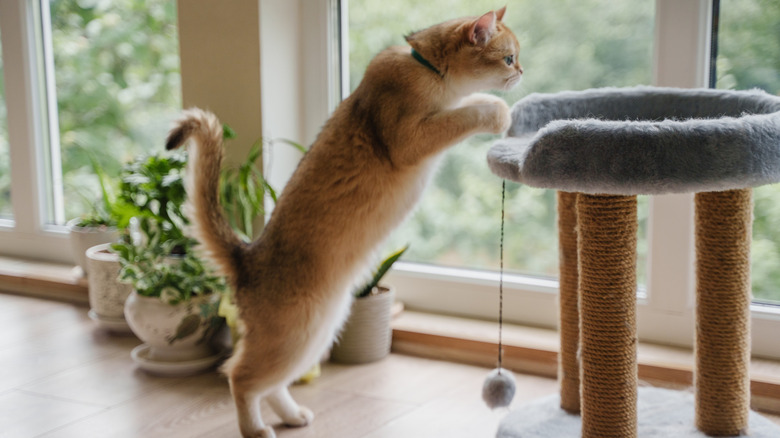
I never buy pet supplies second hand. My pets are too important to me, and the risks are just too great. Fabric pet beds, stuffed toys, and carpeted cat trees, for example, are all high-risk secondhand purchases, as they can harbor bed bugs, fleas, and other parasites or their eggs, which can be difficult to get rid of properly. I work hard to keep my pets in tip-top health, so I don't want to bring home anything that could harm them or make our lives more difficult.
Plastic food and water bowls are also something that I would recommend skipping. I loathe plastic bowls even when new and never use them for my own pets. Secondhand, they can collect bacteria that is almost impossible to remove. Plastic scratches and wears so easily, and those scratches can hold all kinds of bacteria. Again, given just how cheap plastic bowls are, there's really no need to buy them secondhand. If you can find metal bowls with no scratches and no signs of rust or ceramic bowls with no chips, then these are excellent value purchases that are safe for your pet once they've had a good wash. Other safe pet supplies include things like collars, leashes, and hard, non-porous accessories as long as they are in good condition and are washable.
Opened or leftover paint cans

Don't buy opened or leftover paint cans from a garage sale because you never know how long it's been sitting around or how it's been stored. My grandfather, for example, hoarded pretty much every can of paint he'd ever bought, even if there was just a drop left in the bottom. But after 40 years, that paint probably is no good to anyone anymore. Plus, of course, it may be pre-1978 and contain high amounts of lead.
Opened cans of latex paint are generally good for between 1 and 2 years if they're stored properly, but that doesn't mean thrown into a corner of a cold, damp old garage. Older water-based paint that has been stored improperly can develop mold or other microbial contamination, and you can't safely assume that scooping the visible growth off the top makes the remaining paint usable. Unless you're buying from someone you trust who is actively mid-project or who has recently finished a project and can tell you exactly when they opened the can, a leftover partially used paint can is one bargain that you want to avoid.
Old string lights and holiday lights
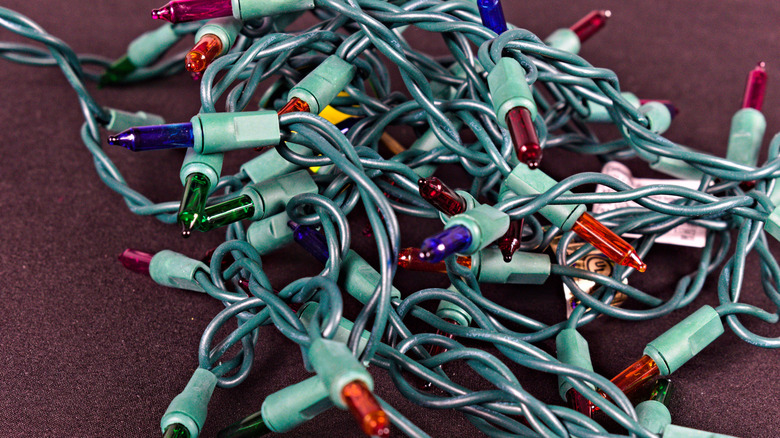
Rehoming and rescuing vintage Christmas decorations from thrift stores and garage sales is a real passion of mine, and I have made some truly stellar finds at garage sales and yard sales over the years. Old string lights and holiday lights are something I'll never buy secondhand. Of the Christmas tree-related house fires that occurred from 2016 to 2020, old or damaged lighting was the ignition source in 44%, according to the National Fire Protection Association. Especially with the older incandescent strands, insulation gets brittle with age, and it can crack at flex points that are hidden inside the cord jacket. They are dangerous even if they look in great condition. Incandescent bulbs, even those tiny little fairy lights, also run considerably hotter than modern LED lights, which further increases the risk.
As with other electrical items on this list, you can plug them in at the sale, and they might light up perfectly. You still don't actually know whether you're bringing something genuinely hazardous into your house because you can't check the internal wiring. When these lights fail, they are a fire hazard. LED holiday lights are increasingly affordable. It's so easy to creatively repurpose LED fairy lights. They have longer lifespans, and the risk is minimal, especially if you buy battery-operated ones. Please don't put your home and loved ones at risk for the sake of a few twinkly lights.
Smoke and carbon monoxide detectors
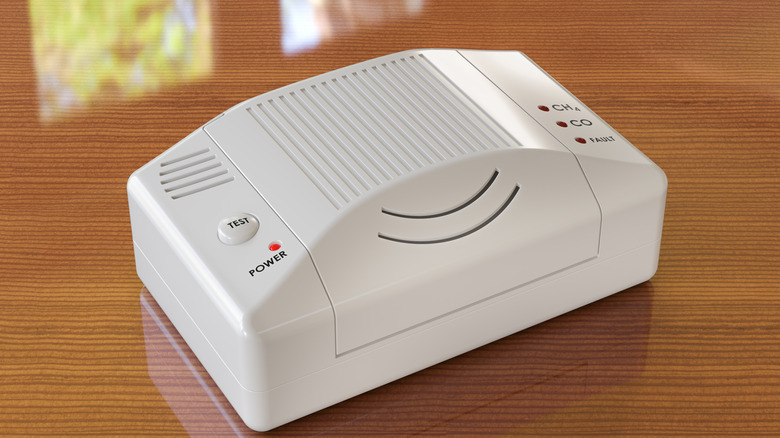
Two crucial pieces of safety equipment you should never, ever, under any circumstances, buy secondhand are smoke and carbon monoxide detectors. Pushing the test buttons on these devices only tells you that the battery is charged and that the speaker works. It still doesn't tell you whether the detection capability of the sensor is fully functional. The sensing element inside these devices can degrade with age. This is why they are only rated for between 5 and 10 years from the manufacture date. After this, they are no longer safe because they are unreliable.
A unit whose test button still beeps may be incapable of detecting real smoke, or it may fail to trigger at all when smoke is detected. Even if, while at the garage sale, you can check a smoke alarm and see the manufacture date stamped on the back, it's still not worth the risk. Given that if you do have a carbon monoxide leak or a fire breaks out in your home, these detectors are usually the only way you know what is happening. It doesn't make sense to risk your family's safety to save a few dollars. Buy a new unit from a reputable store so that you know you have a working alarm with at least a 5-year lifespan. When working correctly, if the worst should happen, they are invaluable.
Pressure cookers
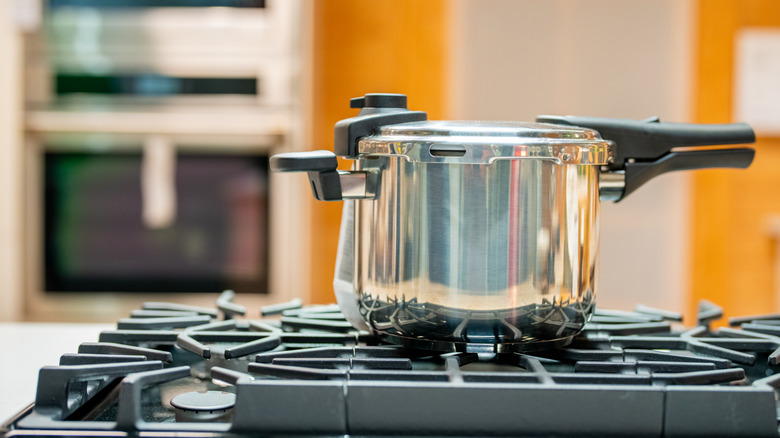
Pressure cookers are great pieces of kitchen equipment. They let you significantly reduce cooking time without sacrificing depth of flavor but traditional pressure cookers can be dangerous. Safety depends on the quality and condition of components like the rubber sealing gasket. This rubber sealing gasket degrades with age and use and eventually, even if it appears intact, it will no longer hold pressure correctly. Worn pressure relief valves and damaged lid components are also critical. All three of these can be difficult to assess properly at a garage sale because you need to disassemble the unit.
Pressure cookers are dangerous because if a lid opens or the contents are under pressure, it will release scalding liquid and steam with significant force. It can cause major scolds and burns. The Consumer Product Safety Commission has issued many warnings and recalls over the years involving pressure cooker models that unlatch or open unexpectedly during use. If you see a pressure cooker at a garage sale, not only do you not know that all of the essential safety components are in peak operational condition, you also don't know if this particular model has been subject to a recall at some point. Consider whether you really need an old-fashioned pressure cooker. If you do, set some money aside and buy one new. Alternatively, if you want to save counter space, then get a multi-cooker like a Ninja Foodi with a pressure cooker function.
Home-canned and preserved foods

Canning and preserving have gone on for hundreds of years. I can and preserve many foods, as I am a master gardener who grows a great deal of her own crops, but I am careful in my preparation to ensure that my preserved goods are safe. I would never buy home-canned or preserved foods at a garage sale. You don't know whether the person who made the preserves did so correctly, adequately sterilized the equipment, or stored them correctly after.
Canned veggies seem fairly harmless, until you realize they are the main source of botulism occurrences. It most commonly occurs in canned and preserved foods when that food is low-acid and has been improperly processed. The biggest issue is that it is colorless, odorless, and undetectable without lab testing, so you may take every precaution and the jar can look, smell, and taste utterly normal but still contain dangerous levels of botulinum toxin. Even a small taste and even a small mouthful of contaminated food can make you incredibly sick.
Handmade or unmarked ceramics
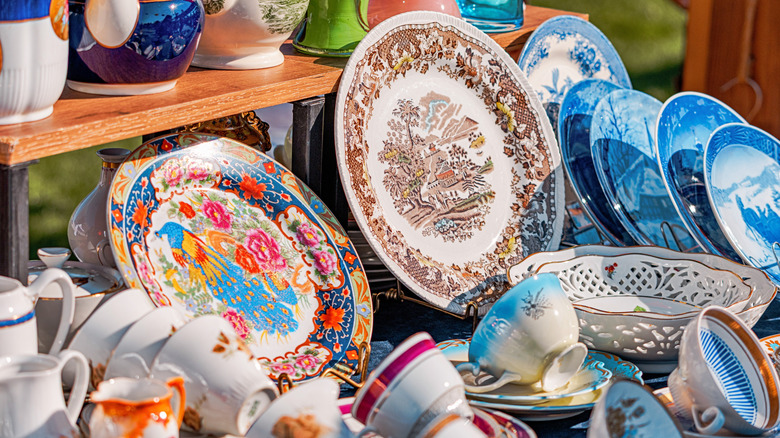
You'll find a huge and enticing range of mugs, bowls, pictures, and other ceramics at pretty much every garage sale you go to. There are some truly stunning pieces on display, including highly collectible ones, usually at great prices. Most of them are harmless but you don't know whether the glaze contains lead. It was common in ceramic glazes in the United States well into the 1990s and even later for homemade items. The difficulty, again, is that lead isn't obvious. Glazes that contain lead don't have an identifying mark so a piece that is clearly designed for food or drink can seem perfectly fine but can still contain lead at dangerous levels. It can leech that lead into whatever you eat or drink from it.
There's a famous and highly collectible rainbow mug from the mid-1980s that originally came with flowers inside. It's white with a rainbow design and it is highly sought after by collectors. However, the originals contain lead, so while they are safe as collectibles, they are not safe at all to be used as an actual mug. Ceramics that have lead glazes can start leaching lead via acid or heat. Drinking citrus juice from one, for example, or having a hot cup of tea, herbal tea, or coffee is enough to trigger the lead leaching. Over time this can result in lead poisoning. If you just plan to use vintage ceramics as decor, that's fine as the risk is minimal if they are never used in contact with food or drink. If however you're looking for ceramics that are safe to come into contact with food, avoid anything that you cannot be certain is free of lead. Use lead test swabs or avoid anything that isn't labeled food-safe.