

Quickly Sharpen A Can Opener With A Multipurpose Tool
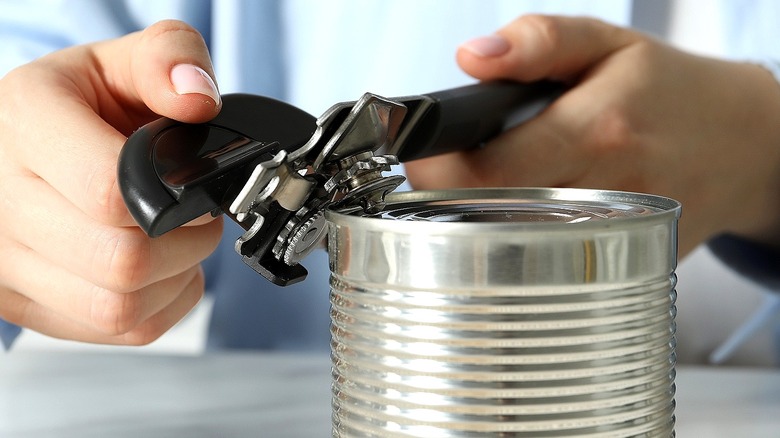
The can opener. This simple kitchen gadget is the key to accessing the food contents in a tin, but unfortunately most of them don't last very long before they start losing their edge. A can opener that goes blunt with repeated use can turn the quick-and-easy process of opening up cans into a mildly annoying chore. However, instead of buying a replacement, just sharpen the one you have. It will take you a few minutes and all you need is a regular sharpening file.
While a blunt blade on your can opener could still work, it calls for more force than usual and even then, it may still keep skipping sections. Moreover, it's frustrating and the resulting jagged edges are a safety risk. Sharpening the can opener's round blade will save you this trouble. Also, a sharpening file is a multipurpose tool you may already have in your toolbox.
In case you're wondering how this goes, a quick understanding of the anatomy of a can opener may help. Typically, the cutting blade in a common handheld can opener is beveled on the top side of the edge, while the bottom is flat. You only sharpen the beveled side, which makes the fix even faster.
Before you get started, consider whether or not your can-opener struggle is actually a sign your can opener needs a deep clean. To test this, give your gadget a thorough wash. First soak it in warm soapy water for about an hour, then use an old (clean) toothbrush to scrub it. Rinse, then dry it. If after cleaning your can opener, the cutter still won't work properly, proceed to sharpening it. (Here are more brilliant ways to use a toothbrush around the house.)
Use a sharpening file to restore your can opener
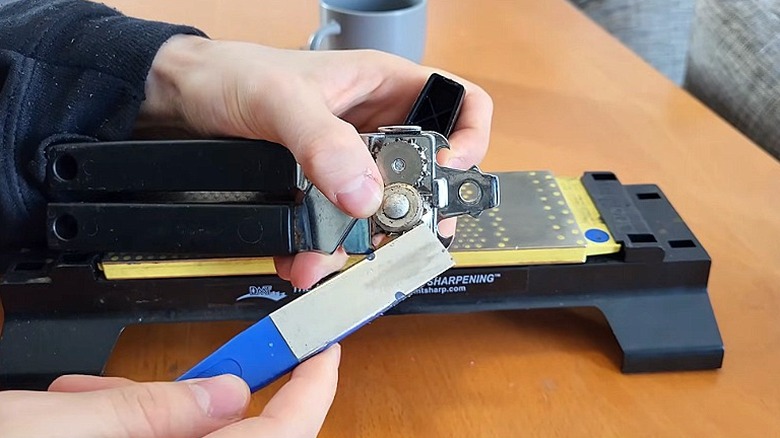
How this works is you hold the can opener securely in one hand, and with the other, begin running the sharpening file carefully against the beveled side of the gadget's blade. Use forward strokes only and stick to the angle of the beveled side. You want to avoid a back-and-forth motion as this can damage the file, and even blunt the cutting edge.
As you file the can opener, the metal will start to look shinier. You'll know you're done with a particular spot once you touch the underside of the blade and feel a burr (it will feel gritty). Keep rotating the cutting wheel while you sharpen, so you cover its entire circumference.
The next step is removing the metal burr that formed on the underside. Prevent the wheel from spinning by holding the handle down with your forefinger, then, give the bottom surface of the blade a very gentle stroke with the file, turning it as you go to cover the whole bottom side. And you're done.
Your can opener should be sharp enough to use once again, and you won't have to get a new one (even though, can openers are among the most useful kitchen gadgets it's worth having two of). Just give your can opener a final wash to ensure there are no traces of metal shavings left because, of course, you wouldn't want those to end up in your food.