

How To Identify A Mice Nest In Your Garage Or Shed
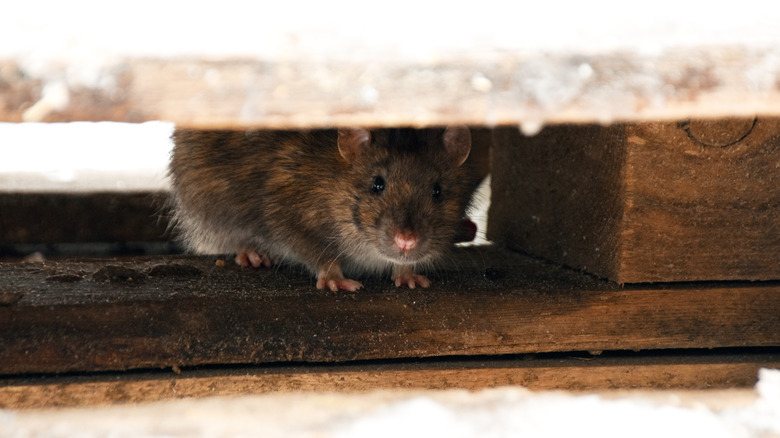
Musophobia, the fear of mice, affects millions of people — and it's easy to see why. While mice aren't out to hurt humans, they can carry harmful bacteria. If allowed to scurry around your home, that bacteria can quickly transfer to furniture, food, and every surface of the house. Additionally, mice tend to chew through wires in their attempt to make their nest more comfortable, creating a financial risk when forced to house these furry guests. Given these factors, and the fact that one mouse can quickly multiply into hundreds, it's important to locate and confirm the identity of mice nests around your property.
If you notice mouse droppings, bits of shredded material like wood chips or paper, or the smell of urine, start searching the less-frequented areas of your house for a mound of material that indicates a mice nest. Mice nests are especially common in the garage or shed, since they offer plenty of protection from the elements (though building a Norwegian-style shed will ensure you stay pest-free). Pay particular attention to the gap between walls or unused furniture for nests, and know that mice can even live in your grill.
Mice nests are spherical, feature one entrance, and are typically no larger than a half foot long in diameter (if you find something much larger than that, you're likely dealing with a rat nest). Mice make their nests using small bits of material such as fabric, grass, and paper. Once you've located a mouse nest, you can check whether or not it's active by looking around the area for fresh droppings. Given the risk of disease, you will need to take special care when removing the nest regardless of whether or not mice are still using it.
It's important to remove mice nests once you've found them
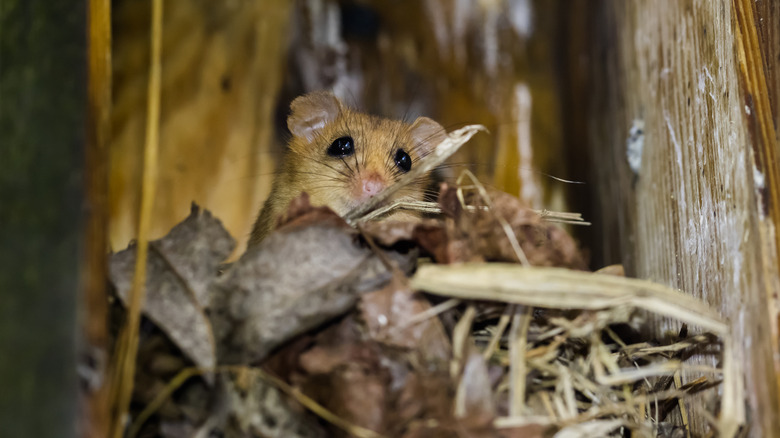
It is possible to remove a mice nest yourself, but due to the presence of biohazardous waste and the difficulty of eliminating an entire mouse colony single-handedly, it's recommended to call in your local pest control or humane society to deal with the critters. However, if you're confident you're dealing with an abandoned nest, you can take care of it as long as you don the proper protective equipment: A quality face mask and gloves are non-negotiable for this task. Since a mice nest is basically a small ball, it's easy enough to move it into a bucket for transport out of your home. Keep in mind that due to the potential of dangerous bacteria, the nest itself is considered biohazardous waste and will need to be dealt with accordingly. After disposing of the nest, use a bleach cleaning solution to disinfect the area, making sure to let the solution soak a bit before scrubbing.
The best way to deal with mice nests is to discourage them from popping up in the first place. Mice can squeeze through holes less than an inch across, so be sure to seal up even tiny gaps or holes around your garage or shed. Keep your property — including the yard — free of clutter, and invest in solid, airtight containers to store both pet and human food, as mice can easily chew through cardboard or plastic bags. A mice infestation is certainly a headache, but by being vigilant and avoiding things that attract mice to your home, your property should be safe.