

Why Aren't House Foundations Made With Cinder Blocks Anymore?
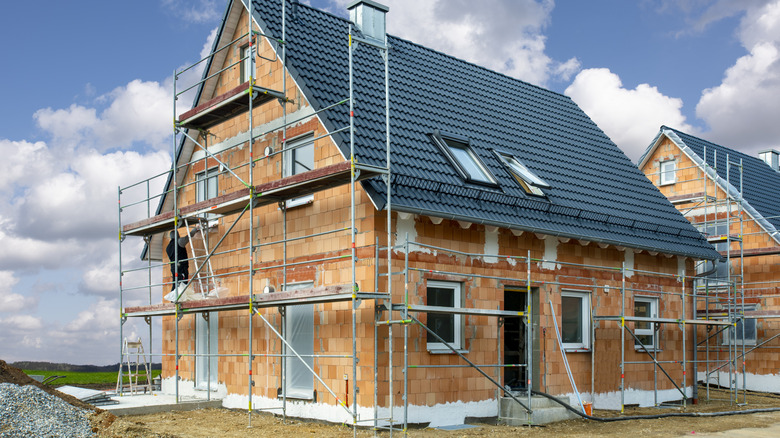
Building a house from scratch is an equally exciting and daunting prospect. One of the most important elements of the build is the foundation, which is crucial for the structural integrity of the entire building. Concrete blocks were typically used as foundations prior to the 1970s, but since then, the preferred material is now poured concrete, as it is one single component, which means greater overall lateral strength.
Cinder blocks are a specific type of concrete block that are made out of sand, cement, and cinders. They have a hollow composition, which means they are noticeably lighter and easier to work with. However, this also means that they lack strength, and the mortar joints are weaker, meaning they can potentially leak water. It's a given that these issues are not problems with your home's foundation that you want to face. Therefore, opting for poured concrete instead is a no brainer for any modern build.
Cinder blocks versus poured concrete
Hollow concrete blocks, otherwise known as cinder blocks, were invented by Harmon S. Palmer in the late 1800s and quickly became a staple in the construction industry. He wanted to create something lighter that still boasted a good level of strength, and he did exactly that. Using cinder blocks for foundations became the standard once equipment manufacturers began selling interchangeable molds, which meant large quantities of standard-sized blocks could be created. Builders and architects could then order and use these blocks as the foundations of their builds.
Unfortunately, cinder blocks are ultimately prone to leaks, due to there being gaps in the mortar. The last thing you want when building a home's foundation is there to be a risk of water getting in and causing damage. Equally, their hollow structure means they lack lateral strength compared to a solid alternative. So, like most things, the construction industry evolved over time, and a more suitable alternative was created.
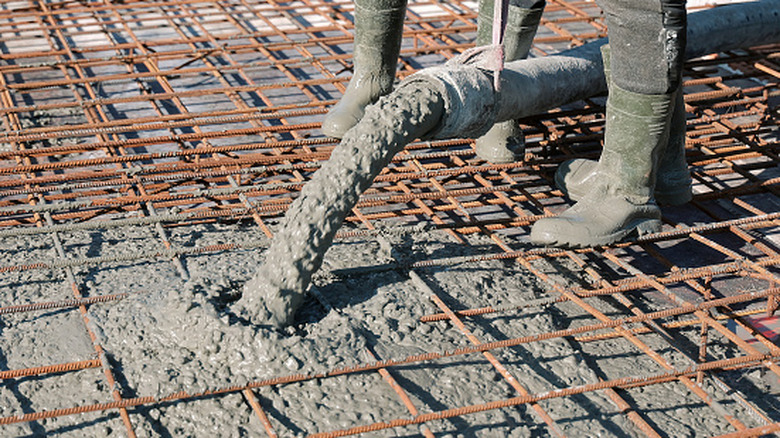
Poured concrete is a great solution to the issues that cinder blocks present. It's obviously not prone to leaks because there are no joints whatsoever, meaning no points of weakness. Foundations made of poured concrete also have extremely high lateral strength and can deal with the heavy pressure of soil and high water tables, making it a fantastic replacement.