

Solid, Hollow, And Cellular Concrete Blocks: What's The Difference?
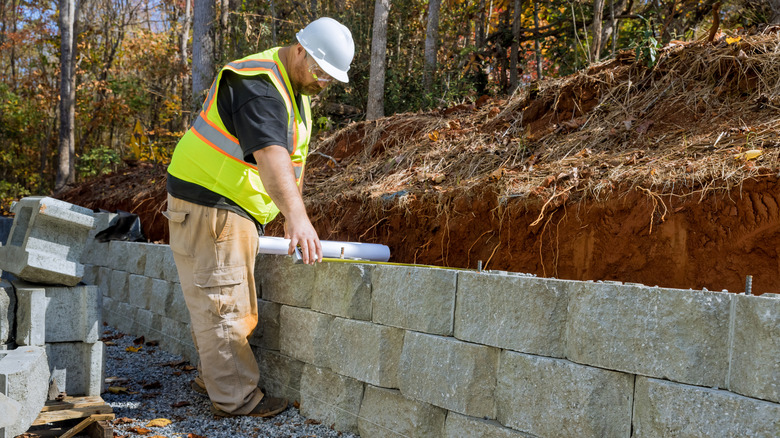
There are many once-popular concrete home features no one uses anymore. Despite the popularity of this material declining, some forms of concrete aren't likely to go out of style anytime soon. One of those is building blocks. There are many kinds of blocks used by both professionals and at-home DIYers, but the various shapes and structures can make it difficult to know exactly which kind you may need for your project. The three most common concrete block types are solid, hollow, or cellular blocks. Each of these has some advantages and drawbacks, so it's important to understand the differences before choosing the right option for you. Put simply, solid blocks are best for heavy loadbearing, hollow blocks have large holes that make them more versatile, and cellular blocks have air bubbles so they're lightweight and easy to manipulate.
To start, let's take a closer look at solid concrete blocks. These don't have any large holes or aerated bubbles in them. Because they're totally solid, they are pretty heavy, making them difficult to maneuver. However, solid blocks are very sturdy and strong. Their most common purpose is in builds that have to hold a lot of weight and need to be very tough, like buildings and retaining walls. Solid concrete blocks can be a better retaining wall material than poured concrete in some cases. However, in return, they don't have a lot of versatility. Drilling through solid blocks can cause weakness or cracks in the structure, so it's not ideal for projects that will need pipes, wires, plumbing, or rebar for extra support.
Hollow blocks offer more versatility than solid blocks
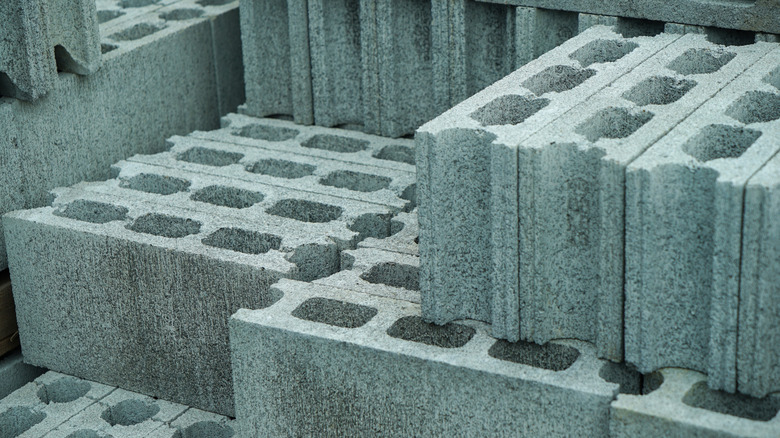
Both hollow and solid blocks are made from Portland cement, aggregates, and water. They are very similar in design, except for the spaces built into hollow blocks. The holes, depending on what kind of block you buy, generally account for 25% to 50% of the block's total space. There are different shapes of hollow blocks with different uses, including ones made for corners, pillars, and jambs. Thanks to the missing material, hollow blocks are lighter and easier to haul around than solid concrete blocks, which makes them ideal for projects where you'll be lifting and stacking by hand.
These hollow areas also give them an advantage when constructing buildings. If you're planning on creating a structure with power or water, the hollow spaces can give you a clear pathway to run pipes and wires through easily before filling the holes with more concrete as needed. You can make hollow blocks more stable by combining them with a bit of rebar and poured concrete. Hollow blocks also work for smaller DIY projects around your yard and garden as well, including building an epic succulent garden entirely from concrete blocks.
Cellular blocks are the most lightweight of all
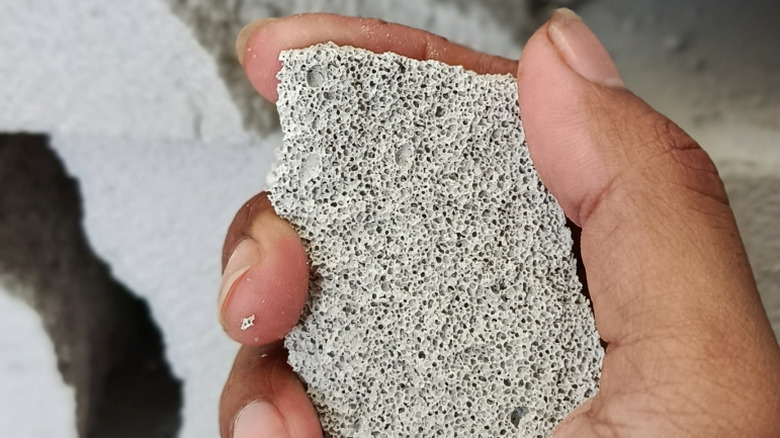
Cellular blocks – also sometimes referred to as aerated blocks or foamed concrete — stand out from the other two. Though they are made out of concrete, their construction is not quite the same. Their ingredients include a mix of water, limestone, silica sand, and cement. Then, an expanding agent is mixed in. This creates tiny air pockets inside the concrete that reduce its density. According to concrete experts at Becosan, cellular blocks can be anywhere between 10% and 87% lighter than similarly sized solid blocks. The aerated structure also makes it easier to cut or drill through yourself.
Despite being lightweight and having tiny holes like Swiss cheese, cellular blocks are still a very durable material. It's strong enough to work as a floor, wall, roof, or even sidewalk, and different densities are available depending on how much compressive strength you need. They still have many of the same benefits of other concrete blocks, including being fire-resistant and insulating. In fact, the air bubbles actually make them a little better in thermal and acoustic insulation. For DIYers, cellular blocks are a good alternative to solid ones, being lighter and easier to manipulate. However, there are times when it isn't ideal. For example, it doesn't handle compression as well as solid concrete, so may not hold up in large buildings. There are also different expanding agents and ways to make these blocks, without much consistency among companies, leading to different durability and strength levels.