

What Does 'Ground Contact' Mean On Pressure-Treated Wood?
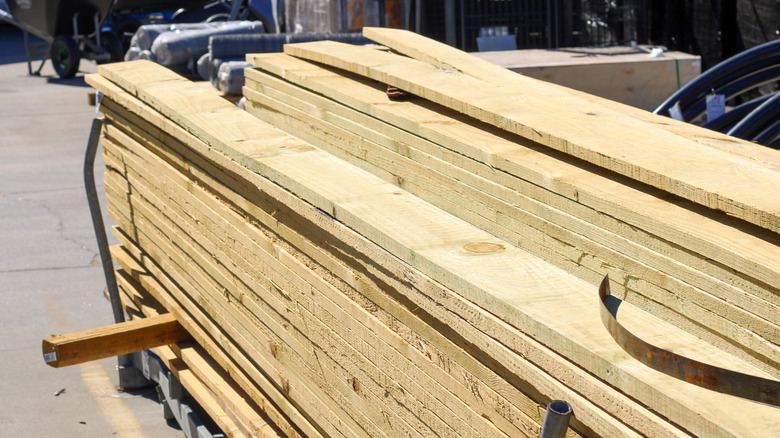
When you visit the lumber store to collect supplies, don't assume that all wood products are basically the same. When you are doing a project that involves outdoor structures, such as when you are trying to build the perfect deck, your construction materials need protection against problems like rot and insects. Pressure-treated wood is the answer, as it uses added chemicals to extend the lifespan of products that are constantly exposed to the elements.
If you decide to use pressure-treated wood, it's important to understand that there are multiple options in this category. Two typesaimed at residential users are found in most hardware stores: above-ground and ground-contact. Determining which type of pressure-treated wood is right for your project involves understanding each option. Ground-contact products have a greater concentration of protective chemicals and compounds added to them, meaning they can better survive tough moisture conditions when touching or hovering near the ground. You should also use it in situations when your lumber will be adjacent to materials that can remain damp, such as porous concrete or bricks.
Building codes can tell you when it's appropriate to use pressure-treated wood in the ground-contact category instead of the above-ground category. In many locations, you will have to use ground-contact products when the wood will be 6 inches or closer to materials that are consistently damp, like the soil. Check your local building codes for any unique rules for your area.
Kinds of projects where you should use ground-contact lumber
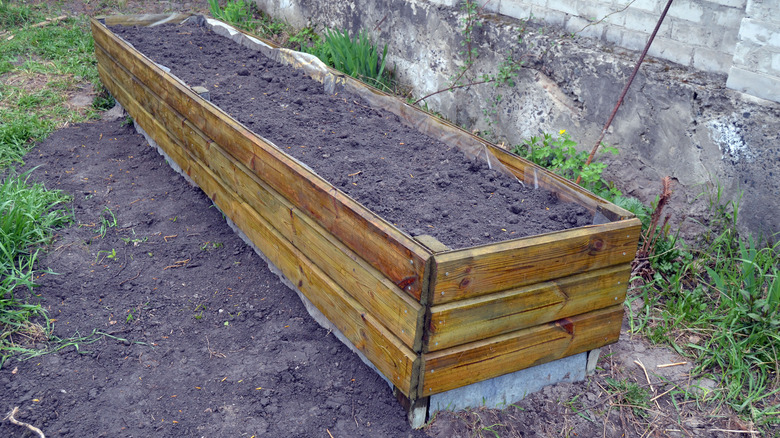
Always use ground-contact pressure-treated lumber for fence posts, support posts for a deck, or retaining walls. If you're building the frame for playground equipment from wood or any other type of framing that will face regular exposure to the elements , you should use the ground-contact design as well.
When creating a raised garden bed made from wood, it will be in constant contact with the soil. You might have reservations about chemical exposure because in the past kind of wood used the additive chromated copper arsenate (CCA), which contains arsenic. Manufacturers stopped using CCA at the end of 2003 for ground-contact pressure-treated lumber for residential use. So, modern products should be safe in this regard. You should not recycle or reuse old ground-contact pressure-treated lumber that was installed or manufactured before 2004 for a raised garden bed because of the potential of unwanted substances leaching into the soil.
You may also want to use ground-contact pressure-treated wood in areas where it would be difficult to replace the lumber if it suffers rot or insect damage, even if it's not going to be close to the soil. For example, this recommendation would apply to beams and joists that support weight within a deck because they would be difficult to repair or replace.
How you can identify ground-contact pressure-treated wood
When you're specifically shopping for ground-contact pressure-treated lumber at the hardware store, you can use a few identifying clues to be confident you're buying the right product. The most common marking used is an end tag, which is stapled to an end of the board and usually consists of plastic. The front of the tag may simply contain the printed words "ground contact" lumber. Some tags may say that the product is not suitable for contact with the soil. With some boards, the manufacturer might stamp or print "ground contact" or "GC" directly on them.
Other tags may display a Use Category (UC) code that you'd have to decipher to determine whether you can use the wood near the soil. Ground-contact pressure-treated lumber will have a UC4A code. Above-ground-only wood will have a UC3B code. You may find that some hardware stores and lumber yards only carry UC4A pressure-treated lumber, wich helps ensure people don't accidentally buy UC3B when they need the former.
If you can't find an end tag or a printed mark, it's difficult to tell the difference between ground-contact and above-ground wood. Ground-contact lumber may be heavier because it has more preservatives added to it. However, you shouldn't rely on weight alone, as this may vary significantly for different kinds of pressure-treated lumber. You can't necessarily rely on a product's appearance, either. Treated wood won't have the same color as untreated options, but the difference isn't consistent from board to board.