

What Is The Average Lifespan Of Cinder Blocks?
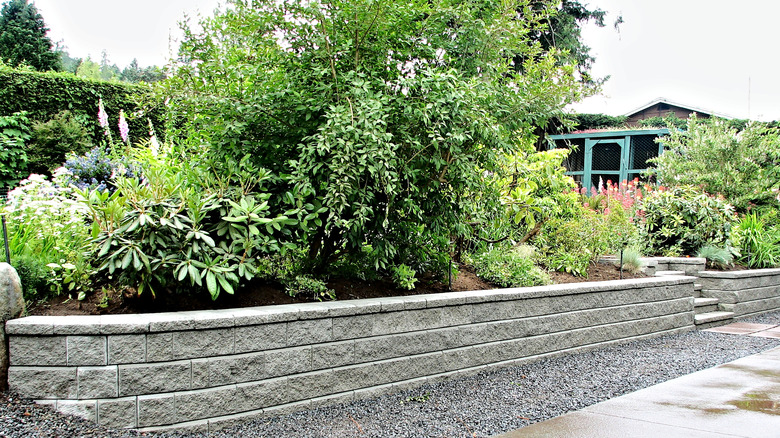
Building material manufacturers often make claims about product longevity, and the numbers can seem impossible to verify. Some materials have lifespans longer than a human's, but with product changes over time, it's not always clear if today's version will stand the test of time. Cinder blocks are a perfect example, and they're said to last 100 years or more. However, not only is the line between cinder blocks and concrete blocks a little blurry, but they've also both been used in many different ways and environments over the past century. So when it comes to lifespan, there's a lot more to the story than stating a single figure as the average.
Different types of concrete blocks, which are now called concrete masonry units, have been experimented with since the 1860s. Some of the row houses built in Minneapolis in 1885 used the modern cinder block's precursor, and these imitation stone blocks are still standing over 140 years later. Mass production of concrete blocks didn't begin until 1900, with Harmon S. Palmer's patented cast-iron block machine. These blocks were sold nationally for about three decades, and some of the first houses built with them are still structurally sound, so they can easily last 100 years or more when properly maintained. Some of the blocks produced in the early 1900s also contained cinders, which is where the name comes from. Cinders were cheaper and lighter than other aggregates at the time. Today, it's almost impossible to tell the difference between them just by looking.
What Affects the Lifespan of Cinder Blocks
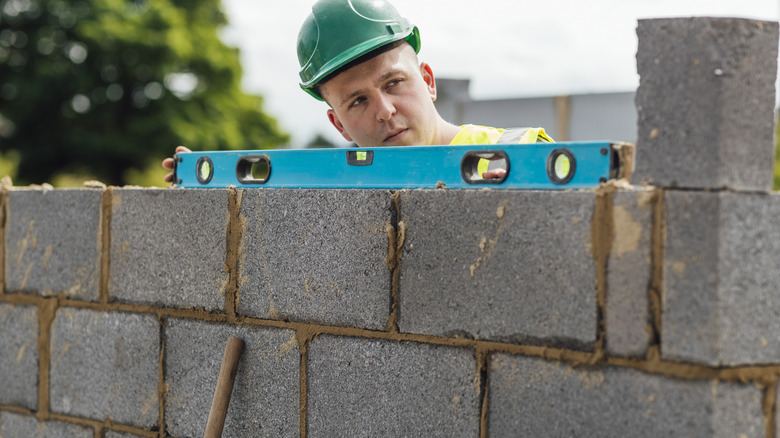
Experts can make rough estimates about the average lifespan of a cinder block, and there are plenty of century-old houses out there to prove they can last. But there are also retaining walls, foundations, and cinder block fences that deteriorated ages ago, and failure isn't always due to how they were made. While good design plays a role, lack of proper maintenance is one of the main reasons for premature failure. A century is a long time, and over the years, cinder blocks need to be maintained by preventing and repairing cracks, cleaning, removing ivy, and applying water repellents to avoid water penetration.
If you want to beat the average, it helps to learn key warning signs and understand why cinder blocks don't always stand the test of time. There are always pros and cons of buying a historic house, but for old homes with cinder block foundations or walls, you want to ensure proper drainage so the blocks don't get too wet. Cinder blocks are subject to freeze-thaw cycles if they absorb too much moisture, so keep downspouts pointed away from walls and foundations built with them. Basement and retaining walls are often made with cinder blocks, and since they're subject to constant pressure and moisture, they're more vulnerable than a cinder block that's kept dry and protected. Signs of water damage include cracking, spalling, and a chalky salt residue on the outside of the block, which can usually be repaired.