

What To Do If You Find Mold On Cinder Blocks

We may receive a commission on purchases made from links.
Cinder blocks are often used for small structures that don't require significant weight-bearing responsibilities (although you can fill the hollow areas of the cinder blocks to increase their ability to support a load). You can use them in garage walls, perimeter fencing, utility sheds, and basement foundation walls for residential projects and for sound control, interior walls, or stairwells in commercial projects.
When comparing concrete blocks to cinder blocks, the cinder blocks are lighter and have a far greater porosity and permeability for water. (Permeability is a measurement of the speed and ease with which water can pass through a material.) If your cinder blocks are constantly wet because of this permeability, you may notice mold growing on them. Cinder blocks have pores that retain moisture and give mold a chance to begin to grow.
If you find mold on cinder blocks, you should take immediate steps to eliminate it. Unchecked mold can release spores into the breathable air and can weaken materials that are bearing weight, affecting their integrity. You can do the mold remediation yourself, cleaning the basement walls with a vinegar mixture or a bleach mixture. You should follow all safety recommendations for cleaning mold to reduce the risk of health problems. If you want to ensure a job well done, you can also call a professional company to remove the mold for you.
Steps to eliminate mold found on cinder blocks
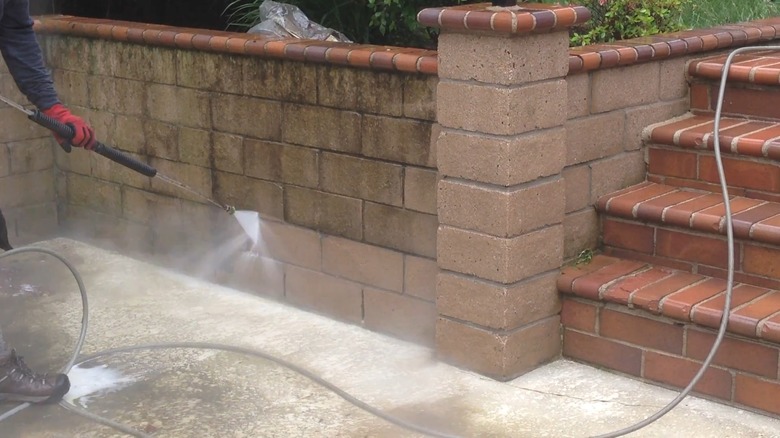
When you find mold on cinder blocks at your house, the Environmental Protection Agency (EPA) recommends only doing mold cleanup yourself if the covered area is less than 10 square feet. Otherwise, you may need to hire an experienced professional contractor to do the work.
If the mold on the cinder blocks is heavy or spread over a large area, you may need to block off the area with plastic to try to prevent any spores from floating into your ductwork and moving through the air to other areas of your house. You should also wear protective gear, including gloves, goggles, and a mask or respirator.
You can start cleaning the mold by using warm, soapy water and a stiff brush to scrub the affected area. You have a few options for trying to remove and kill any remaining mold spores that may be in the pores of the cinder blocks. Deploying a commercial mold killing product found at a hardware store is an option. (Home Depot offers Concrobium Mold Control in a 32-ounce spray bottle for $14.) A cheaper option is to mix white vinegar with water in equal parts and spray it on the affected area. Some people recommend using bleach diluted with water to remove mold, but this mixture might not work well in the porous surfaces that you'll find with cinder blocks.
How to stop mold from coming back on your cinder blocks
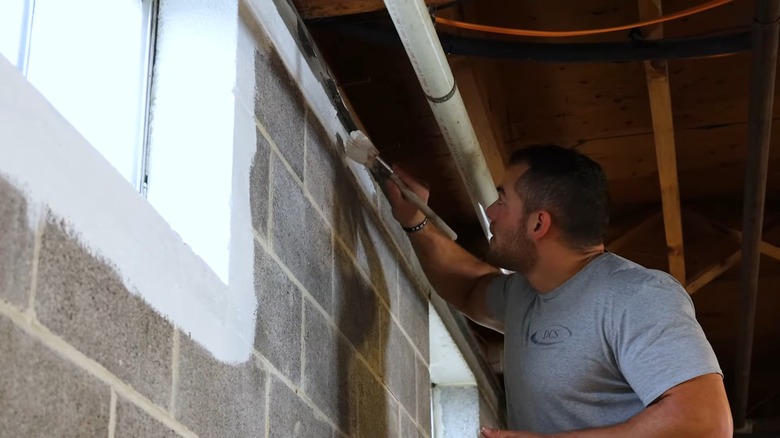
When you identify mold in your home, taking steps to get rid of it for good is important, whether it's on drywall or cinder blocks. To keep it from growing back later, you should identify areas where moisture is constant because it's trapped in the pores of the cinder block walls and then treat these areas. You can identify moisture penetration on the cinder blocks through visibly wet spots, puddles on the floor, and damp odors. Constant moisture can appear on cinder blocks because of things like seeping groundwater, high humidity, or nearby sweating or leaky pipes.
After cleaning and removing the mold, let everything dry. You may need to run a fan or dehumidifier in the area to fully remove the moisture. You then can add a sealant to the cinder blocks that will prevent moisture from causing mold to return. Because cinder blocks have so many pores, you may want to apply a penetrating sealer (that contains silane or siloxane) that will seep into the pores to block and repel water. The right penetrating sealer won't damage the cinder block materials, either. Home Depot carries a Siloxane Penetrating Sealer in a 1-gallon container for $50, and it goes on invisible. It's important that any sealant product you use allows the cinder blocks to "breathe," meaning any moisture trapped in the pores is able to naturally evaporate. If you apply a coating that doesn't allow the material to breathe, the coating may peel because the moisture cannot evaporate out of the pores.