

Brick Vs Cinder Blocks: What's The Difference?
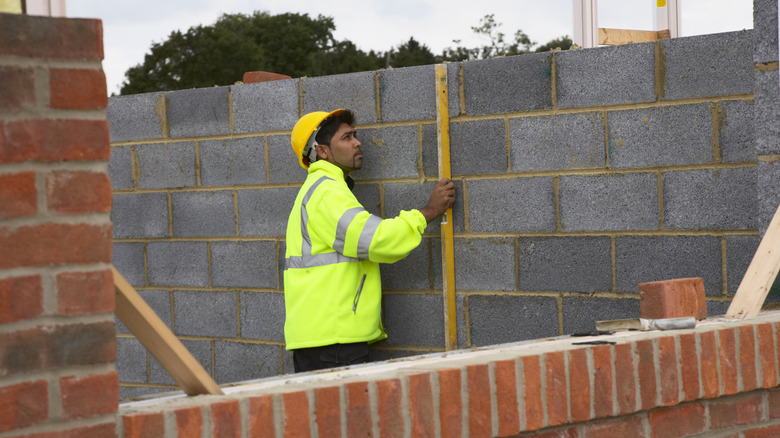
Bricks and cinder blocks don't really seem all that unique at a glance. They're both heavy, used for construction, and textured, so the difference doesn't really matter all that much ... right? We'll be the first to admit that if you're simply using them to weigh down a tarp or build a DIY raised garden bed, it's true — they can both serve the same purpose and yield more or less the same results. If you're building a home or another kind of permanent structure, however, their distinct shapes, characteristics, and compositions are imperative to understand.
Bricks and cinder blocks are made of two completely different kinds of materials. Bricks are clay-based, with additives of shale and sand, while cinder blocks are made of cement and coal cinders. To add a bit more confusion to the mix, the terms concrete block and cinder block are often used interchangeably, but true cinder blocks contain real cinders that make them much lighter and more porous than their concrete counterparts. Cinder blocks were largely phased out as a construction material in the mid-century in favor of concrete blocks, however, so we'll cover both.
Another main difference you'll likely notice is the shape of these two respective materials. Bricks are typically much smaller than cinder blocks, with the most commonly used size coming in at 3 ⅝ inches wide, 2 ¼ inches tall, and 7 ⅝ inches long. While there can be some variations in the details, their design is most frequently solid and rectangular. Cinder blocks and concrete blocks are bigger, measuring in at 7 ⅝ by 7 ⅝ by 15 ⅝ inches, and they typically feature hollow channels that can be used for adding additional structural materials.
When should you use each material?
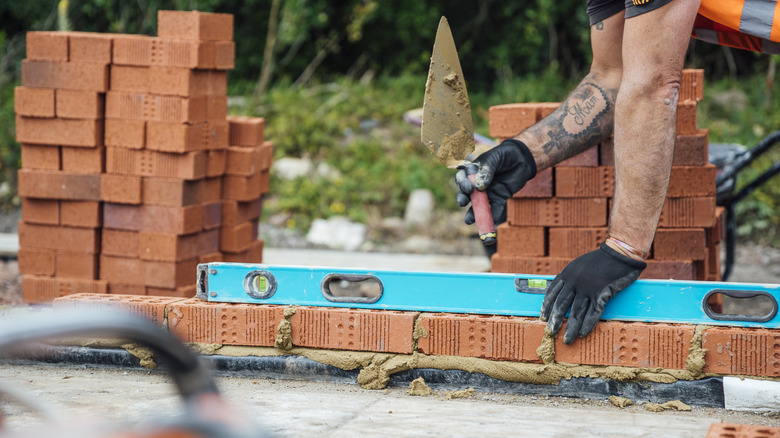
Bricks and blocks are both used in the construction of structures, but due to their differences in price and ability to bear heavy weight, they have different roles. Bricks are more expensive, both when it comes to raw materials and cost of installation, which means that some builders on a budget might prefer to only use them for visible exterior walls or interior walls that will be left exposed. Brick exteriors also have positive, long-term effects on home resale value due to their timeless look and durability, so opting for this material for your facade could provide a significant return on investment.
Concrete blocks and cinder blocks, on the other hand, are cheaper upfront. They're much quicker and easier to install, and they're often reinforced with rebar for added structural support. True cinder blocks aren't great for load-bearing applications, however, so they're only recommended for use in small structures. Concrete blocks, on the other hand, are very strong and can bear plenty of weight, just like bricks. Their plain, gray look is a con for many homeowners, but they're a very popular choice for walls that are going to be covered anyway.
Plenty of builders opt for a hybrid approach that includes both bricks and concrete blocks. By using concrete blocks for concealed walls and brick for more visible areas, the costs are balanced, the construction moves quickly, and the outdoor areas still have a classic (and marketable) look.