

What Is The Purpose Of A Microwave Turntable?
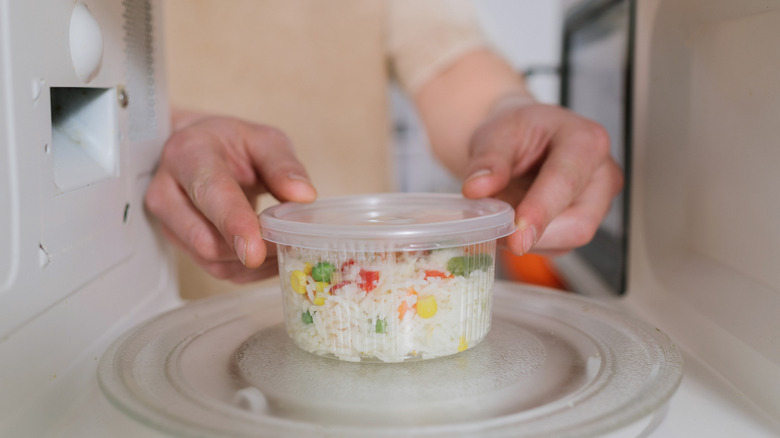
Microwaves work by emitting electromagnetic waves that move quickly around the appliance's interior, heating up whatever the waves hit in the process. Because of this, microwaves can do a lot more than just heat up food. Since these waves are already bouncing around the microwave, a rotating turntable can seem like nothing more than a fun bonus feature. However, while watching your food spin around as it reheats can be entertaining, the turntable in a microwave's main purpose is not for aesthetics — instead, it's to help your dishes heat up more evenly.
The majority of reheating methods tend to include some sort of motion to achieve the best results. For example, if you want to warm up a leftover batch of soup on the stove, you should regularly stir it to properly distribute heat. In this way, the function of a microwave's turntable is similar to spit roasting: It provides constant rotation so that the food receives consistent heating. Despite their speed and quantity, the appliance's electromagnetic waves aren't able to cover every square inch of the cooking compartment evenly. If there's a pocket of space that doesn't receive as much electromagnetic activity, food in that spot won't heat up as much. Turntables greatly reduce this issue — this was proven in a 2024 study published by Innovative Food Science & Emerging Technologies, which noted that "rotating the food during microwave heating could raise the heating uniformity by about 40%."
Microwave turntables ensure even heating
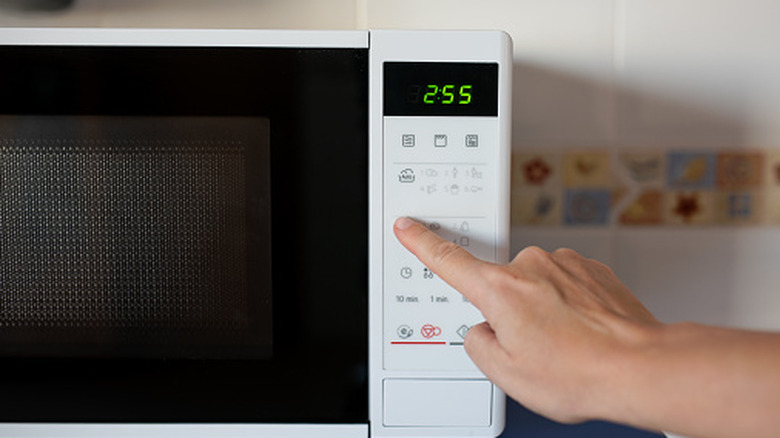
If you've ever dealt with a faulty turntable, you've likely experienced the consequences of a microwave's uneven cooking process. There could be a number of culprits behind a stationary turntable, but a quick clean often solves the issue. Crumbs and grease can build up in a microwave over time, especially around the mechanism in the center that connects to a motor and actually rotates the turntable. That's why it's a good idea to clean your microwave regularly, removing the turntable in the process so you can clear out debris. Luckily, the easiest way to keep your microwave clean is already in your kitchen.
The turntable can also stop working if it falls off of the rotating post or tracks it's situated on, which may happen if you overload it with a heavy dish; in this case, simply realign the turntable. If the interior of your microwave is clean and correctly assembled but the turntable still isn't spinning, the problem is likely mechanical and will require a professional repair or replacement.
There are some instances where you may want the turntable to stay motionless. Some microwave models come with a button that switches the turntable off, which can be handy when reheating large dishes that would bump up against the microwave's sides if they were spinning. In that case, be sure to manually rotate the dish a few times throughout the cooking process. This is also the technique for cooking with a broken microwave turntable, but given the dramatic reduction in reheating quality, you may be better off just using the oven — after all, some believe there's simply no need for a microwave anymore.