

What To Do If You Get Sprayed By A Skunk In Your Yard
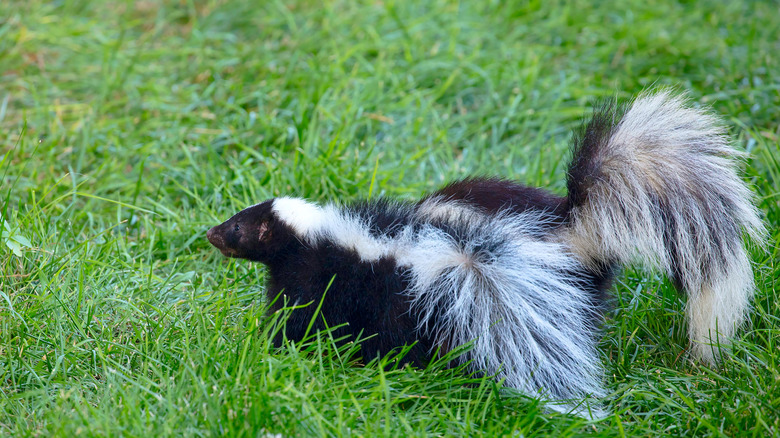
Stepping into your backyard only to be doused in the pungent, unmistakable stench of a skunk is every homeowner's worst nightmare. If they feel scared, skunks will usually try to escape the area before resorting to spraying, but when they do, their spray can reach up to 15 feet away. They can also keep spraying five or six more times. As soon as you're sprayed, focus on getting away from the animal, especially if it seems aggressive or rabid. Then, before you run inside, take a deep breath (preferably through your mouth) and think. Skunk spray is packed with volatile sulfur compounds called thiols that bind fast to skin and fabric, meaning every second counts. If you've just had a close encounter of the worst kind in your yard, you need an immediate action plan to stop the stink before it spreads.
If you have an unfortunate run-in with a skunk, you'll need to act fast, skip the useless myths, and tackle the oily residue head-on. You'll need to stay outside to let the smell dissipate, mix up a DIY neutralizing solution that will help banish the smell, and treat your clothes and outdoor gear right away. Beyond immediate personal decontamination, you'll also want to assess the yard itself. Lingering spray on lawn furniture, decking, or landscaping can keep the odor circulating for days every time the wind shifts. Taking a few steps to clean your outdoor space and learn how to keep skunks out of your yard — including using plants as natural deterrents — will ensure your yard goes back to being a safe, fresh haven rather than a stink zone.
How to get skunk smell off of your body
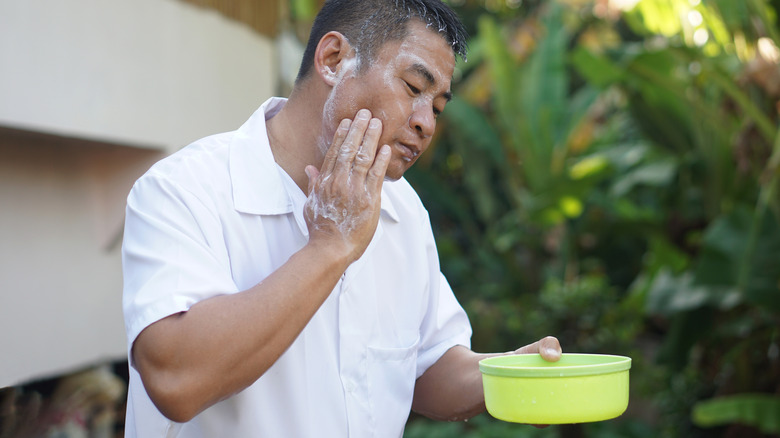
First, do not go straight into the house. While your first instinct might be to sprint straight for the shower or run inside to grab supplies, doing so will only transfer those volatile oils to your carpets and furniture, which will make the cleanup process that much harder. It's best to stay outside, assess the situation, and have a buddy help you prepare clean-up supplies. Avoid rinsing with a water hose, as this will only spread the oils. However, if any of the noxious spray hits your face, immediately flush your eyes with lukewarm water or saline to soothe irritation.
While it might be tempting to reach for a can of tomato juice, this classic myth doesn't actually remove the spray — it just tricks your nose through olfactory fatigue. Instead, hydrogen peroxide is the cleaning staple you'll want on hand to get rid of the smell of skunk spray. You can make the ultimate de-skunking solution using four cups of 3% hydrogen peroxide, a quarter-cup of baking soda, and one to two teaspoons of Dawn dish soap to chemically neutralize the odor-causing thiols.
Mix all ingredients together in an open bowl, then remove any contaminated clothing and work the solution thoroughly onto dry skin, avoiding your eyes and mouth. Using this on your hair could damage it or affect hair color. Do not wet your skin with water, or else the hydrophobic oils will not be effectively broken down. Allow the solution to sit for at least five minutes to break down the skunky sulphur compounds. After five minutes, rinse the area well with warm water. Repeat the process once more if the smell remains. Finally, wash yourself with standard body wash to strip away any lingering residues.
How to remove the stench from clothes and your yard
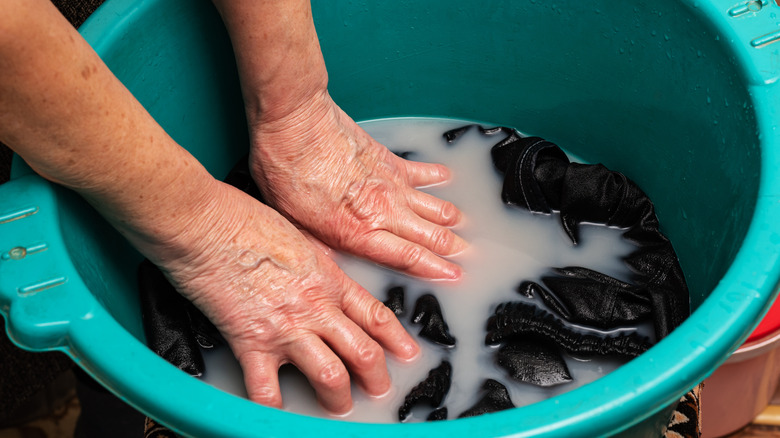
To eliminate skunk odor, the goal is to break down the oily sulfur compounds rather than masking them. Using the same hydrogen peroxide mix as above will work for clothing, but it will probably discolor the fabric. For clothing, submerge items in a bucket of warm water with either 1/2 cup of baking soda or two cups of distilled white vinegar for at least one hour to loosen stubborn oils. Machine wash immediately using heavy-duty laundry detergent and an extra 1/2 cup of baking soda added directly to the drum. Repeat if needed, and always air-dry clothes outside on a line — placing sprayed fabric in a hot dryer before the oil is fully removed will permanently bake the scent into the fibers.
If a skunk sprayed your grass or landscaping, every breeze will push the stench toward your house until it's treated. Don't use the same solutions on your lawn. Instead, flood affected lawn areas with a garden hose to dilute the oils and drive them into the soil where natural microbes break them down. For decks, patios, and outdoor furniture, skip harsh chlorine bleach, which damages wood and kills surrounding grass. Instead, scrub hard surfaces like concrete or unpainted wood using a stiff broom and one cup of oxygen bleach powder (like OxiClean) per gallon of warm water, then rinse well. For outdoor fabrics and painted railings, scrub using warm water, white vinegar, and dish soap. Let it sit for 10 minutes, then hose off completely. Once the emergency is under control, consider planting jalapeños, which happen to be the popular garden vegetable skunks can't stand, to keep critters from wandering back into your garden beds.