

Skip Fabric Dye: The Common Household Waste You Can Use On Your Clothes
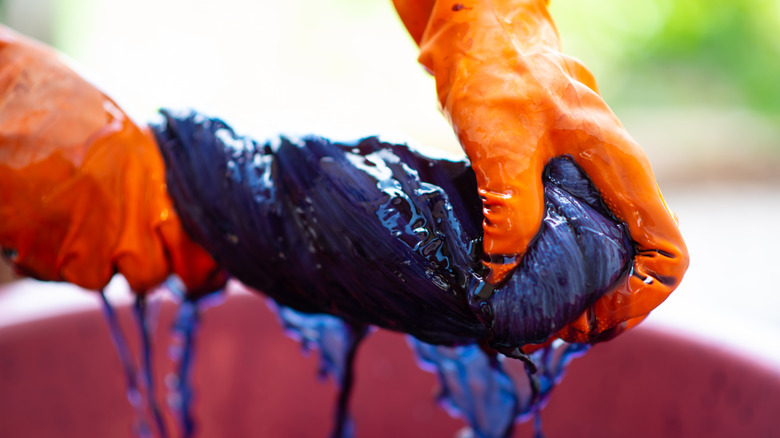
There is a humble veggie scrap that can turn your plainest clothes into richly-hued pieces — red cabbage. Red cabbage is a natural source of anthocyanins, the plant compounds that act as natural colorants. Depending on factors like soaking times, fabric material, and any secondary ingredients, red cabbage can turn clothes purple, bluish-gray, or anywhere in between. Best of all, it's a way to add panache to your clothing while also reusing a kitchen item to reduce waste.
Red cabbage not only provides ornamental color to your clothes, but can also be a bit longer-lasting than other natural blue-purple dying materials, such as berries. But to add intensity as well as longevity to your red cabbage dye, consider adding a mordant. Mordants allow dyes to bond to fabric fibers and help freshly dyed clothes survive laundry cycles. It can also vary the color in interesting ways. To simply "fix" the cabbage's inherent color, opt for alum as a mordant, the natural pickling salt you'll find in the spice aisle.
You can also throw in color modifiers. For example, a bit of baking soda can take the red cabbage dye from purple to blue, and additional baking soda can even get it to the teal stage. Salt will also help intensify the basic dye. Best of all, dying with red cabbage is a fairly simple process. You'll simply be chopping and simmering the cabbage, then soaking your clothing of choice in the strained, colored water. Red cabbage is generally effective on a range of fabrics, from cotton T-shirts to wool and silk scarves.
Dying with red cabbage is almost as simple as cooking with it
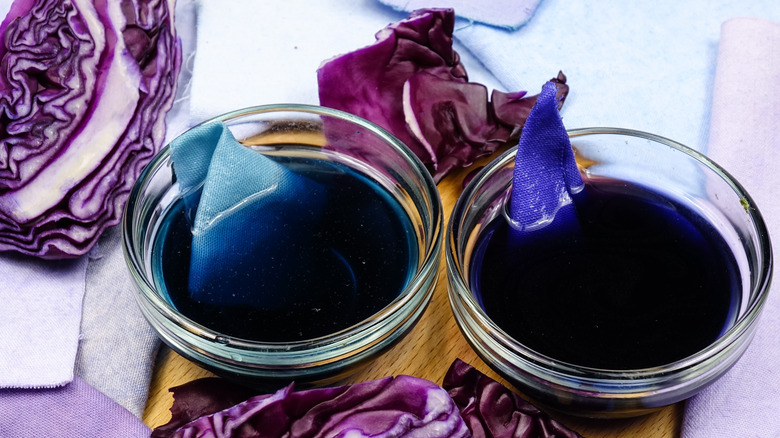
As an optional first step to strengthen the color stay of your red cabbage dye, start by simmering your pre-dampened clothing with a mordant, such as 1 tablespoon alum powder per every 3 ½ ounces of clothing weight, for about an hour, perhaps while your dye is cooking. Otherwise, skip it and start boiling the cabbage in a large pot. Aim for a ratio of about 3 parts water to 1 part chopped red cabbage. Once the leaves are in, reduce the heat so that the cabbage pieces simmer for about one hour. Then, set a colander in an additional pot and strain the now-colored water.
For a basic dye using the red cabbage's inherent color, simply add salt to the water, at a rate of up to 1 to 3 teaspoon for every 1 pound of fiber. This will intensify the color but not alter it. If you want to alter the dye, add white vinegar for a pinker hue or baking soda for a bluer one — it's not magic but a pH modifier that affects the color. Even better, try one of each in different pots to tie-dye clothing fabrics from just one plant.
Next, add your fabric of choice and let it soak in the water until it reaches an intensity just a bit beyond what you'd prefer. (The color will fade a bit when dried.) Finally, remove the fabric, rinse in cold water, and let it dry. Whether you need a hack to let your curtains reflect your style or give boring bed sheets a new look, cabbage scraps come in handy.