

What Percentage Vinegar Do You Need To Kill Weeds?
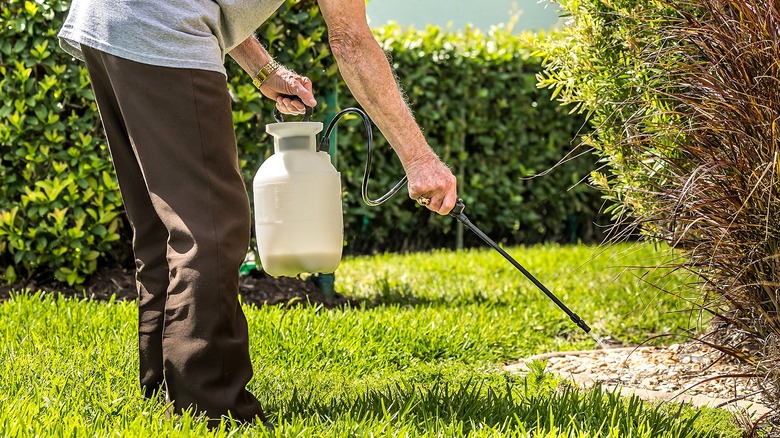
When it comes to combating weeds in your garden, there's an array of products you can use aside from reaching for toxic herbicides. For example, a pantry staple, vinegar, is often recommended as a weed killer. However, the standard white vinegar may not be quite strong enough to get rid of all the weeds you want to banish from your yard. Instead, there is herbicidal vinegar, which contains 10% to 30% acetic acid. Compare this to distilled white vinegar which contains about 5% of the acid.
Acetic acid is the byproduct of two-stage fermentation, and it's what makes vinegar smell like it does. In a bottle of white vinegar, about 95% of it is water; for cleaning vinegar (which shouldn't be used for cooking), it's 94% water. By contrast, higher concentrations of acetic acid (more than 11%), like those found in herbicidal vinegar, can be quite corrosive and harmful – specifically, it can burn the skin and cause permanent eye damage.
If you're tempted to try using a horticultural-type solution of acetic acid, take extreme care, and wear protective clothing, eyewear, even a respiratory mask. Keep the product away from children and animals, and always follow the instructions on the package.
How effective is vinegar at controlling weeds?
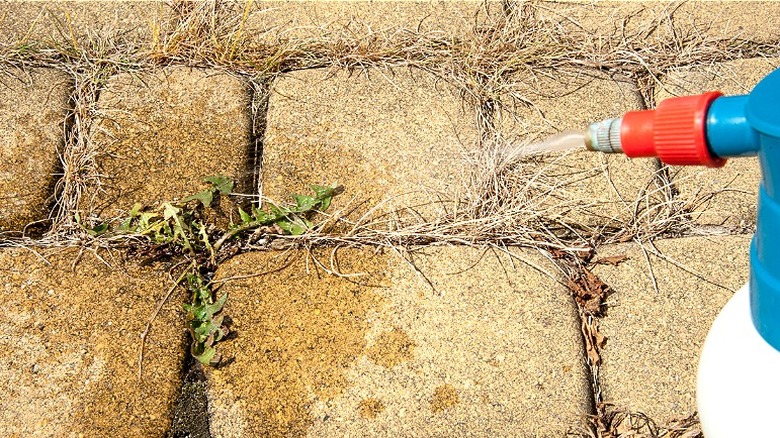
A USDA research study from over two decades ago found that a 5% and 10% concentration of acetic acid in vinegar could kill weeds that were 2 weeks old or younger. Further, the researchers found that as the concentration increased, so too did the kill rate, regardless of the growth stage. They also found that for at least one weed, the Canada thistle, vinegar — even at 5% concentration — was an effective solution, explaining, "[T]he 5-percent concentration had a 100-percent kill rate of the perennial's top growth. The 20-percent concentration can do this in about 2 hours."
If you want to use vinegar to combat weeds, understand that it works as a contact herbicide. This means the solution has to touch all plant parts to destroy the plant cells. It is unable to move through the plant, like a systemic product does. Also important to note, the vinegar is going to kill or damage any plant material it comes into contact with. It doesn't, however, leave lasting residue in the soil.
For these reasons, you'll have to be vigilant and apply the vinegar to any new weeds that pop up to keep them all under control. Plus, you'll get the best results if you spray when the sun's out and it's a hot day. Finally, to keep your spraying tasks to a minimum, you might want to learn how to prevent weeds from growing in cracks, thus eliminating the need to kill them.