

Beyond Deadheading: Here's How To Get Bigger Peony Blooms Next Season
With long-lasting, lush blooms of pink, red, or white, and many wonderfully fragrant cultivars to choose from, peonies are a feast for the senses and a true star of the mid-to-late-spring garden. As a professional gardener, I care for many peonies for clients, and these long-lived perennials are fairly low-maintenance, as long as they have full sun and well-drained, rich, slightly-acidic soil. I'd love to share some tricks for coaxing bigger, lusher blooms next season and beyond. Want your peonies to be real show stoppers? These post-bloom tips can help.
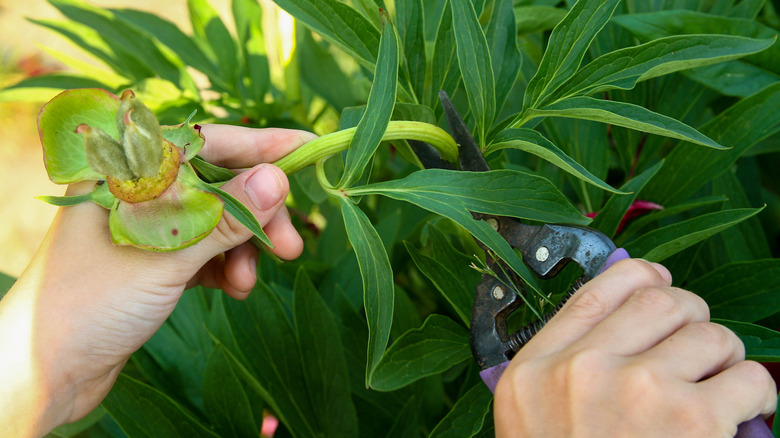
Many gardeners know that deadheading or pruning peony flowers post-bloom can help focus the plant's energy towards next year's buds instead of late summer seed pods. Peonies also need to be divided every few years, and the best time for this is late summer or early fall, just before the plants start to go dormant. But beyond the right growing conditions, timely dividing, and prudent deadheading, what can you do to help your peonies grow bigger, fuller blooms? Two key things to focus on are proper watering and effective fertilizing.
Peonies are famous for living a long time (100 years or more!) as long as they're planted in a suitable spot and at the right depth (with the crowns 2 inches below the soil surface). Although the size of blooms is in part dictated by the variety, they can also be helped or hindered by weather. To help your peonies form more robust blooms each year, start by paying close attention to the weather and adjusting your watering and feeding accordingly.
Best watering practices for better peony blooms
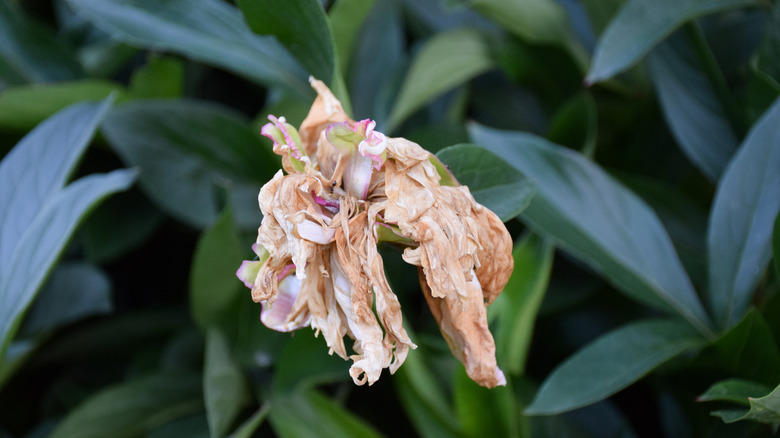
Peonies only need supplemental watering in the absence of average rainfall. If you have a dry spring season, regular weekly watering will help with healthy bud formation and lush flowers. Once they're done blooming, prune the leaves back a bit, and water your peony plants as you would your other perennials. Summer droughts can affect overall vitality, so water well once a week if things are very hot and dry. In a dry autumn, watering your peonies and other perennials helps prevent frost damage if there is a sudden freeze.
Another water-related concern: If you find you have issues with powdery mildew on your peony leaves, this can ultimately affect overall plant health, and may reduce bud and flower size. Sporadic water access is one common cause of powdery mildew. Make sure your peonies aren't too sheltered from rainfall (like under eaves or tree canopies), and water as needed during dry spells. If powdery mildew is extensive, it's best to prune peony plants carefully and allow fresh growth.
Mildew can also mean your peonies need better airflow. Dividing them can improve air circulation, as can removing other plants that have grown too close to them. Peonies don't particularly like to be moved, and may have fewer blooms until they're fully established in their new spot after a year or two. So be sure to divide at the proper time: mid-August through mid-September is best, I find. Peony experts recommend regular watering to help new plants get established: water deeply at the base to encourage strong roots, which means healthy buds and big blooms in spring.
Fertilizing, feeding, and mulching peonies
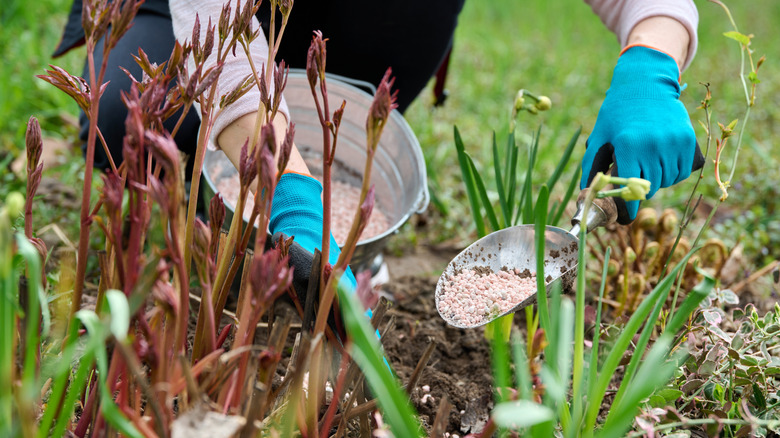
Some gardeners like to apply a basic fertilizer to spring-blooming perennials. Using a good organic fertilizer on peonies is fine if your soil is deficient in phosphorous. But I've found that spring fertilizing isn't usually necessary for established peonies, if you have good soil. In fact, fertilizer applied at the wrong time may only encourage bigger leaves, not bigger blooms. So I follow the advice of traditional gardeners and practice top-dressing. This means spreading a light layer of soil amendments around the base of peonies in the fall. I use aged manure, but you can also use compost to feed peonies. These amendments break down slowly over the winter.
This method is different from fertilizing because most plant fertilizers work on the plant directly, whereas top dressing feeds the soil, and it's a slower, more gentle way of adding nutrients. Since peonies are so long-lived and generally robust, this seasonal practice improves the plant's overall health. Avoid fertilizing peonies in autumn, as this can stimulate growth that might be vulnerable to frost damage. Let peonies go dormant naturally, and top-dress in September or October with aged manure or compost.
You can also improve the soil around your peonies, as well as protect them from winter weather, with some natural mulch. I apply mulch 2 to 3 weeks after top dressing. I only use shredded pine bark mulch with peonies, no dyed mulch, hardwood chips, or cedar mulch. I find the pine bark mulch breaks down well, improves soil texture and drainage, and gently boosts soil acidity, which helps keep peonies happy and heathy, with gorgeous big blooms in spring.