

How Extreme Heat Impacts Your Air Conditioner's Performance

When summer temperatures surge past the 100-degree mark, your home's air conditioner is pushed to its absolute physical limits. While it might feel like your unit is simply slacking off when the indoor thermostat refuses to drop, extreme heat actually disrupts the fundamental science of how your AC cools your space. Knowing how extreme heat strains your air conditioner — and why it struggles to cool when temperatures soar — is essential for avoiding expensive repairs and keeping your home comfortable all summer long.
Air conditioners do not actually "create" cold air — they work by absorbing heat from inside your home and dumping it outside through a refrigerant loop. When it gets hotter than 95 degrees outside, your air conditioner hits a wall. The system relies on a big temperature difference between its hot outdoor coils and the outside air to dump heat. But as the ambient temperature spikes, that gap shrinks, and the whole heat-transfer process grinds down. In fact, every degree past 95 knocks about 1% to 2% off your AC's overall efficiency. This means that at 105 degrees outdoor heat, the system can lose 10% to 20% of its effective cooling capacity.
Compounding this efficiency drop, most residential central air conditioners are sized and engineered based on standard design thresholds to maintain roughly a 20-degree drop below the outside air. On an 80-degree day, maintaining a crisp temperature of 68 degrees is practically effortless. However, if it is 105 degrees outside, expecting the unit to cool down to 68 degrees pushes the equipment beyond its design limits. The unit will run continuously without reaching the setpoint.
What extreme heat does to your air conditioner
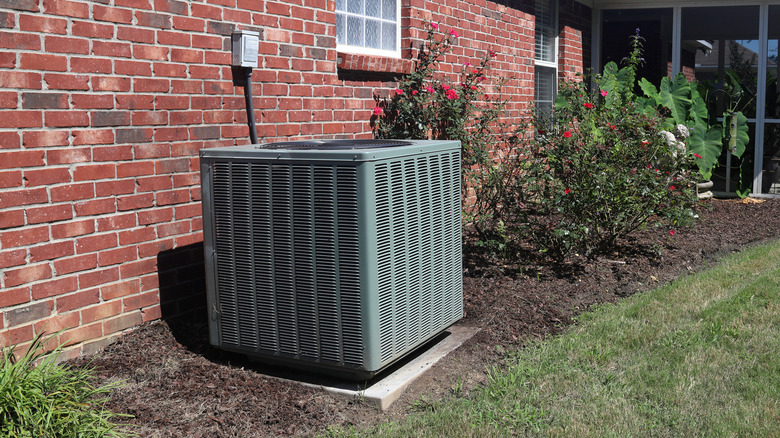
When there's a heat wave, it's not just your indoor comfort that suffers — the extreme temperature actually wreaks havoc on the air conditioner itself. For example, the compressor — the system's most critical and costly component — can easily overheat and burn out as it struggles to pump high-pressure refrigerant against peak heat. When ambient temperatures soar, the oil inside the compressor that lubricates its moving parts can thin out or break down, creating friction that cooks the motor from the inside out. The cost to replace your AC's compressor can range from $1,000 to $3,500, making this a budget-busting nightmare during the hottest summer months.
Additionally, since the compressor draws significantly more electrical current to handle the intense head pressure, the fan motor has to run continuously to pull air through superheated coils. This creates a dangerous domino effect across your system's electrical board. Dual-run capacitors, which store energy to keep the fan and compressor running smoothly, are notoriously sensitive to excessive heat and can easily swell, leak, or blow out. Pushing your unit past its limits is a major HVAC mistake to avoid in extreme heat, as the non-stop strain on every electrical component can lead to a tripped breaker, a high-pressure system lockout, or a complete system shutdown right when you need cooling the most.
On top of the threat of an equipment breakdown is the brutal spike in your monthly energy costs. While your energy bill might make you think you're getting extra cooling performance for your money, it's actually wasted power going toward a system operating at its lowest efficiency. Because the system runs for much longer cycles — often 24 hours a day without taking a break — electricity consumption spikes dramatically during heatwaves, forcing you to pay premium utility rates for drastically reduced cooling power.
How to protect your AC during peak heatwaves
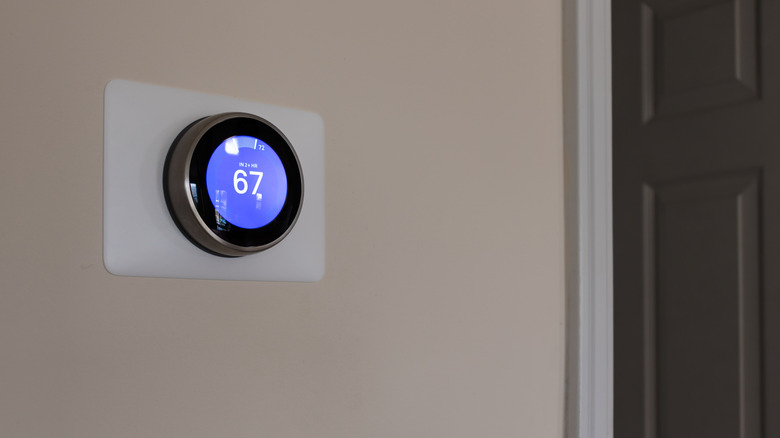
Your air conditioner's performance and lifespan are all tied together — especially when severe summer heat waves hit. To protect your unit from costly damage during particularly scorching days, you'll want to take a few key preventative steps. First, to keep your system from running into thermal overload, try to follow the "20-degree" rule on your thermostat. Because most central AC units are designed to lower indoor temperatures by roughly 20 degrees relative to the outside air, setting your thermostat to 78°F or 80°F on a 100-degree afternoon keeps the system working safely within its limits. In fact, keeping your dial at this temperature aligns with expert advice on the best thermostat setting temperature for your home in the summer.
Inside your home, you can pre-cool your house by lowering your thermostat early in the morning when outdoor air is still relatively cool, and your unit doesn't have to work as hard. This lowers the thermal mass of your home, like the walls and floors. When afternoon temperatures peak, bump the thermostat up to 78 degrees. Your home will stay cooler longer before the AC needs to kick on intensely. You can also keep airflow moving by keeping all the AC vents open. Closing vents increases static pressure in the ductwork, straining the blower fan and reducing overall efficiency. As a rule of thumb, install a fresh filter before a predicted heatwave hits, since a dirty filter forces the blower fan to work twice as hard. Taking these simple measures alongside other practical tips for keeping your home protected in extreme heat will ensure both your cooling system and your household weather the storm safely.