

Heat Detector Vs Smoke Detector: What's The Difference?
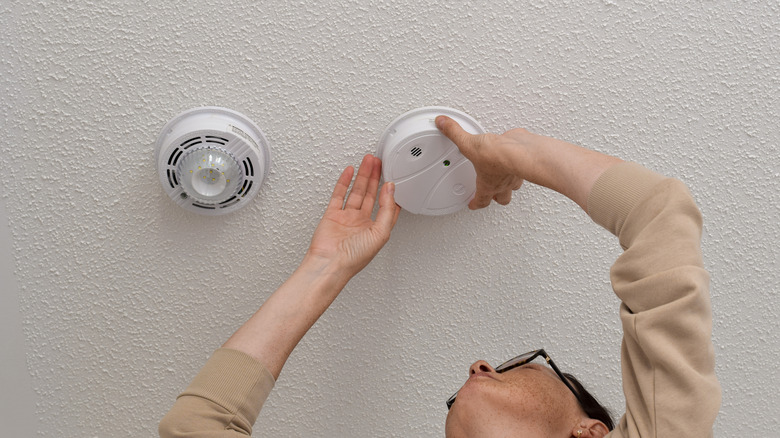
If you've ever heard a smoke detector scream in terror at a slightly overcooked piece of toast, you already know fire safety technology can be a double-edged sword. While these ceiling-mounted guardians are an absolute non-negotiable for every home, placing them in the wrong spots often leads to constant nuisance alarms and middle-of-the-night battery yanks. But when it comes to safeguarding your space, standard smoke alarms aren't your only line of defense — and using the wrong device in the wrong room could leave your home unexpectedly vulnerable. Enter heat detectors: a lesser-known alternative that operates on an entirely different set of rules. Understanding how these two fire safety tools differ — and where each one truly belongs — is the key to building a protection system that actually works.
So what's the difference? At the end of the day, it all comes down to what the device is tracking and what it's actually designed to save. Heat detectors only kick on when a room gets dangerously hot or experiences a sudden temperature spike. Since they completely ignore dust, steam, and everyday cooking smoke, they're tailor-made for protecting your property without frequent false alarms. Smoke detectors, however, trigger at the first presence of airborne smoke particles from smoldering fires long before high temperatures build up, providing early warnings to give occupants time to evacuate. Because sensor sensitivity degrades over time, knowing how often you should replace your smoke detectors is crucial — especially since smoke detectors react much faster than heat detectors, making them your primary line of defense for saving lives rather than just property.
How to divide and conquer
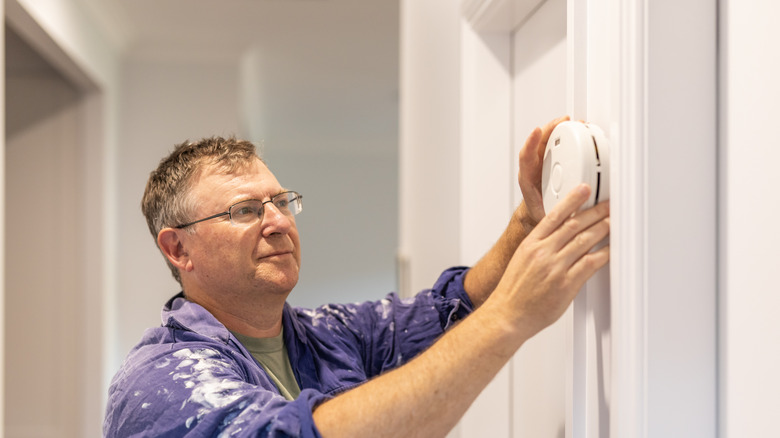
Relying solely on smoke alarms is like wearing rain boots on a hike — great for specific conditions, but frustrating in the wrong environment. The best strategy is orchestrating a tag-team approach that plays to the strengths of both options. When paired correctly, you get early life-saving warnings without the false alarm headaches.
The primary goal of having a heat detector is property protection and keeping high-risk utility zones monitored. Just be sure not to mount them directly over cooking appliances, as direct stove heat and airborne grease can damage or prematurely trip the unit. Instead, placing them in nearby utility zones allows them to stay quiet during everyday chores while sounding the alarm the moment structural thermal energy spikes.
Since the primary goal of having a smoke detector is warning you of danger and giving your family maximum time to evacuate, they belong squarely in the spaces where people gather, relax, and sleep. Knowing how many smoke detectors you really need in your house is crucial, since building codes require smoke detectors in every bedroom, outside all sleeping areas, and on every level of a home (including basements). In fact, inside bedrooms is the most important place to use smoke alarms. In these living spaces, a smoldering fire from upholstery or electronics can release toxic smoke long before temperatures rise enough to trip a heat sensor, making fast, early detection the key to survival.