

What To Put Around The Bottom Of A Shed To Keep Water Out?
We may receive a commission on purchases made from links.
Water can quickly damage expensive equipment stored in a shed, along with the structure itself. This can be particularly annoying if the water comes in through the shed's walls (and especially if you already used the most durable material for your backyard shed). It's easy enough to find and patch a hole in a shed's roof or wall, but sealing the bottom of a shed can be more involved. Fortunately, it's not impossible — there are a number of effective techniques for ensuring your shed is waterproof from top to bottom.
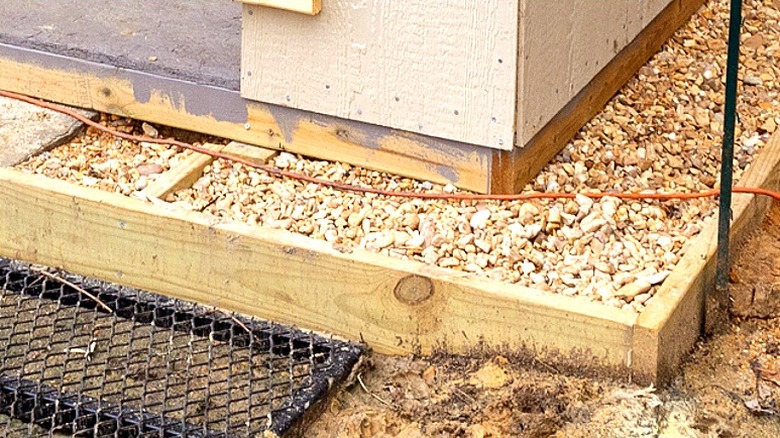
It's best practice to attach a mesh netting around the bottom edge of your shed. While this certainly won't prevent water from flowing through, it can stop larger bits of debris (as well as pests), and can also provide some structure for other sealing methods. Sometimes, simply providing drainage around the shed can stop water from seeping through the bottom.
If the flooding isn't too intense, you can try adding a layer of gravel along the shed's foundation. Gravel should help redirect rainwater away from the shed, and keep the surrounding area from getting too muddy. Another simple solution is to line the bottom of your shed with a strong silicone sealant, such as the Flex Seal waterproof caulk. Adding the sealant, in tandem with the mesh netting, can provide a durable seal, but you may have to perform touch-ups from time to time.
Other methods for waterproofing a shed
If your shed is still experiencing flooding, you can reinforce the bottom seal by installing a skirting board inside the structure. The skirt is attached to the bottom of each wall to hide any gaps, and can be a piece of metal, vinyl, or pressure-treated lumber (if you go this route, try waterproofing the wood with an all-natural ingredient).
Even though the skirt acts as a barrier, it's important to ensure it doesn't make the interior of the shed airtight; otherwise, the lack of airflow can lead to moisture-related issues for the structure (like mold). Alternatively, you can line the bottom of your shed with bricks or cinder blocks.
A sealed, skirted shed that still seems to be leaking from the bottom may have bigger issues related to the foundational slab. In extreme cases, the best solution may be to install a new slab that's higher off the ground. Before you take this expensive step, you can try reverse engineering the effects with a bit of landscaping. If your shed is located in a low point section of your yard, instead of making it taller, shovel the dirt so that it doesn't slope toward the shed's foundation.
Along with adding gravel around the shed, you can also improve drainage by installing gutters and downspouts so any water collected on the shed's roof is directed away from its walls. To ensure your belongings stay safe on the off-chance water does break through all your new defenses, add plenty of shelves to your shed to store things off of the ground, and follow these othe safety tips to protect you and your shed belongings.