

What Type Of Drill Is Best For Home Use?
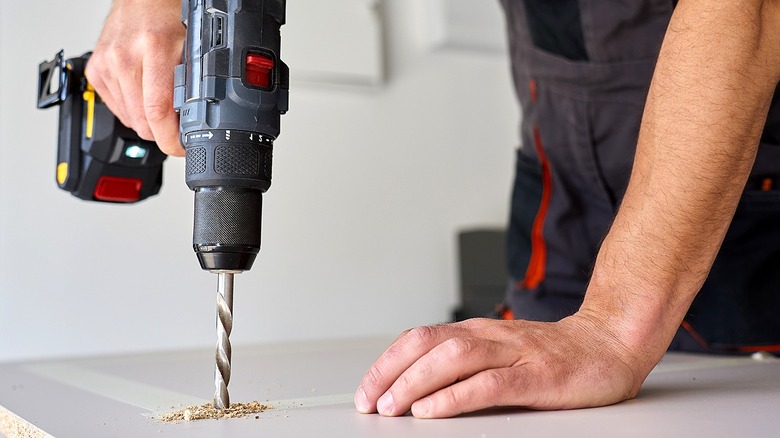
From hanging up shelves or artwork to making furniture assembly faster, the right drill can take the headache out of everyday maintenance so you don't have to hire a professional every time something needs a quick fix. If you're new to the world of power tools, the wide array of drills on the market might be overwhelming, but there are a few ways to narrow down your options.
First, opt for a cordless drill (a mainstay in garages and tool sheds, by the way, since it was invented in the 1960s by Black and Decker), since it will be easier to maneuver than a corded one. Next, you'll have to consider the drill's voltage. Generally, a 12-, 18-, or 20-volt drill will be plenty powerful for use around the home.
A drill's voltage refers to how much power it receives from the battery: The higher the number, the stronger the drill will be. The caveat to this are 18-volt and 20-volt drills. A 20-volt drill only reaches that power when it's first turned on (i.e., with a full charge); afterward, its power goes down to 18 volts. A lighter 12-volt drill, meanwhile, is a good choice for someone who lives in an apartment or someplace where it's easy to avoid wall studs when installing features like shelves, mirrors, and curtain rods.
While these drills can make their way through the thick planks of wood if needed, a more powerful drill will make the process easier. Twelve-volt drills are excellent for projects that involve premade pieces; for instance, they could help you put together the Vihals, or the IKEA table that saves more space in a kitchen, in a flash.
A 12-volt or 18-volt drill works for everyday use

More DIY-minded folks will need something with a bit more umph to ensure that their projects are sturdy. For instance, an 18- or 20-volt drill is a better choice if you want to hang up a floating shelf that is going to bear a lot of weight. It'll make it easier to install wall anchors or drill through wooden beams so you don't have to worry about your creation falling apart. This extra bit of versatility makes an 18-volt or 20-volt drill suitable for every homeowner, particularly those who are always working on a new home improvement project.
Aside from their power, there are a few other factors that separate 12-volt and 18- or 20-volt drills. One important element to consider before you make your choice is size. As you might guess, a 12-volt drill is smaller and lighter, and therefore easier to handle and fit into tight corners. Alternatively, a 20-volt drill's extra strength comes at the cost of a bulkier tool.
People who aren't yet comfortable wielding power tools may find that the ergonomic nature of 12-volt drills lessens the learning curve while also being easier to store. Eighteen-volt or 20-volt drills also tend to be more expensive, though they may be worth it considering how many applications they can be used in. (Read about the top cordless drills, according to Consumer Reports.)