

Everyone Owned It In The '30s — Now It's A Surprisingly Collectible Thrift Store Find

You can find all sorts of exotic and exciting things when shopping for antiques, but sometimes, the most charming thrift store finds aren't the flashiest or most colorful. One surprisingly collectable item is an antique meat grinder. Admittedly, a dusty old cast iron meat grinder doesn't quite get a thrifter's blood flowing like a rare Pyrex bowl. It's a mistake to ignore them, however, as some commercial-grade models of these once-common kitchen tools can command prices of up to $1,000 today. An antique meat grinder can also be the perfect addition to any modern farmhouse kitchen.
Hand-crank meat grinders were common in the U.S. until the advent of electric units in the post-World War II period, with many high-quality cast iron models produced in the 1920s and 1930s. Almost a century ago, you could find one of these grinders in just about every American home, before widespread refrigeration and modern grocery stores changed the way people bought their meat. If you wanted ground beef or pork, you'd have to do it yourself; a meat grinder made the work easier, even if manual hand-crank units still required a bit of elbow grease. Since so many of these were made of cast iron and built to last, more have survived from the '30s to now than you might think. Vintage and antique meat grinders are among those retro appliances that should make a comeback, but there are a few things to know about them before you buy one.
What to look for in a vintage or antique meat grinder
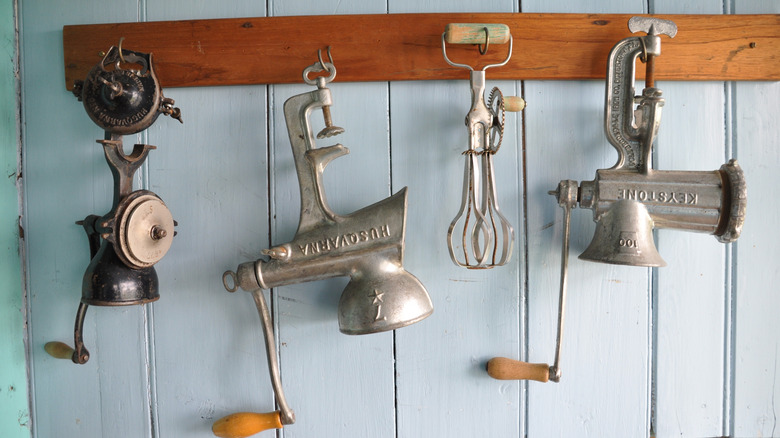
When keeping your eyes peeled at the thrift store, some of the most notable American grinder brands of the era to look for are Enterprise, Griswold, Universal, Climax, and Keystone. Models from these manufacturers are identifiable by their brand names, which are usually cast into the grinders themselves on its main body or its clamp. You can also look for markings indicating model numbers, patent dates, or where the grinder was made, which can give a clue to the manufacturer if the brand name is absent.
Once you find a promising meat grinder, the next step is to inspect it and assess its condition. First, check it for corrosion and peeling. Since iron is vulnerable to rust, antique cast iron kitchenware was often plated with corrosion-resistant metals such as nickel. Secondly, examine the plates and blades. If they're absent or worn out, the cost of restoring or replacing them could be too expensive to be worth it. Finally, inspect the clamp used to mount the device to your table or countertop, as the grinder won't be of much practical use if you can't secure it properly. Though you may be able to use your meat grinder for its original purpose, older models may contain lead, so either lead test your grinder before using it, or use it for display only.
If you're thrifting for antiques to resell them, there are a few other features besides condition that can increase an old meat grinder's value. For example, extra-large and extra-small grinders are rarer than standard-sized kitchen models, which can fetch more on the open market. A grinder that includes its original packaging or has unique features, such as special attachments, will also be worth more.