

Striking Yet Minimal: The Valuable Vintage Glass We'd Be Thrilled To Find
We may receive a commission on purchases made from links.
Pieces like Murano glass will always be collectible, thanks to its wide array of unique designs and handmade technique. This artisan-made glass, specialized on a small island near Venice, Italy, is truly more art than houseware — though it is able to be both. This type of glassware is typically known for its bright colors and ostentatious design, suitable to a very particular aesthetic. However, if your taste veers more minimal, yet you can still appreciate an amazing piece of craftsmanship, there is an Italian glass line for you: Salviati glass.
Since 1859 (and still today), the Venetian glass maker Salviati is set apart from the rest. Nearly 200 years ago, Vicenza-born lawyer Antonio Salviati declared one didn't need to be born into the glass industry, and he set out to start his own production of Murano glass, experimenting with new production techniques. Eventually, the company pioneered Aventurine glass (featuring sparkly minerals) and the Opaline glass (a milky white).
The company is still producing artisan glassware and lighting today, but it's the vintage glass that could set off a new aesthetic trend. From sleek birds to dynamic sculptural bowls to gold-flecked dessert sets and enameled wine glasses, Salviati glassware has a more sophisticated, minimal vibe compared to other Murano glass lines. Its pieces can go for a pretty penny ($100 to $500 and beyond) on secondhand sites like Etsy.
How to find and identify vintage Salviati glass
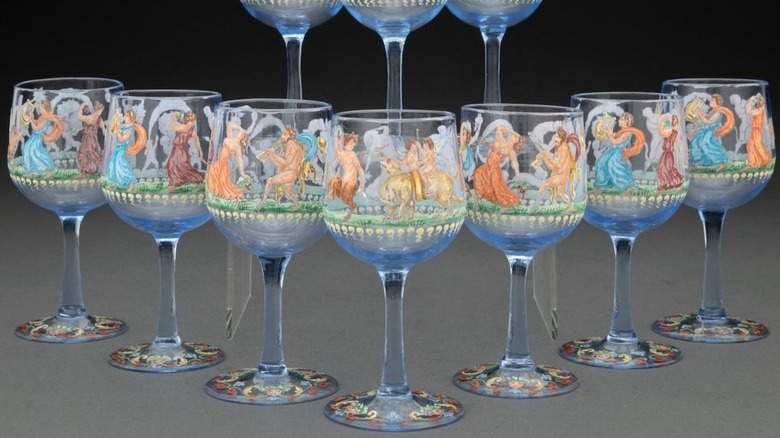
Salviati glass is a thrifter's best-kept secret you'll want to know about, but identifying it secondhand takes a careful eye. You'll probably be grabbed by the signature flecks of gold or other sparkling minerals, and you can see visible bubbles that reveal this line's hand-blown technique. Pieces should feel weighty and significant — even champagne flutes are known for their thicker bases.
If you suspect a piece is Salviati, look for the designer's marker. Though they have evolved over the years, this usually involves a foil sticker, glass etching, or acid stamp mark somewhere on the piece. It will include the brand name as well as "Made in Italy." More modern pieces will have a circular plastic label, while those prior to the 1970s will have a foil label. Once you've spotted it, you know you've found a valuable glass item you should be looking for at thrift stores. Take it home and style it as the artwork it truly is.