

How To Repel Spider Mites With A Citrusy Essential Oil They Can't Stand
We may receive a commission on purchases made from links.
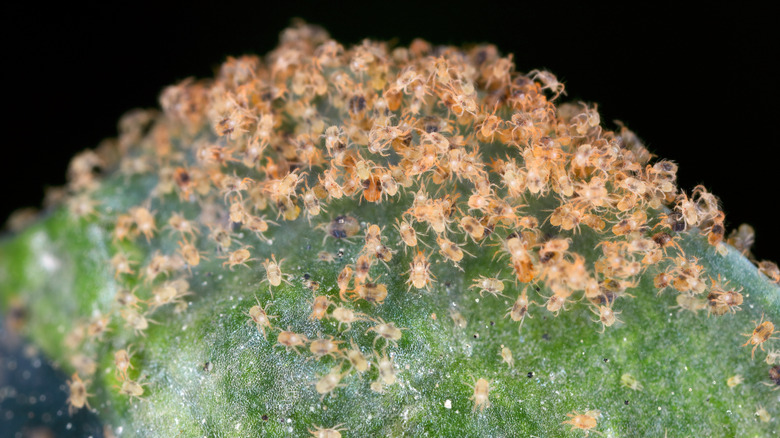
Spider mites resemble yellowish, microscopic spiders, but instead of helping to keep your home free of other pests, they eat through your garden, destroying every plant in their path. If you notice your plants starting to look sickly and develop yellow spots, or you find a thick white web in your yard, you likely have a spider mite infestation on your hands. The war between gardeners and spider mites is a long one, and as such a wide array of remedies have been discovered that can keep these critters at bay. For a natural solution that will repel spider mites while giving your home or outdoor space a citrusy scent in the process, look no further than lemon balm essential oil.
Lemon balm, also known by its scientific name, Melissa officinalis, or more simply just "Melissa," produces an oil that is rarer than other lemon-based essential oils and prized for its slightly sweet scent. This makes it a perfect natural solution to give your house a fresh smell. Citrus scents in general tend to detract pests, and lemon balm is no different. In fact, in a study published to Acta Phytopathologica et Entomologica Hungarica, a journal focusing on the health of plants, researchers found that plants treated with lemon balm oil showed high rates of repellency (64.86%) against spider mites, and the formula could even kill female mites, nymphs, and eggs. Given the evidence, it would seem that lemon balm essential oil is a worthy alternative against traditional pesticides. Along with being effective, the oil is also less harsh on your plants and soil, and will fade back into the environment harmlessly over time. Plus, a bottle of Sheer Essence Melissa Lemon Balm Essential Oil can cost less than a pesticide targeted for spider mites, and you only need a small amount to make your own repellent.
Lemon balm essential oil spray naturally repels spider mites

Pure essential oil straight from the bottle is much too strong to be used near your plants, so you will need to dilute it with 1 gallon of water for every 10 to 40 milliliters (roughly 2 to 8 teaspoons) of lemon balm essential oil. To ensure there aren't any negative effects to your garden, only use your DIY pesticide on one plant or small corner of a flower bed when first starting out. The essential oil can become more potent when it's hot outside, which is also when spider mites become most active. Keep that in mind when mixing up the solution, and start with a weaker formula before adding more drops of lemon balm if needed.
To apply your natural spider mite repellant, transfer it to a spray bottle. Spritz the solution onto plants that show signs of spider mite damage, focusing on the underside of leaves and new growth. Along with repelling spider mites, lemon balm can also dissuade other insects from plaguing your garden, since it contains citronellal, the same compound used in citronella-based insect-repelling candles. As such, you can also spray the lemon balm concoction around your patio and even on yourself to keep bugs away — just make sure the solution is properly diluted.
Keep in mind that it is the lemon balm essential oil that repels spider mites, not the plant itself. Spider mites are actually a common offender against lemon balm plants. However, a homemade lemon balm essential oil spray may be more effective. If you've been regularly treating your plants with the essential oil to no result after a few weeks, you may need a stronger alternative to get rid of the spider mites.