

10 Tools That Pioneers Used To Survive On The Oregon Trail
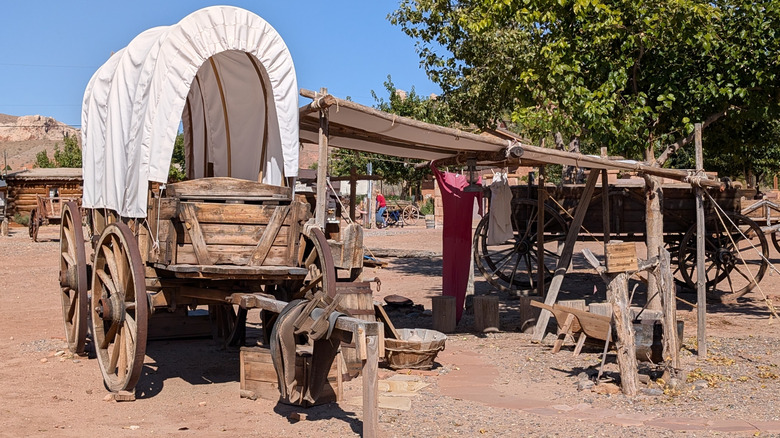
During the 19th century, many pioneers emigrated across the United States on wagon trails taking them west. The Oregon Trail, which wound over 2,000 miles from present-day Missouri to Oregon, still captures the American imagination. If you want to gain a bit of personal perspective on how the pioneers lived, you can stay in a Wyoming Airbnb that's a converted covered wagon. Or, you might try living without all your modern luxuries and relying on the tools that pioneers used to survive the brutal lengths of the Oregon Trail, such as cast iron pots, lanterns, and washboards.
Pioneers had to be smart about what they carried across the country on the trail. Heavy loads could prove too taxing for their draft animals over difficult stretches of road. Stories say that the Oregon Trail was littered with furniture, trunks, stoves, and other items that needed to be dumped to continue on the way. While the most important cargo on board a wagon was the food supply, pioneers also brought along tools and equipment to help them make it all the way west. Everything from their cookware to their wagon-repairing tools could make a big difference in their survival.
Cast iron cookware
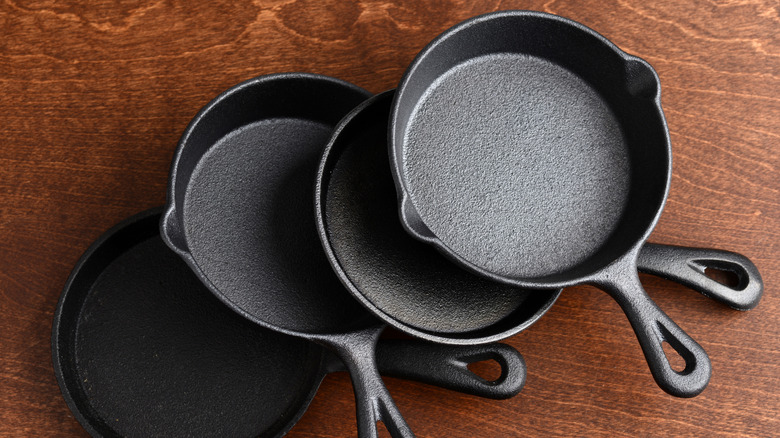
Some of the very same cast iron kitchen tools you can find at the thrift store once accompanied pioneers on their journey west. Although cast iron pots and skillets added weight to a wagon, they were worth it due to their tough construction. One reliable and versatile type of cast iron cookware that was very popular is the Dutch oven. Pioneers could use them for all types of meals and flip the lid over to use as a skillet.
Lanterns
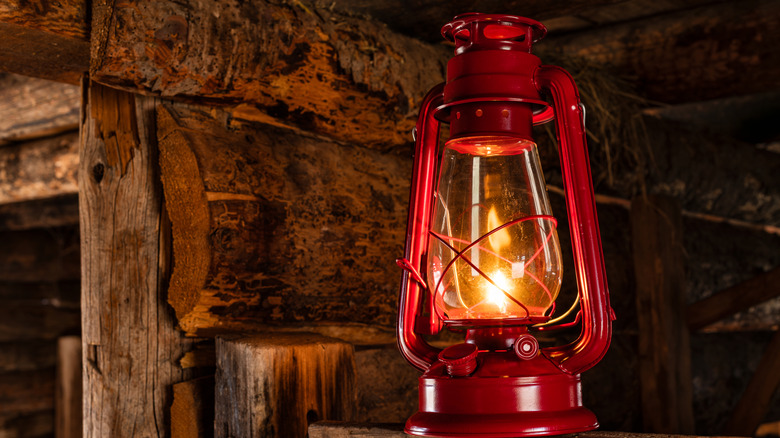
While modern-day folks only need to turn to light sources like candles during blackouts, pioneers needed a reliable light source every day. Most work, including repairs to the wagon, happened after the wagons stopped to rest for the night under the light of candles and kerosene lanterns. Kerosene was invented in 1846, and once it became easier to make and widely used, kerosene lanterns became popular. Plus, they had a handle for portability. Kerosene lamps are still used for camping today, but you are more likely to rely on electricity for nighttime work at home.
Water barrel
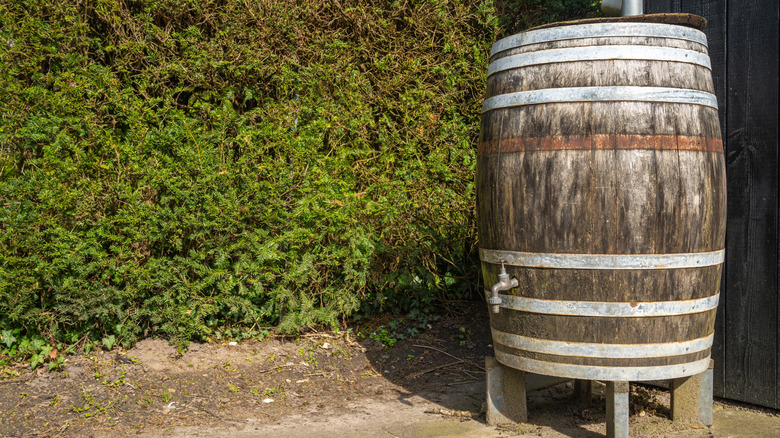
Instead of relying on streams and rivers on their journey, pioneers needed a way to save and store water on the go. A barrel, or keg, allowed them to collect river and stream water when they stopped to camp, which could later be used for drinking, cooking, and washing. It was smart for each wagon to carry one water barrel at all times. Barrels also worked for collecting rainwater, which might be preferred over the hard, mineral-rich water pioneers found along the trail.
Hand-operated coffee mill
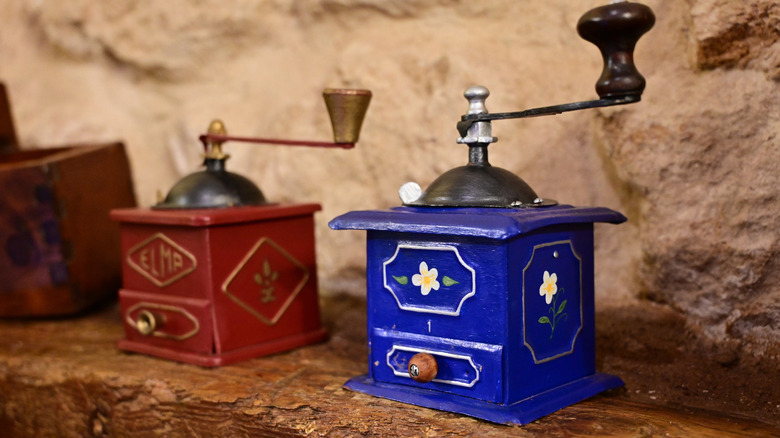
Pioneers relied on their supply of coffee immensely, because a lot of the water near the trail was full of minerals, which made it tough to stomach. Even children drank coffee to disguise the taste. Hand-operated coffee mills were used to grind coffee beans for brewing. A coffee mill would have cost about $1 in the 1840s and would now be considered a collectible antique. It was a tool used daily, considering pioneers packed several pounds of unroasted, green coffee beans per person and drank coffee as part of meals.
Felling axe
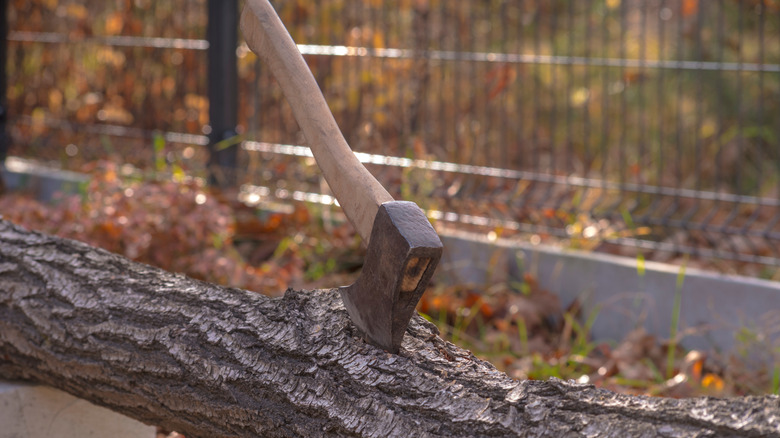
A pioneer heading west would have needed various tools to chop wood, including a handy felling axe. An American felling axe features a curved handle and a broad blade. If a wagon ran into fallen trees along the Oregon Trail, they would have grabbed an axe to clear them out. This tool was also versatile for grabbing firewood, which was necessary to be able to cook food outside. There were other uses for a good felling axe: Wood was vital for wagon repairs and sometimes for building corduroy roads, or pathways made of logs over difficult terrain.
Wagon jack
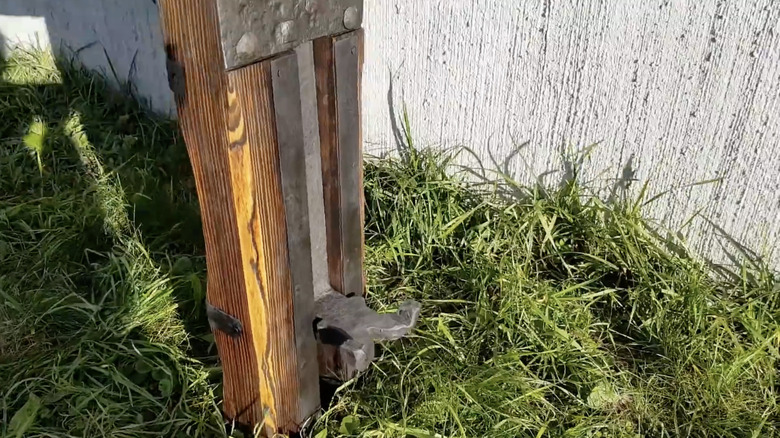
Another vital piece of equipment for pioneer wagon trains was the wagon jack. If a pioneer ran into trouble on the trail, such as discovering their wheel had loose parts, they might need to fix a wheel before continuing onward. They would use a wagon jack to lift up the heavy wagon to replace or repair the wheel. Many different types of jacks were created, including some that were all wood and others that used iron components. Along with a wagon jack, pioneers often packed spare parts like tongues, spokes, and axles in case of emergency.
Carpentry tools
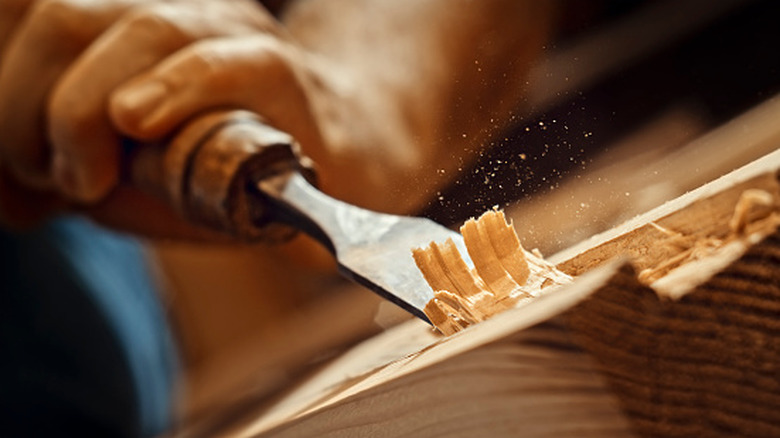
While we can leave the homebuilding and woodworking to professionals nowadays, that was not true earlier in history. One set of tools that a pioneer would never leave behind would be their carpentry tools. Included in this set were items like augers, planes, and saws, which cost $2.50 in the 1840s. A handy pioneer would be able to use these kinds of tools, along with chisels and gimlets, to repair wagons and wagon wheels. And once they got to where they were going, the Oregon Trail pioneers could turn around and construct basin log cabins using those same tools.
Blacksmithing tools
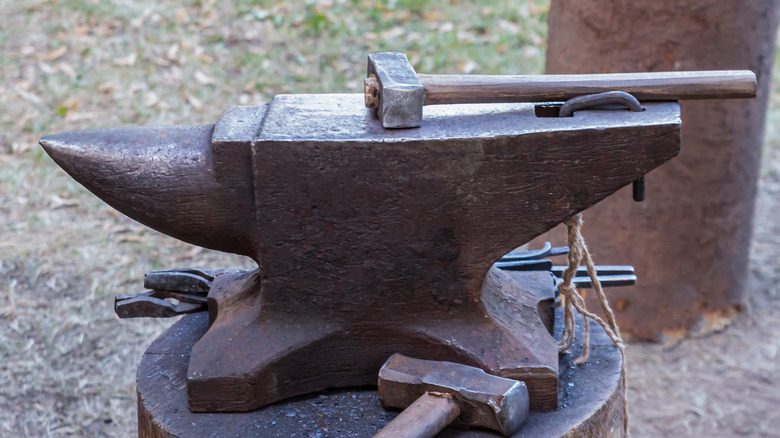
Blacksmithing is not a common skill for the average modern homeowner, but it was vital for 1800s homesteaders. Many pioneers had basic blacksmithing tools to repair equipment when they were not near towns. Despite the weight of a heavy anvil, which was a solid piece of iron, it was often seen slung below the wagon. If a pioneer had trouble with an iron part of the wagon, they would be able to fix it no matter where they were if they kept an anvil aboard. The iron parts of covered wagons included the wheel rims, axles, and hounds. Hounds acted as a brace to stabilize steering in the undercarriage.
Washboard
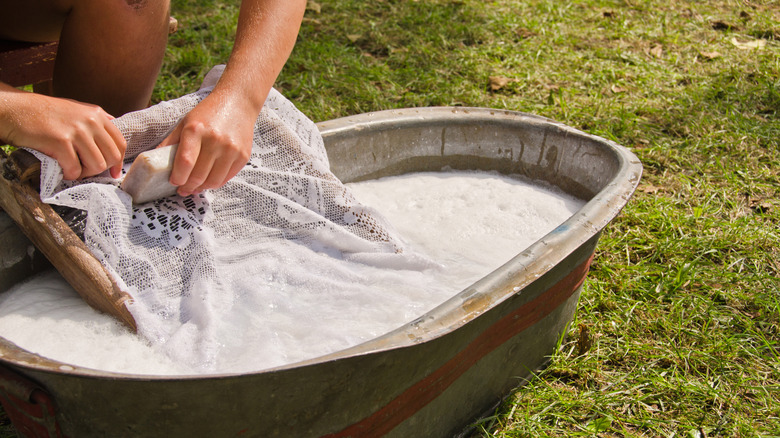
Long before washers and dryers existed, laundry had to be done by hand. When traveling by wagon for months on end with only two or three changes of clothing per person, it was very important for pioneers to maintain their clothing and other goods properly. Washboards, which were wooden boards with rounded wood strips nailed on to create a rough surface, were necessary to clean clothing along the way. Pioneers packed their wash tub and washboard and used them once or twice a month. A plus of a washboard is that it doesn't use much water, a major concern for Oregon Trail pioneers.
Needles
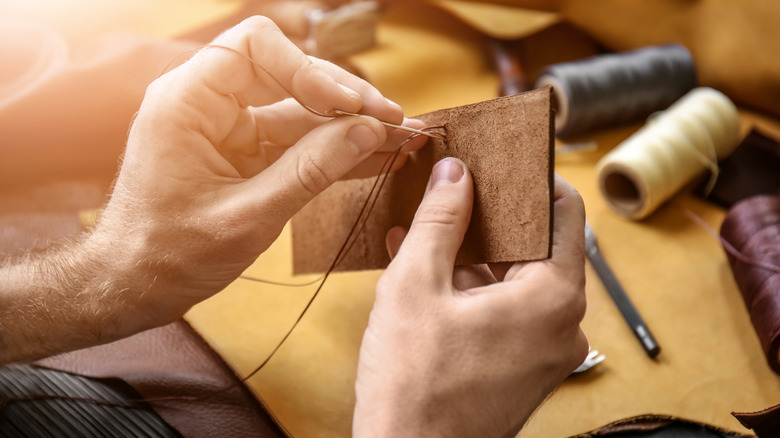
A humble set of needles was one of the most important tools a pioneer could carry with them. Needles allowed people to repair worn clothing and other fabric items. There were not many towns with stores where they could buy replacements, plus they typically did not have a lot of money to spare to buy new goods at high prices. Pioneers also would have carried needles meant for leatherworking, which were vital to repair bridles and halters for horses and oxen.