

GFCI Vs. AFCI: What's The Difference, And Which Outlet Type Do You Need?

Delivering power safely to household electrical outlets has come a long way from the early 1960s when most outlets were not even grounded. In modern residential construction, though, there are several different types of electrical outlets found in homes. Understanding the options available for your home can help you choose the right one and keep your living space safer.
Two modern designs of outlets made to enhance household safety are GFCI (Ground Fault Circuit Interrupter) and AFCI (Arc Fault Circuit Interrupter). Even though the outlets look similar, they perform different functions. The AFCI receptacle detects arcing in the wiring and cuts the power before it can start a fire. GFCI technology constantly measures the electrical current as it passes through the outlet. If it detects a slight difference between the hot and neutral wires, it cuts the power immediately to prevent a person from suffering a shock. The hot wire constantly carries power, while the neutral wire simply completes the circuit, allowing power to flow through your electrical system.
Building codes often require the installation of AFCI outlets in living rooms, bedrooms, dining rooms, kitchens, and other gathering areas to protect against electrical fires. Building codes require GFCI outlets in areas where water and electricity may come together. In a home, this could include kitchens and bathrooms. They may also be needed in outdoor areas, or in garages.
Why you must use GFCI outlets in certain areas of your home
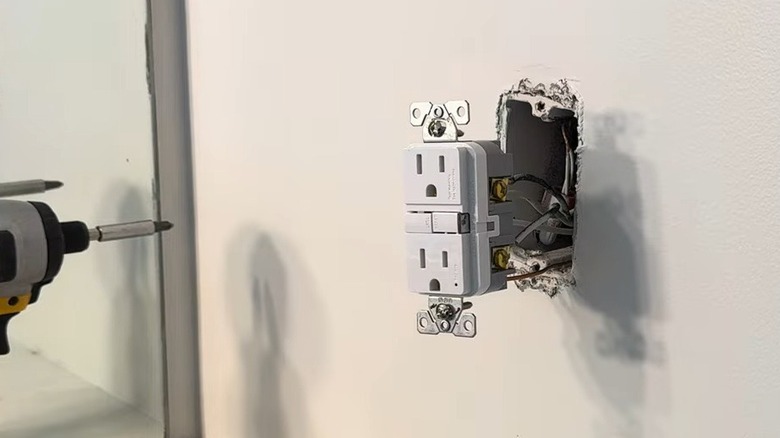
Determining where you need to use GFCI outlets in your home instead of AFCI outlets starts with thinking about the conditions where they are being operated. Because GFCI receptacles protect against electrocution, and because having water near electrical outlets increases the possibility of someone suffering an electrical shock, building codes require GFCI receptacles in frequently wet areas. If water gets inside the GFCI outlet, the electrical current may migrate off the intended path through the wiring, causing the receptacle to measure an imbalance between the hot and neutral wires. And if water entered a non-GFCI receptacle, you could suffer an electrical shock as the standard receptacle wouldn't cut off the power.
In addition to kitchens and bathrooms, building codes may require GFCI outlets within six feet of sinks and near dishwashers. If the GFCI outlet in one of these areas trips because of water penetration (or another reason), it will make a clicking sound and cut off power.
Although these types of receptacles may last 15 to 25 years, they could fail far sooner in harsh conditions. Electrical codes recommend testing the outlet each month to ensure it's working properly and keeping you safe. Plug in a night light and press the test button, which should turn off the light. Pressing the reset button should turn the night light on again. Any other result may indicate a malfunctioning receptacle.
Why AFCI outlets are required inside particular rooms
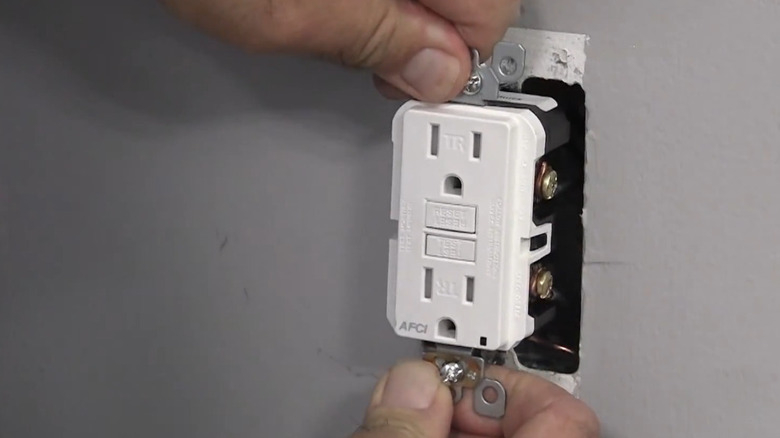
The AFCI outlet can measure irregularities in electrical current that could lead to a fire because of arcing, which occurs when the current moves outside the wiring, usually through the air. The receptacle tests for potential arcing both in the wiring connected to the outlet and in any appliances or other devices plugged into the outlet. An unintended arc can occur because of loose or damaged wiring inside the wall or an appliance plugged into the receptacle that's having wiring issues.
Arcing generates significant heat, which can lead to a fire that places people nearby at risk of injury. When the AFCI outlet measures arcing (also called an arc fault), it immediately interrupts power to the receptacle. Consequently, building codes require AFCI breaker installations in normal living areas where people are more likely to have devices plugged in for long periods of time, such as in bedrooms, to try to prevent sudden electrical fires.
Even though AFCI and GFCI outlets perform different functions, you might want to use them in the same room at the same time. Building codes can require you to use both types of receptacles in areas that have an electrical fire hazard from a malfunctioning appliance and a moisture hazard, such as a kitchen or laundry room. Your electrician might recommend using a dual-function receptacle that includes both AFCI and GFCI protections in a single outlet.