

Do You Need To Pick Up Dog Poop Before Mowing Your Lawn?
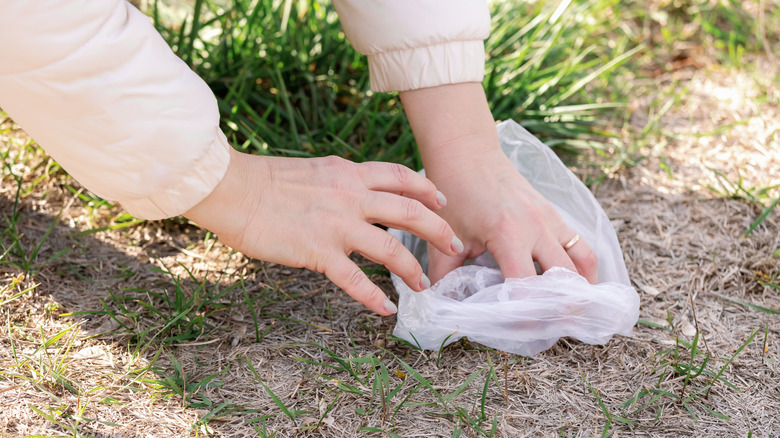
According to the latest statistics from the American Veterinary Medical Association, over 42% of U.S. households keep dogs. That means there are lots of dog droppings around yards—if not from your own pet, maybe from the neighbor's or an unashamed stranger who refuses to pick up after their furry friend. And if you've ever eyeballed a big doo and wondered if you should pick it up before giving your yard a clean cut, the answer is a resounding yes. Picking up dog poop before mowing is necessary to avoid damaging your equipment, protect the environment, and minimize the spread of diseases to your family. It only takes a few minutes to remove waste beforehand, but doing so can save you from needing to clean your mower and tracking bacteria across your lawn and home afterward.
You might think it wouldn't be so harmful since you know their diet. Where the yard is big enough, the harm may seem even less. After all, it's acres against a few piles of poop. Some are also under the misconception that dog poop can fertilize the lawn, much like aged manure, and feel like they should just mulch it along with the grass clippings. But it's actually one of the many things you should never add to a compost heap or have near your vegetable beds because it contains harmful bacteria and can contaminate your food. Unlike manure from herbivores such as cows or horses, dog waste isn't considered a safe soil amendment because of the pathogens it can carry.
Mowing over dog poop is environmentally hazardous
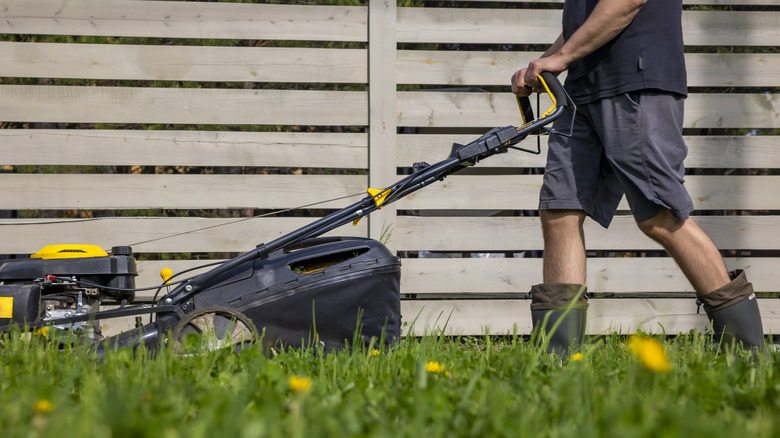
Let's be honest. Mowing over dog feces is plain gross. It sticks to your equipment's wheels and smudges the yard — the very space where you walk barefoot while soaking up morning sun or your kids play catch with your dog. It might not be present in tiny specs, but it's likely getting onto your feet or shoes and tracking inside your home. If you use the same mower in both your front and back yards, you could also unintentionally spread contamination across your entire property. And don't even get us started on the stink you'll have to deal with.
But most worryingly, pet waste is hazardous. In fact, along with lawn pesticides and heavy metals, it enjoys the notorious distinction of Nonpoint Source (NPS) Pollution from the U.S. Environmental Protection Agency (EPA). To understand why, here are some facts: up to 23 million E. coli bacteria can inhabit a single gram of dog poop, along with ringworms, salmonella, hookworms, tapeworms, roundworms, and giardia. Generally, these can last in your yard for around four years (yikes!).
But more often than not, they're washed away into storm drains or streams, polluting the water sources. The result? You (or your community) may get exposed to harmful bacteria if you consume fish or swim. In fact, authorities have even traced drinking water contamination back to dog droppings. Besides, the heavy dose of phosphorus released into the water sources can't be effectively neutralized, leading to the growth of algal blooms. Envisioned on a scale across several mowing runs or the neighborhood, such an act is in poor taste and bad for the ecosystem.
Mowed dog poop isn't great for your yard or the equipment
As touched upon previously, dog doo isn't a fertilizer. Unlike wild animals that survive on greens and such, pet dogs are given highly processed, protein-packed diets. As such, their poop reflects this: it contains certain minerals and bacteria in substantial numbers, and it's highly acidic. If you've cared for a lawn long enough, you'll know that plants can only absorb nutrients within a specific pH range. Once these acidity levels are breached, your grass may become weak and stressed. Excessive nitrogen from dog feces can also exhibit results similar to overfertilized lawns. Indeed, it's one of those surprising ways you've been killing your grass without knowing it, or at the very least, saddling it with brown patches. Moreover, your dog's droppings may be secretly attracting rodents to your yard. Turns out, mice and rats have a thing for their poop, which is pretty nasty. Flies, fleas, and other pests are also drawn to areas where droppings accumulate, creating another reason to clean up quickly.
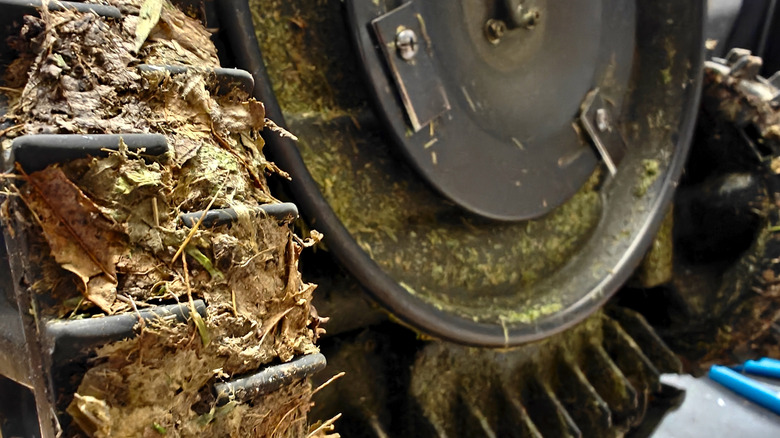
Running your lawn mower over dog doo can damage it, as the particles get on the wheels and under the deck. If you hose it down later, you risk kickstarting the cycle of polluting the waterways. But if you let it solidify and gum up your equipment, or worse, repeat it often enough, eventually your lawn mower may become clogged and struggle to make a clean cut. Not to mention, it would stink up your garden shed. So, do yourself a favor, and scoop up the dog poo before trimming your turf.