

Why You Should Avoid Using Garden Soil For Seed Starting
We may receive a commission on purchases made from links.
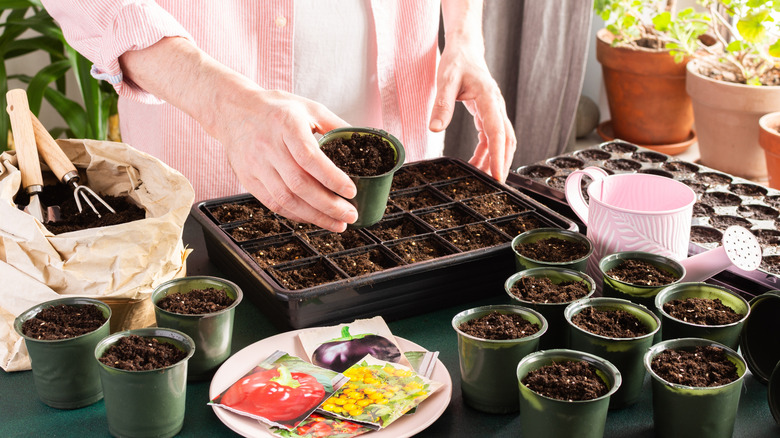
Many gardeners like to be precise in everything they do. From selecting the right plant cultivars to choosing the best tool for weeding in clay soil, you'll usually get an exacting answer. For example, when it comes to choosing the right soil for your project, the answer depends on what you're trying to do, and if you're starting seeds in containers, you might be cautioned to avoid garden soil altogether. While your garden dirt may grow things beautifully in your backyard, most don't live up to the ideal for container gardening, especially when it comes to tiny seedlings. Garden soils are usually too heavy and dense to drain well enough for seed starting.
When drainage is inadequate, roots can't breathe, and a crust forms, which seeds sometimes can't push through. Dirt from your garden can also contain weed seeds and pathogens, unlike bagged mixes. A seed starting mix provides better drainage and a sterile environment that's better for young plants. Potting mix also provides protection against problems like damping off — a common fungal disease that can quickly kill a tray of seedlings. If you are still interested in using some garden soil in your potting mix, though, there's a way to make it work.
What makes a good seed starting mix
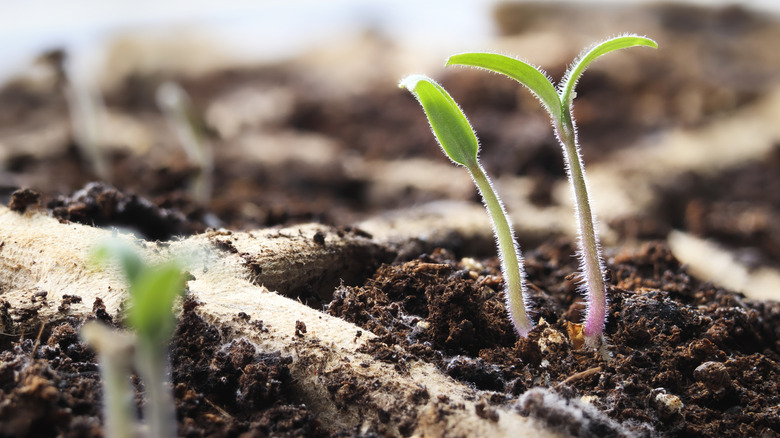
When you're cutting costs on gardening projects, there are better ways to save money on soil than using plain old garden dirt for starting seeds. A good seed-starting mix is sterile, commonly made with varying combinations of ingredients like peat moss, perlite, coir, and vermiculite for excellent drainage and breathability. If you decide to make your own, it should have a fine texture, with loose, lightweight particles that stay aerated. A common mistake is putting too much compost in a seed-starting mixture, either your own or a bagged mix that you get at the store. Seeds don't need fertilizer right away, so potting mixes don't need to be full of soluble nutrients. In fact, soils that are too fertile can damage tender seedlings.
A mix that both drains well and retains moisture can be a delicate balance. Peat moss holds moisture, but since it can become hydrophobic and repel water when it dries out, avoid seed-starting mixes that use too much of it. A product like Burpee Organic Coconut Coir Concentrated Seed Starting Mix, 16 Quart from Amazon, which is made with coconut coir instead, costs $12.99 at the time of writing, which is less expensive than some peat-based mixes. If you're still interested in saving money by using your own garden soil, coir is one ingredient you can add to make your own mix.
How to make your own seed starting mix using garden soil and other ingredients
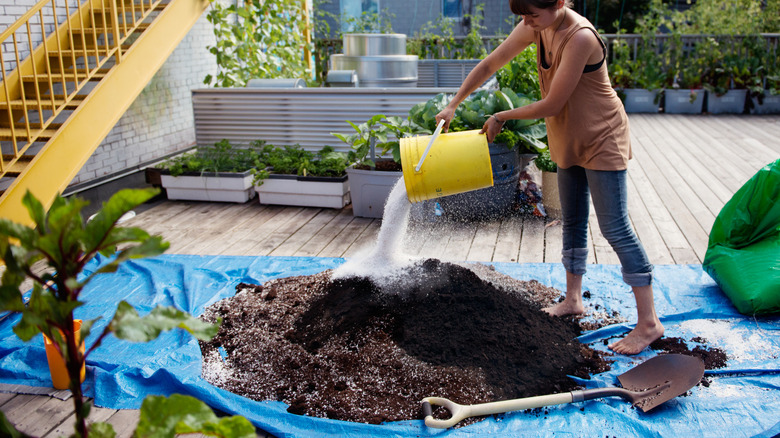
If you're starting seeds indoors and want to make your own mix using garden soil, you should pasteurize it before blending it with other ingredients. Heating it in your oven to 180 degrees Fahrenheit for at least 30 minutes should kill most weed seeds and pathogens. A good combination to use is ⅓ pasteurized soil or compost, ⅓ sand, vermiculite, or perlite, and ⅓ coir or peat. If you're starting a lot of seeds and mixing up a large batch, sterilize all your soil at once before adding the other ingredients.
When you're using compost to make your own potting mix, keep in mind that decaying organic matter can bind some nutrients. Microbes that are still working to break down unfinished compost compete with seedlings for nitrogen and sulfur, which can stunt plant growth. And keep in mind that even if you pasteurize your soil or compost carefully, it can still contain things like stubborn weed seeds and insect eggs. Another thing to note is that your planting containers should be washed and disinfected with a weak bleach solution, because they can also be infected with pathogens and spores.
No matter what seed starting mix you choose, once your seedlings develop their first true leaves, they'll need a light feeding, such as a half-strength liquid fertilizer. Since seedlings don't need extra nutrients until then, there's no reason to fertilize any earlier.