

Here's What A Catslide Roof Actually Is (And What They're Good For)
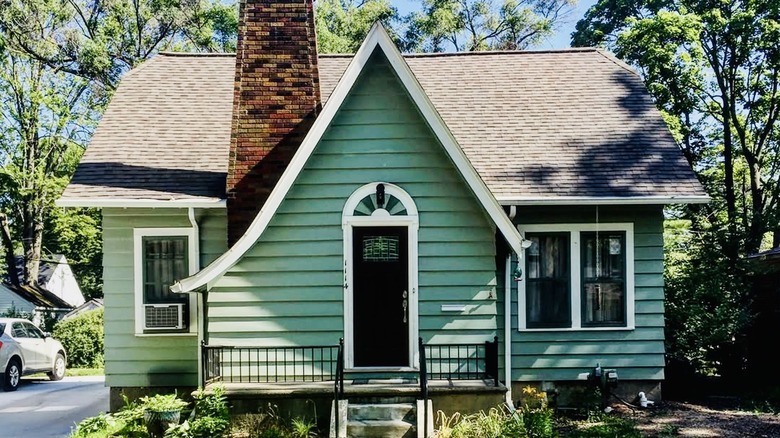
You've undoubtedly seen a home with a roofline that just keeps going, sweeping down past the second story, past the first, almost to the ground, like the house forgot where to stop building. That long slope has a name, a catslide roof, and it's been solving the same practical problem for buildings for centuries — enabling an increase in covered space without boosting height.
The catslide, which can be used on any kind of roof, creates a dramatic and sometimes fairytale-like effect. It's a roof slope that continues seamlessly past the height of the main eaves, extending down over a lower attached structure, such as a single-story extension, rather than stopping and starting a new roofline. The side covered by the catslide roof will have a lower exterior wall than the other side, resulting in an asymmetrical appearance for a home, so if an unbalanced look bothers you, a catslide roof is probably not for you.
Catslide roofs originated in England, with homes built in the Tudor period (1485 to 1603) and even earlier that are still standing and show the catslide form, though the original thatch or timber roofing materials have typically been replaced. When the British brought catslide roofs to the American colonies, the focus was on placing them on saltbox houses so the front of the house was two stories and the back one story. Several centuries later, a catslide-roofed home called "The Willard" was even one of the home designs sold by Sears Roebuck in the late 1920s.
Why choose a catslide roof?
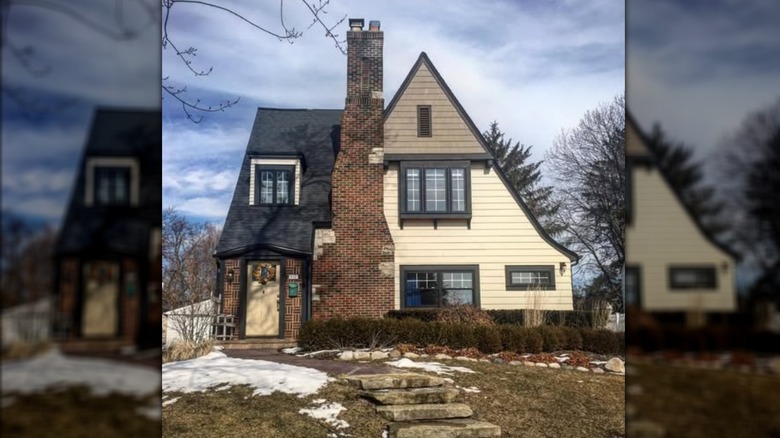
As you set out to pick the best roof for your home, you may want to consider a catslide roof if you'd like to create additional space without extending your roof ridge height or the overall height of the building. By matching the main roof's pitch and sharing its wider, shallower footprint, the extension mirrors the original house's proportions, thus allowing both structures to blend harmoniously, despite their distinct shapes.
In the United Kingdom, catslide roofs are used to meet regulations in which extensions are capped so that eaves and ridge height must not exceed the existing house. In the United States, where local zoning boards govern these issues, a catslide-style roof extension may help you avoid triggering a height variance.
Catslide roofs also used to cover mudrooms and garages, as well as porches and entryways, where they are primarily a decorative touch. On saltbox houses, catslide roofs can act as a windbreak. Of all the different types of roofs to consider, the catslide roof adds a distinctive and historical look to your home.