

Do Seeds Germinate Faster In Light Or Dark?
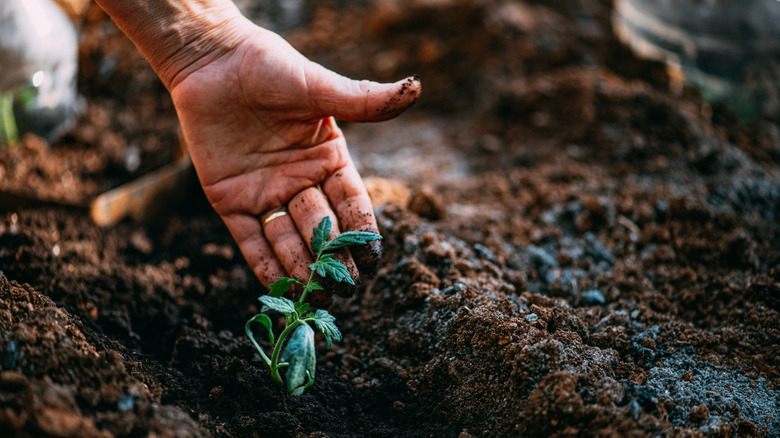
There are certainly various benefits of starting seeds instead of buying plants. For starters, the endeavor is inexpensive. And because nurseries typically offer a limited selection of starts, you'll usually have access to a much wider variety of plants as seeds. You're also in control of the growing environment, making it easier to minimize or avoid chemical treatments if that's your goal.
But germinating new seeds requires major tinkering. Apart from ensuring the soil is warm enough for the seed to wake from its dormancy, you must offer it adequate light — or darkness. Turns out, whether a seed germinates faster in light or darkness depends on the species. In other words, simply tamping down the seeds and covering them with soil might not be an optimal strategy to produce healthy plants.
So, how do you determine whether your seeds need more light or are happier in the dark? You take cues from their size or from the recommended planting depth stated on the seed packet. Usually, many small seeds require light to germinate. Similarly, if you're advised to sow seeds shallowly or to broadcast them lightly over the soil, they'll perform better in light than an inky environment.
Light or dark — why it matters for seed germination
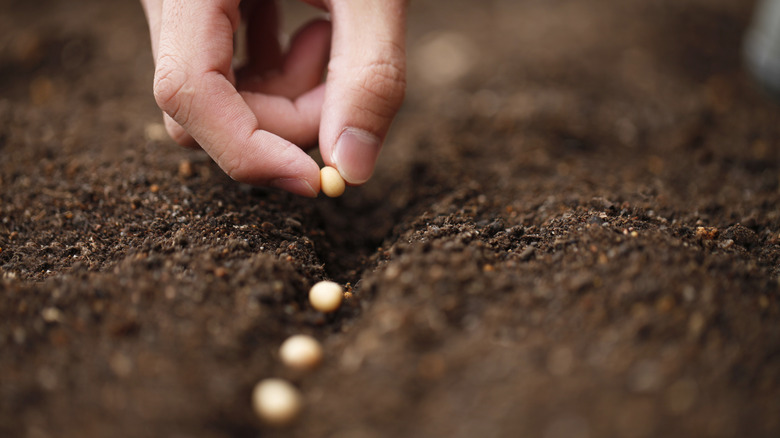
Although the concept isn't widely understood, it's believed that some seeds are photoblastic, meaning their germination is influenced by light. This discovery came courtesy of Kinzel, who carried out several experiments on seed germination in 1926. After sowing all seeds at about 60 degrees Fahrenheit, he noticed that 270 seeds germinated better in light and 114 did better in opaque darkness. He also found that some seeds (33 in his experiments) germinated equally well in both light and darkness.
This birthed the concept of positive and negative photoblastic seeds, where the former initiated germination in the presence of light, whereas the latter were inhibited by light. Basically, germination is controlled by a variety of plant hormones and environmental cues. When positively photoblastic seeds receive light, gibberellic acid increases, while dormancy promoters like abscisic acid and ABA decrease, leading to germination.
However, as with all things plants, this terrain gets murky when other factors come into play. For instance, a 2013 study published in the American Journal of Botany found that positive photoblastic seeds respond differently to light spectrum in some plants. This may become important if you're starting seeds indoors, as they may respond better to blurple grow lights. Further experiments noted that this response isn't even consistent across the same genus and may become immaterial if the soil is rich in nitrates, as it compensates for poor lighting. Another complication? Temperature. Light requirements may be dispensed with in some cases where seeds are subjected to fluctuating temperatures, though these seem to be more noticeable at soil level anyway.
Maybe it's more about the seed mass
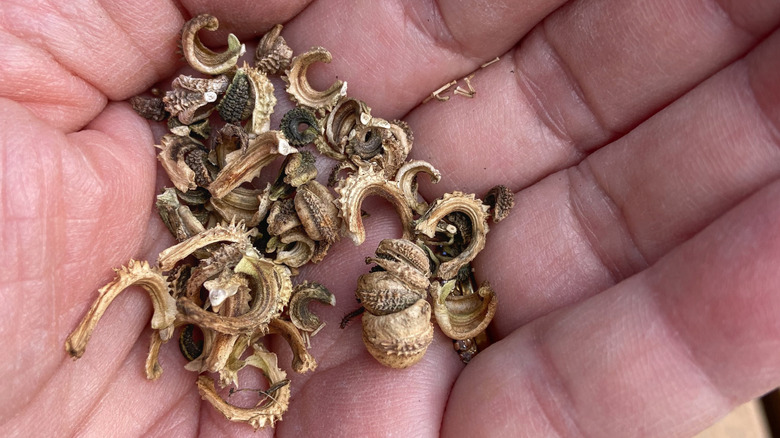
As understanding evolved about how various seeds respond to light, it is hypothesized that size may be a crucial determinant. Typically, it's seeds with a small mass, such as impatiens, begonia, petunias, and lettuce, that require light, and this makes sense. Compared to large seeds, they have fewer resources to support their growth in the soil. This means their seeds will soon need to start photosynthesizing, which requires sunlight. Without enough light, a seedling may exhaust its stored energy before reaching the soil surface.
This co-evolution between light and seed mass becomes less important for larger seeds, including but not limited to calendula, delphinium, and gazania. Some vegetable and herb seeds that generally germinate best when covered include cauliflower, brussels sprouts, pepper plants, squash, tomatoes, beans, peas, basil, and parsley.
That being said, this equation may become even less noticeable for hybrids or commercialized, market-based varieties since they're selected for easy germination (assuming they're viable as seeds). To take the guesswork out of the equation, look for the light requirements noted on the seed packet. If no light requirement is listed, follow the recommended planting depth. If it's advised to leave them uncovered, they'll germinate faster in light. However, if you're afraid of birds or rodents stealing your seeds, you may use vermiculite for efficient seed germination. All you have to do is dust the seeds lightly with vermiculite. It will then allow some light to penetrate the soil and improve moisture retention to support your seeds' growth.