

The Dinner Table Scrap That You Can Use As A Powerful Tomato Fertilizer
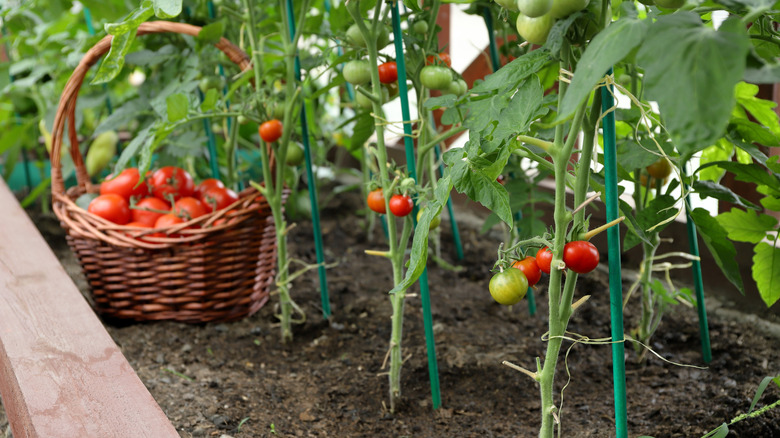
Growing the best tomatoes in your garden or at home is one of life's simple pleasures. They are one of the easiest fruits or vegetables to grow, so if you're a wannabe gardener, it's definitely worth giving it a go. One of the key components to any successful crop is the fertilizer. There are different things you can use, including a specialized formula designed specifically for tomatoes. However, these don't tend to be the most eco-friendly. A natural and sustainable fertilizer you can reuse in the garden for your tomatoes that many households already have available as a dinner table scrap is seafood shells, believe it or not!
Seafood shells make a great eco-friendly fertilizer for tomatoes because they are rich in nitrogen, calcium, magnesium, and phosphorus, all of which promote beneficial microbes and improve the overall soil structure. These components also protect the plants from harmful pests. If you're keen to use a natural alternative to a chemical fertilizer, keep reading to discover how to best use seafood shells to promote the healthy growth of your tomatoes.
How to use seafood shells as tomato fertilizer
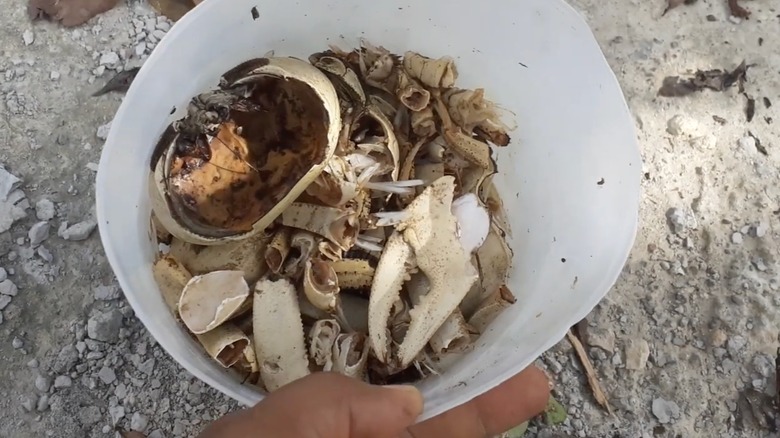
Crab, shrimp, lobster, and oyster shells make excellent fertilizers. They enrich the soil with key nutrients and calcium carbonate, balancing soil pH so your tomatoes grow faster and healthier.
Oyster shells are high in calcium carbonate, which helps balance your soil's pH. But what exactly is the best way to use them? It couldn't be simpler. Spread your seafood shells on a baking sheet and roast them at 250°F for 30 to 60 minutes. Once they've cooled down, tip them into a food processor and blitz until they turn into a gritty powder. Mix the powder in with your soil and watch your tomatoes thrive.
To get enough seafood shells for the soil, you'll need to collect them over time. A great way to do this is to mix them in with your compost pile. Bury the shells at least 12 inches deep under leaves, twigs, and other dry organic material to prevent odors and deter pests.