

This Material Would Make For A Durable Toilet, But You'll Never See It In A Home. Here's Why
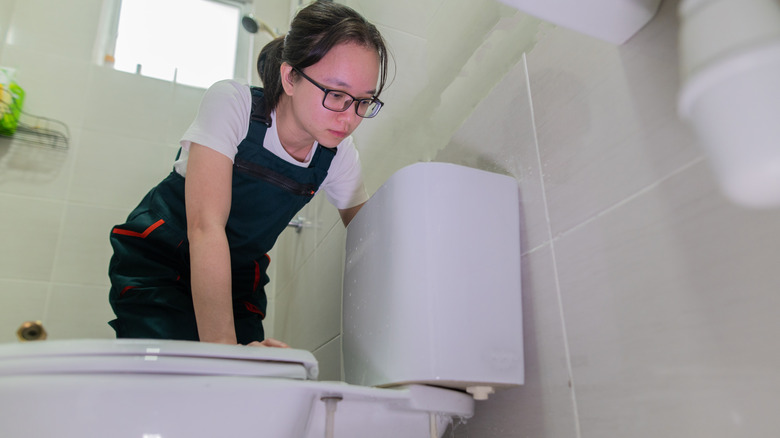
Most toilets you see today are made of something called vitreous china. It's a mix of porcelain and ceramic, and provides a shiny, smooth surface that looks clean, dampens sounds, and fits into most bathroom designs. However, despite these perks, there are a few negatives. While they are somewhat durable, ceramic toilets can break from sudden impacts and eventually chip and crack with repeated use. Worn spots then easily stain, scratch, and harbor bacteria.
You may feel curious about more practical, modern materials, such as stainless steel. After all, a stainless steel toilet would be virtually indestructible. While it could be dented by a strong hit, the toilet itself wouldn't shatter, and would continue working in most instances. Cleanliness is definitely another perk. Stainless steel is a non-porous material that doesn't hold a lot of bacteria, and in areas where you have all sorts of nasty particles floating around, a material like this is important. Just like a stainless steel cooking pot, a steel toilet would also be easy to keep looking nice. The surface is smooth, so it just needs a quick wipe-down. And you wouldn't need to scrub hard to get rid of most stains and build-up.
But if you actually start shopping for a stainless steel toilet, your dreams might go down the drain. Unfortunately, due to logistics, high cost of production, and their high-powered plumbing design, this is a toilet material you may never find being used in residential homes. While they seem low-maintenance, many people wouldn't know how to care for a stainless steel toilet either, since standard toilet bowl cleaners contain or acids that could damage them.
Why you'll never find a stainless steel toilet in a home
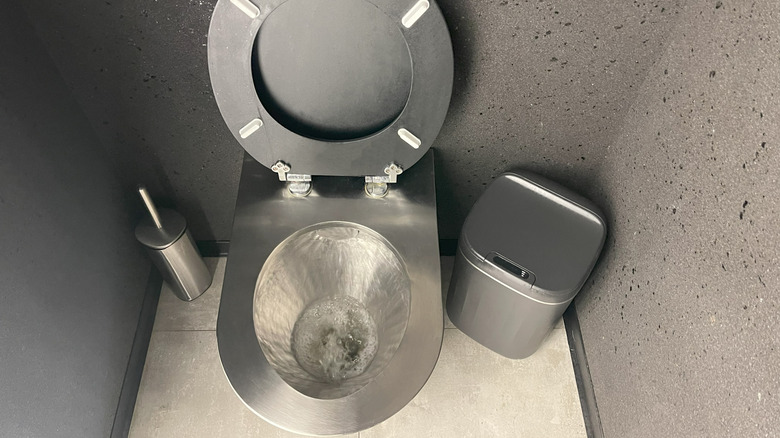
While steel toilets have perks, there is a reason that white china toilets are still the most common style found in homes. For one, they are cheaper. While stainless steel is lighter and potentially more affordable to ship, the materials and difficulty in molding a toilet shape lead to higher final prices. Down the line, maintenance costs may build up as well. Human waste and urine typically have a low pH, making them slightly acidic. Over time, that will corrode a stainless steel toilet, eventually leaving pits, rust, and unattractive rings.
Another reason steel toilets aren't trendy is that they make splashes and grubby fingerprints a lot more obvious. Steel toilets are easy to keep free of harmful bacteria and mold, but their appearance may not seem so clean. Have you ever been annoyed by all the random streaks, water stains, and fingerprint smears on your stainless steel dishwasher or fridge? Imagine that, but on a toilet. These have to be cleaned with mild solutions or special stainless steel bathroom cleaners that might be hard to find in stores — and might not disinfect as much as you'd like.
Another problem is that they're hard to find and install. Most are made specifically for businesses or public spaces like airports, stadiums, hospitals, and prisons. If you've noticed, these toilets generally don't come with a tank. This is because commercial toilets rely on higher water pressure, so they often won't work with your home's plumbing. Additionally, the seats can get cold, and they aren't exactly the most attractive toilets either,. In the end, most homeowners would prefer a toilet design that complements the style of their bathroom.
Better ways to upgrade your toilet than going with steel
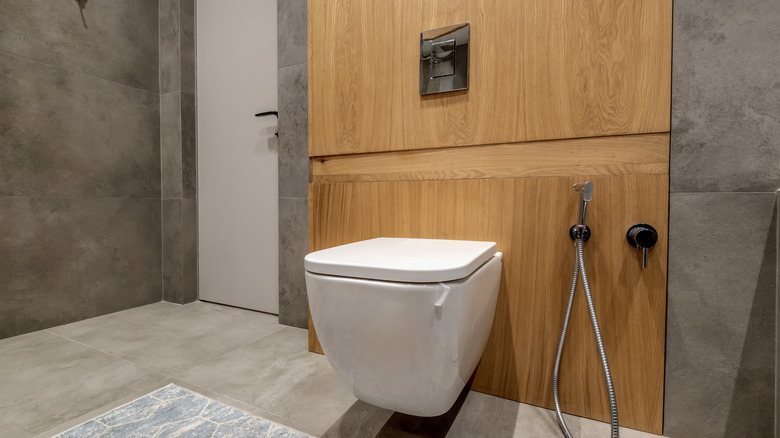
While stainless steel toilets likely won't become a popular trend in homes anytime soon, you don't have to settle for a bog-standard option. There are other ways to upgrade your toilet, including a soft-close lid or a bidet attachment. The high-powered flush of a commercial toilet might be out of reach, but you could consider installing a low-flow toilet as a worthwhile addition to your home to reduce your water bill and reduce strain on the planet.
If you're planning on replacing your toilet or buying a new one, do some research on the best brands. A trustworthy toilet brand will have better durability and quality, making it less likely to chip or crack, even if it's not steel. Kohler and American Standard are just two examples of top-rated brands to consider choosing. Changing out the toilet seat lid for something more sanitary is also an idea. While you may not be able to get one made entirely from stainless steel, you could potentially swap just the lid and seat. Plastic seats are easy to scratch, but specially created resins like thermoplast are good alternatives.
All things considered, stainless steel toilets may become a more popular option someday, but for now, vitreous china offers the color, comfort, and durability that most homeowners desire. Though cracks and chips are a definite possibility, if you care for them right, standard white toilets could last up to 50 years. To get a long life from them, use cleaning products that aren't abrasive and avoid strong chemicals like bleach.