

The Blue Flower To Plant In August For A Beautiful Spring Garden
The work of a good gardener never truly ends, even as we approach the end of summer. In fact, you can actually give yourself a leg up if you start planning for next year's garden now. August is an excellent time to get some plants started in preparation for the coming growing season. Cineraria (Pericallis x hybrida) is a great option for fans of brilliant blue blooms. If you plant them now, you can enjoy their lovely flowers in early spring.
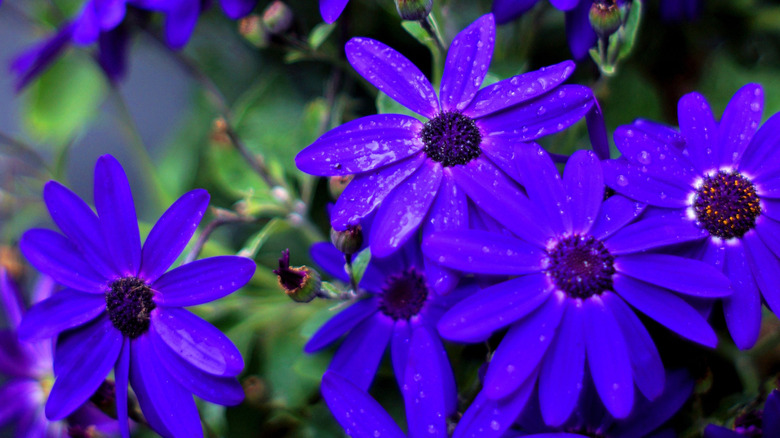
Cineraria — also known as florist's cineraria — is an herbaceous perennial featuring daisy-like blooms in a range of colors including blue. It usually grows about 12 to 18 inches tall and wide. This plant is suitable in USDA hardiness zones 9 to 11. However, they can grow as annuals outside of these regions and also serve as bright house plants when kept indoors.
This relatively low-maintenance plant is one of the best flowers to plant in August for a lovely spring garden. While you can plant these flowers at different times throughout the year, if you're aiming for late winter and early spring blooms, it's best to plant them in late summer. Luckily, these beauties are not too difficult to grow from seed. Keep in mind, selecting the correct seeds is critical when it comes to growing cineraria. As mentioned, these flowers come in a variety of colors and if you're hoping for a specific look, you'll be sorely disappointed if you don't pick out the right variety. If you're hoping to cultivate stunning blue flowers, go for a variety such as Pericallis 'Senetti Super Blue' or 'Senetti Blue Bicolor.'
How to grow and care for blue cineraria
Once you have your seeds, you can start them inside in August. You'll need small pots or a tray filled with well-drained soil. Press your seeds into the surface of the soil. They should be slightly exposed so the light can aid in germination. Mist the soil and continue to do so as the seedlings develop. They should start to sprout in roughly 14 to 21 days. Thin out the small, weaker seedlings. You can transplant the more successful seedlings once their true leaves appear. If you're keeping the cineraria as a house plant, opt for a smaller pot. They tend to offer the best blooms indoors if they are slightly root-bound.
Make sure you establish your transplants in moist, well-drained soil. This plant isn't too picky about soil texture, taking to sandy or loamy environments just fine. Just be sure water isn't pooling too much at the plant's feet. Cineraria require a temperature of 60 to 70 degrees Fahrenheit during the day to thrive. They also tend to grow best in moderate humidity. Select a spot that will provide partial shade with limited direct sunlight. Getting your plants in the ground now will help them to develop strong roots before temperatures drop. From here, these plants are pretty easy to care for. Expect blooms in late winter to early spring. Keep the soil moist but not sopping wet. You can feed your plant with a balanced fertilizer every 2 to 4 weeks for lush foliage and show-stopping blooms. Enjoy your cineraria flowers longer by deadheading spent blossoms.