

Start Mulching With Banana Peels And Watch Your Plants Flourish
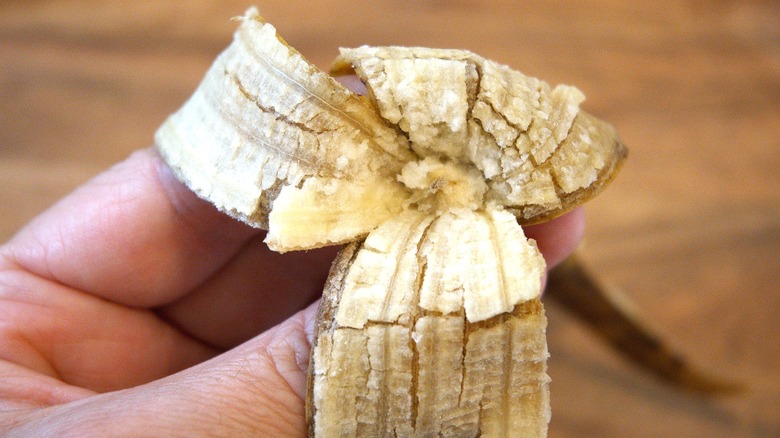
Like us, our plant friends benefit from potassium, too; it's among the core elements plants need for healthy growth (it's the "K" in N-P-K, or nitrogen-phosphorus-potassium). When plants have enough potassium, they're able to metabolize other nutrients well and their edible parts may even be better-tasting. Banana peels can also be sources of calcium, sulfur, and magnesium, all of which can benefit plants. With that in mind, don't throw out that banana peel after you've eaten the fruit. Mulching with banana peels (which you should turn into compost or chop up finely) is a way to reuse kitchen scraps and help your plants flourish.
Though banana peels are nourishing to plants, note that it's better to avoid some of the gardening hacks that don't give them enough time to decompose and release all their nutrients. For example, some gardeners bury banana peels or steep them in water to make a "tea," but these methods come with downsides. Burying the banana peels can attract unwanted critters to the garden or even make less nitrogen available to the plants as soil microbes focus on the peels instead. And while banana peel "tea" does draw out the potassium, other helpful compounds will still remain within the peels themselves until the scraps are fully broken down.
When you incorporate banana peels into compost, and use the resulting compost to mulch with, you're letting the slow-releasing benefits keep your soil in good shape over time. One common way to facilitate this is by spreading the compost (which includes banana peels) yearly over the soil's top layer.
How to compost banana peels for the garden
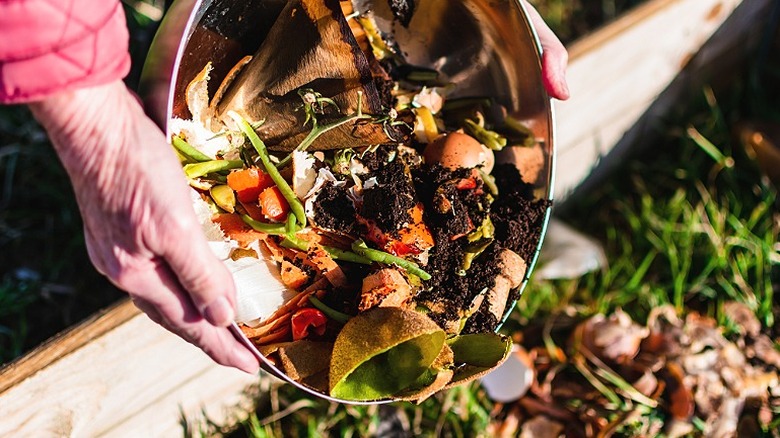
The best way to unlock the nutrient power of spare banana peels is turning them into compost and then spreading that compost over plant roots as you would a mulch. Compost can usually be applied as mulch, but there are some instances where it's better to skip it, like for plants that have a strict requirement for alkaline soil.
When making your own DIY compost for the banana peel scraps to go into, it's important to include enough material like wood chips, paper scraps, and dried leaves, which are known as "browns" that bring in carbon to balance with "greens," or the nitrogen-rich materials. Before you incorporate them into compost, chop the peels up into small segments to help them decompose more quickly.
If you have enough outdoor space, create the compost pile on a bare patch of soil enclosed with a wire fence. In smaller yards or even apartments, you can toss the compost ingredients into a bin and then add some earthworms to break it all down. Add the banana peels into your composting system and top it off with extra soil.
Over time, the mixture will collect heat as the peels and other matter start to decompose; during this time, turn it at least once a week. It'll be ready in several months; per Ohio State University Extension, "Compost is ready to use when it is dark brown, crumbly, and earthy-smelling."
Alternatively, layer banana peel pieces under mulch
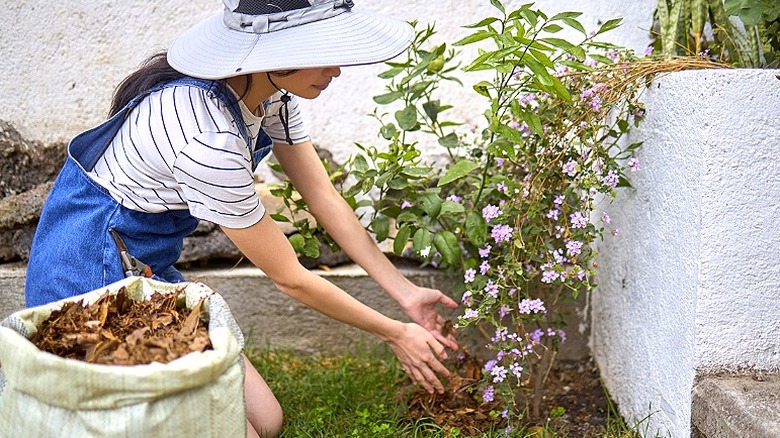
Once your compost is ready, you can add it to your plants. Generally, you'll want to leave 1 or 2 inches of the compost in a layer over the soil. While composting is the best way to unlock all the benefits banana peels have to offer plants, if that's not an option for you, it's still possible to get some benefit by placing small pieces under a layer of mulch.
If you go this route, it may help to freeze the peels until you're ready to use them in the garden. Also be aware that it will take time for the nutrients in the banana peel to actually reach your plants — you might not see results until five or more weeks have gone by.
When you're ready to try this method, simply bury the banana peel pieces under your mulch. This step is important, because peels that are buried shallowly can attract critters, including skunks and rats.
Further, fresh peels can lure in bugs, like gnats, which is why you should stick to outdoor use when trying out this approach, and not experiment with your houseplants. Know that a surprise pest invasion is a major drawback of using banana peels as houseplant fertilizer. In addition to watching for small animals or bugs, monitor the area to make sure mold isn't accumulating.