

The One Place In Your Yard You Shouldn't Ditch Landscape Fabric
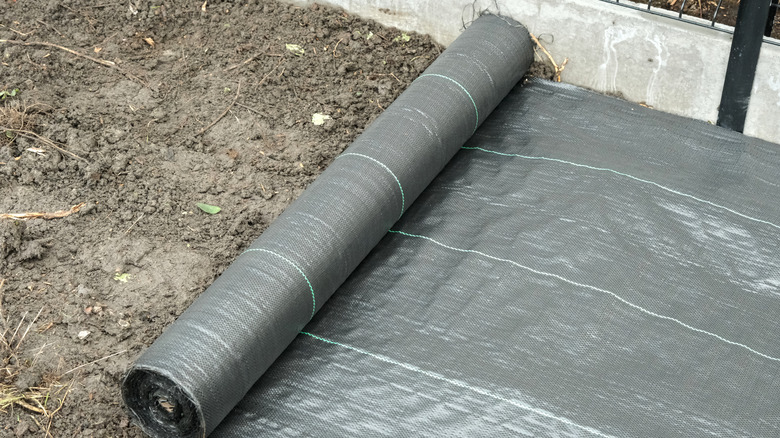
The downsides to using landscape fabric in your garden are many. Sure, it can help you to keep weeds at bay for a short period of time, although it's usually not a long-term fix. Soil accumulates on the top, which eventually supports weed growth anyway. And the longer the fabric is left in situ, the more likely it is to degrade.
However, while you're better off opting for other methods to keep weeds controlled in most of the garden, there are other products that can prove useful — and places where they're necessary. The base of your shed is one example.
Provided that you use the best type of landscape fabric, you should find that it brings several benefits to the installation of your new shed. Firstly, from a structural standpoint, it can help to keep the gravel layer beneath the structure separated from the soil underneath, thus supporting the stability of your shed's foundations. And if you're hoping to keep maintenance of your shed and its surroundings to a minimum, you'll find the combination of fabric and gravel all but eliminates the chances of weed growth. Gravel is an excellent mulch material anyway. But when you throw a heavy-duty landscape fabric into the mix, it makes life very difficult indeed for even the most recalcitrant weeds. The trick is to use commercial-grade landscape fabric — the heavier duty, the better.
Maximize landscape fabric's effectiveness beneath your shed
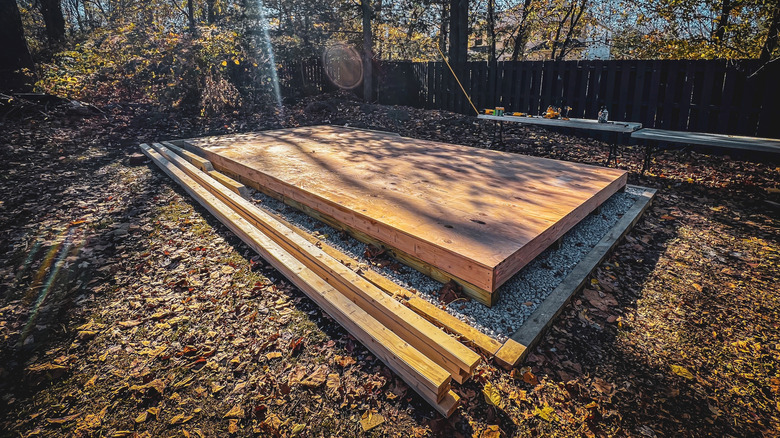
If you're DIYing your own shed, there are several things you can do to ensure the foundations are solid and you've got a sturdy, durable build. Firstly, choose your site wisely to ensure it doesn't flood. Then, level your site before laying the hard foundations. As far as landscape fabric and gravel are concerned, be careful to cover the ground with fabric out and around the perimeter of your shed. Ideally, you need a gravel-and-fabric moat extending at least 12 inches beyond all sides of your shed. This helps in several ways.
Firstly, when rainwater runs off the shed roof and over the sides, it'll fall into gravel and drain away, instead of landing in mud and splashing up against your lovely new shed. It'll also give you a sturdy place to stand instead of a muddy puddle, should you need to do any maintenance to your shed's exterior either during or after bad weather.
Secondly, that extra gravel and fabric will keep any garden growth from jeopardizing your shed's foundations. And it's not just weeds. Grass, too, can hold lots of moisture and is constantly shifting. If allowed to grow too close to wooden frames and foundations, it can eventually cause your shed's base to deteriorate. So consider putting down some solid landscape fabric the next time you're thinking of adding a shed to your yard.