

If You Don't Have A Drill, You May Be Able To Use This Other Household Tool
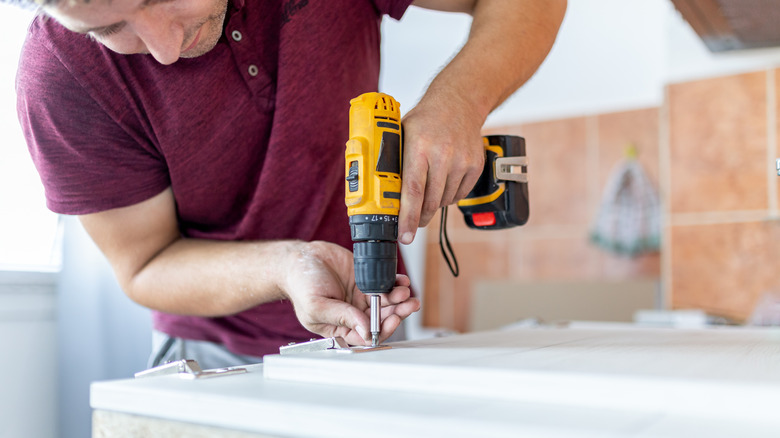
Tools can be incredibly expensive. If you frequently do projects around the house, the cost is certainly worth it. If you're not particularly handy, however, shelling out hundreds for so-called "basic" tools that you only reach for once or twice a year can feel like a waste. You can DIY a simple household toolkit for under $100, which we certainly recommend, but this requires omitting one item that many consider essential: a cordless drill/driver. A quality drill with a battery will usually cost between $100 and $150, demolishing a budget. But if you're planning to work with heavy-duty materials, an electric screwdriver can give you the same convenience at a much more affordable price.
The average cost for one of these tools is around $50, and in many cases, they don't require you to purchase a separate battery or bits. The functionality and power of an electric screwdriver is a bit limited compared to that of a drill/driver, so they're not the best pick for everyone, but they're a solid option for completing smaller tasks around the home.
If you're a smart shopper, you might be able to save even more with this investment, as there's an affordable screwdriver kit that Harbor Freight customers are loving available for under $20. But even if you shell out for a more expensive brand, you shouldn't expect major pain in your pocket. To determine whether this is the right option for you, however, you should first consider how it compares to a drill/driver and what tasks it's useful for.
What makes drills and electric screwdrivers different?

Drills/drivers can perform two primary functions depending on the bit that is attached: drilling into materials and driving in screws. These bits typically need to be purchased separately, further driving up the cost, but they're necessary to get the job done. Electric screwdrivers, on the other hand, are most often used for — you guessed it — driving in screws. While they can be used to drill into materials in certain cases, they can usually only handle lightweight materials and might require the purchase of extra adapters.
Another major difference between the two tools is power. Most drills/drivers run on a 12V battery, but electric screwdrivers have a smaller one — think 4V or so. This makes electric screwdrivers more lightweight, but it also means they're often incapable of handling bigger jobs or tougher materials. They're a major step up from an average screwdriver in terms of torque, but drills/drivers are the clear winner across the board for more involved construction projects.
Finally, there's the size. Drills/drivers can be weighty to hold, inconvenient to store, and difficult to use in tight spaces. Electric screwdrivers don't have that problem, making them a useful purchase. They fit comfortably in your hand, allow you to work with precision, and can be stowed in a tight space. Their smaller design also makes them a great pick for those with limited strength or mobility.
What can electric screwdrivers be used for?
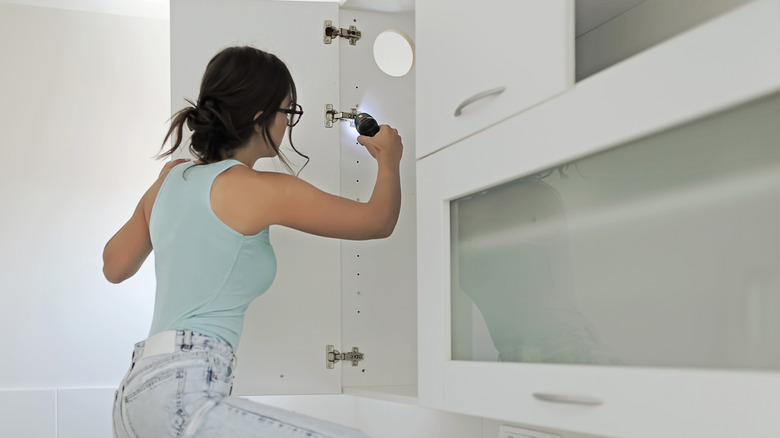
Electric screwdrivers can be used for a wide array of tasks around the house, but most of them fall into light building or regular maintenance. This tool will shine anywhere you'd use a regular screwdriver — think tightening hinges, hanging art, or building difficult IKEA furniture. The extra oomph you get from the battery can make these tasks easier and minimize stress on your wrists. Plus, the low-profile design will help you get into awkward corners that a bulky drill can't reach.
Electric screwdrivers can also sometimes be used to drill holes into softer materials, but there's a chance you'll need to purchase a separate hex shank adapter in order to install a proper bit. Some drill bits with a round shank that will fit into an electric screwdriver are available, but options are few and far between. You also likely won't get as clean of a hole when drilling with an electric screwdriver, but it can certainly get the job done in a pinch on MDF, plywood, thin plastic, or other similarly low-resistance materials. When it comes to driving screws into tougher materials like hardwood, metal, or masonry, an electric screwdriver isn't the best choice.
With the proper bit, a drill/driver can accomplish tasks like drilling into hard materials, polishing, and mixing paint. These tools provide more flexibility in the long run, but they're not an absolute need for those who live in an apartment or don't frequently take on tasks around the house. Both pieces of gear will shine in the right circumstances, but for some folks, an electric screwdriver is a much more cost-effective and useful buy.