

The Fragrant, Yellow-Blooming Shrub That's Just As Drought Tolerant As Lavender And Sage
Lavender (Lavandula angustifolia) and sage (Salvia officinalis) are often recommended as drought-tolerant herbs you can grow together for a thriving garden, and for good reason — they're low-maintenance, have a lovely scent, and boast pretty flowers that provide a subtle pop of color. Their popularity, however, can also present a downside: Seemingly everyone gravitates towards these plants in the garden, so they're far from unique picks. If you're looking for an option that offers the same benefits but is a bit more off the beaten path, consider planting lavender cotton (Santolina chamaecyparissus).
Despite the name, lavender cotton isn't actually related to either plant. It's part of the Asteraceae family, which includes daisies, chamomile, and yarrow, among many others. Its stunning appearance makes it an interesting textural add-in for those in USDA Hardiness Zones 6 through 9, boasting tiny, feathery, silvery gray leaves that can help break up swaths of deep green. Its flowers are real showstoppers, too: rounded, sunny yellow, and reminiscent of something out of a Dr. Seuss book.
Lavender cotton's appearance is a major source of its appeal, but it comes with quite a few other pros for gardeners, too. It's highly drought-resistant, can handle salt, and deters deer with its earthy, herbal scent. It's also far from picky across the board — as long as things are kept dry and well-draining, it can handle a wide range of sun and soil conditions that many other plants would surely wither away in.
How to care for lavender cotton
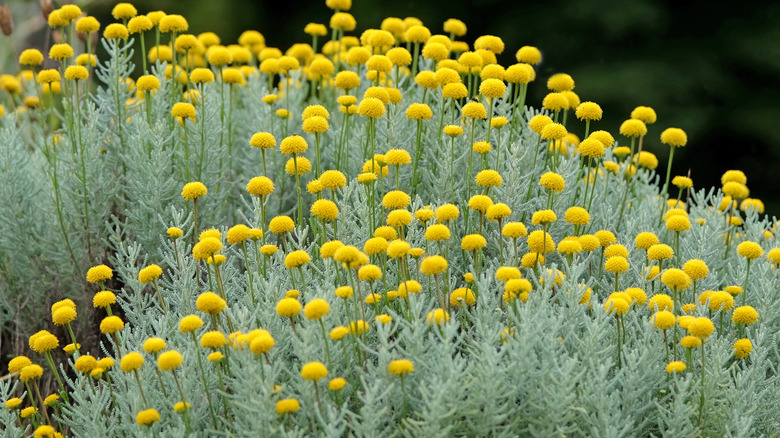
Keeping lavender cotton healthy is far from challenging. It will only grow between 1 and 2 feet tall, making it a solid option as a ground cover, and it's happy to take root in sandy soil, giving it a leg up for those who are designing a rock garden. It prefers full-sun conditions — you'll likely get the best blooms and densest growth with six or more hours a day — but it can still do well in shady spots. As long as you make sure the area is well-draining and overall fairly dry, your lavender cotton should stay happy. Keep an eye out for fungal diseases or root rot, which are common signs of a too-damp environment.
While consistent pruning isn't required, deadheading and reshaping the shrub annually can help to keep things looking bushy and healthy. Remember the three D rule to properly prune your plants: remove dead, diseased, and damaged branches. Every one or two years, you can also cut back the plants to just above the lower buds to prevent woodiness. Otherwise, care is pretty much hands-off. Thanks to the fact that lavender cotton thrives in dry conditions and poor soil, you don't even have to worry about regular watering or fertilization.
If your lavender cotton is established and healthy by fall, you also have the option to propagate it to extend its reach across your garden. Take some healthy cuttings, or look for branches that have drooped and re-rooted into the soil, and plant them in nursery planting mix. After some time, they should develop strong roots and be ready to re-plant in the garden.