

The Ancient Cabbage-Family Vegetable Gardeners Rarely Grow Anymore
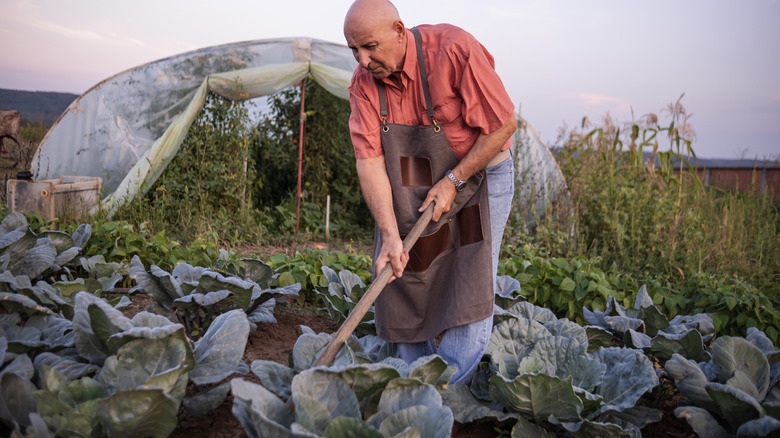
There are quite a few vegetables that were popular prior to and around the 19th century that modern-day gardeners rarely grow anymore, unlike the vegetables people grew and relied on during the Great Depression. One such ancient variety is a member of the cabbage family and is known as sea kale (Crambe maritima). This perennial was grown quite extensively in Britain and France, but fell out of favor by the 21st century.
Sea kale grew naturally along European seashores, but seems to have diminished somewhat since. It had a stint of popularity in the U.S. when Thomas Jefferson grew it at Monticello, the lavish home of the former president, in 1809. As is the case with a number of older varieties of vegetables, a few commercial growers are starting to see the value of these ancient crops and have started growing sea kale again. On top of that, people are foraging wild sea kale and finding a market for it at a few restaurants in London.
Interestingly, you might spot this intriguing plant growing wild along the West Coast, especially near lighthouses, like the one at Yaquina Head in Oregon. It would seem that all parts of the plant are edible, including the young shoots, leaves, florets, roots, and the green seed pods, making this a worthwhile vegetable to add to your garden if you would like to try something new.
How to grow sea kale and use it
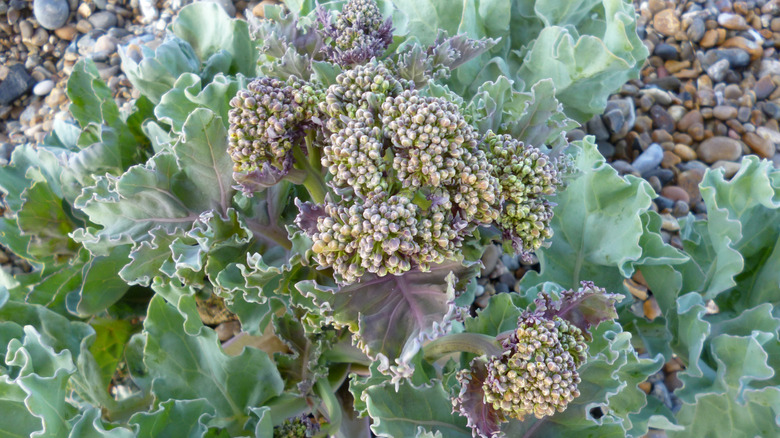
Sea kale leaves are very similar to curly kale in appearance and can be used in the same way. The young shoots that come up in the spring are often harvested and eaten like asparagus. However, it's best to wait until the second spring after planting to begin harvesting those lovely tender shoots. You could also harvest the seed pods while they're still green and add them to salads, and the florets or closed flower buds can be used much like broccoli. Once the buds open, the plants will be covered with masses of pretty, sweetly scented white flowers that are very attractive to pollinators, especially syrphid flies.
You can easily grow this perennial vegetable if you live anywhere in USDA hardiness zones 4 through 8, as it prefers cooler temperatures overall. It should be planted in the spring after danger of frost has passed, using either seeds or root cuttings. These are known as thongs and need to be planted with the pointed end downwards. If you're collecting your own seed, you'll first need to remove the corky outer coating to reveal the small black seed inside, which should germinate fairly readily. Choose a sunny spot in the garden that has well-drained soil. Water your plants consistently and feed regularly with a balanced fertilizer. Best of all, sea kale is one of those perennial veggies you can plant once, and it'll come back to your garden on its own every year.